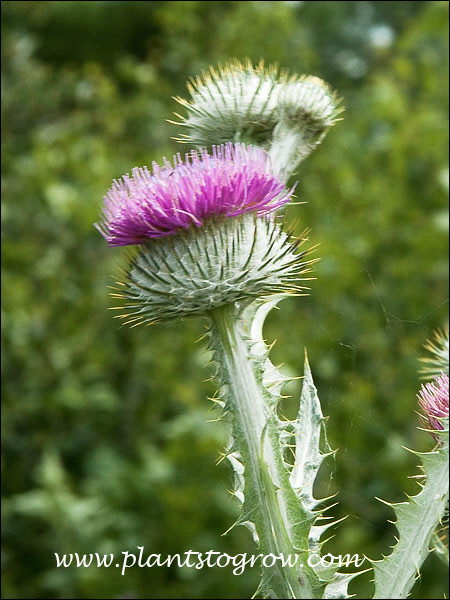
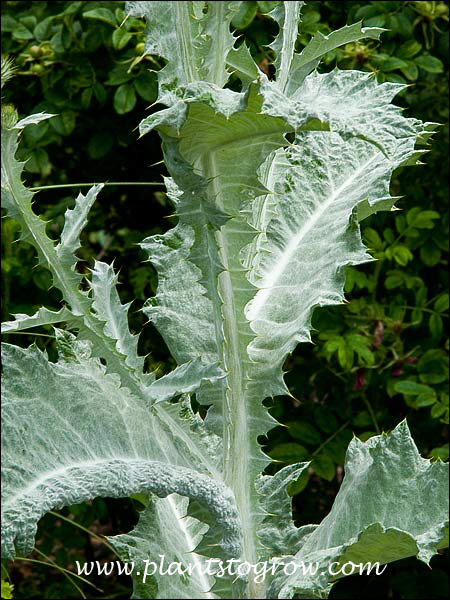
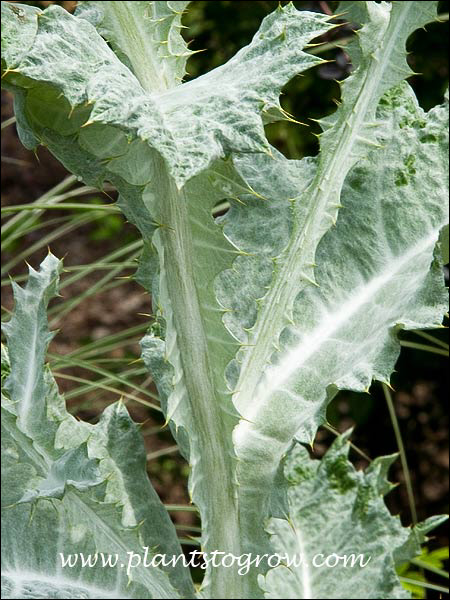
| Description | Scotch Thistle (Onopordum acanthium) is a tall plant with spiny, woolly silver foliage. It grows as a biennial or short-lived perennial and is considered a noxious weed in many regions worldwide. |
|---|---|
| Pronunciation | (on-0-POR-dum-a) |
| Plant Type | Biennials |
| Sunlight | full |
| Moisture | average |
| Soil & Site | average |
| Flowers | terminal spiny flower, capitium, purple ray flowers, |
| Fruit | achene |
| Leaves | Basal rosette leaves are large and petioled, while stem leaves are smaller, sessile, and alternate. Often featuring spiny, winged structures that extend down the stem. Gray felted spiny runcinate leaves. The color is due to the dense hair. |
| Stems | Spiny winged gray stems. |
| Roots | Has a thick, fleshy taproot. This acts as a nutrient reservoir. Roots reach depths of 6 to 15 feet. The roots can be harvested, cooked, and eaten, often described as having a sweet taste. |
| Dimensions | Has been reported to reach over 6 feet tall with 4-foot-long leaves. |
| Maintenance | It will readily reseed, so volunteer plants need to be removed. In many areas, it is considered invasive. |
| Propagation | seeds |
| Native Site | Native to Eurasia and naturalized in the USA. |
| Misc Facts | Onopordum [genus name] is a corruption of a Greek name onopordon that for some authorities is derived from Greek ono- (ass) and perdo (to consume) components with reference to asses eating thistle foliage. Others suggest Greek porde (break wind, fart) with reference to the plant's effect on donkeys.(#145) |
| Author's Notes | I have seen this plant used in gardens and it creates an architectural statement, not only in form but the silvery color. |
| Notes & Reference | #109-Annuals and Tender Perennials for North American Gardens (Wayne Winterroud), #145-Plant Lives, (Sue Eland) www.plantlives.com |

Cart