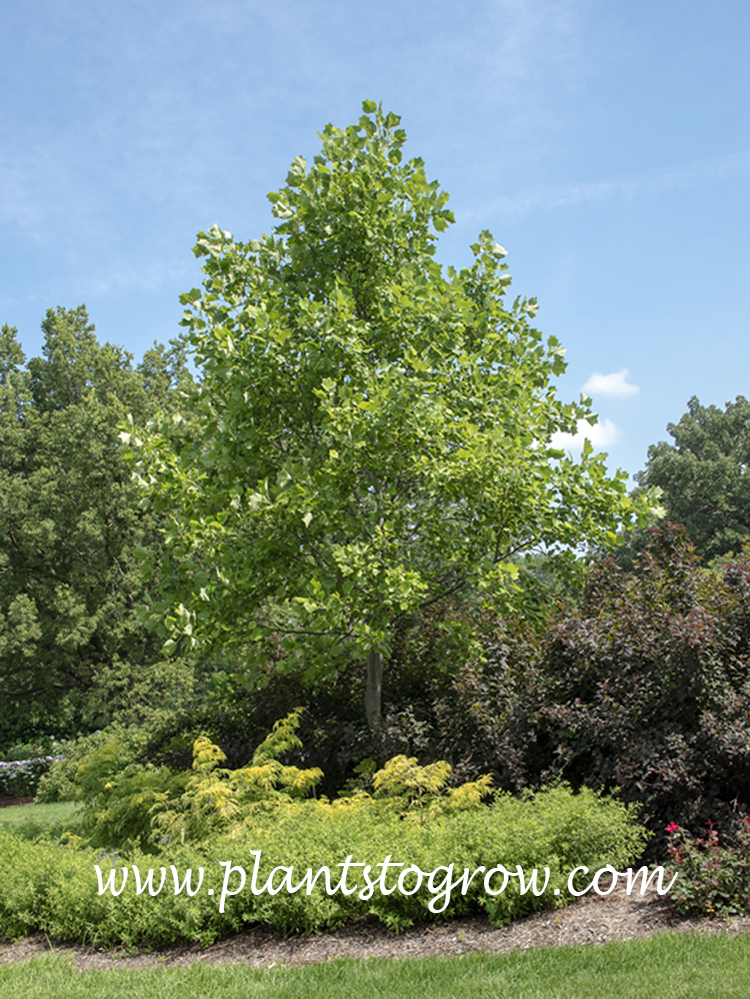
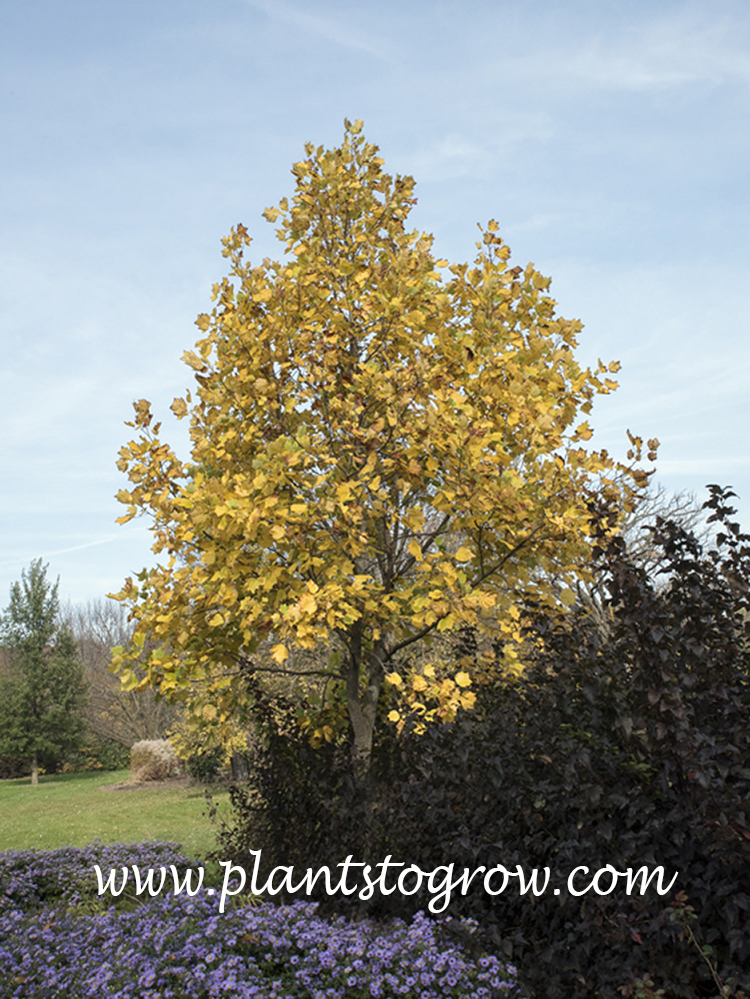
| Description | Tulip Tree (Liriodendron tulipifera) is a large growing tree with beautiful flowers and fall color. |
|---|---|
| Pronunciation | (lir-o-DEN-dron)(tu-li-PIF-eer-ah) |
| Plant Type | Trees Deciduous |
| Hardiness Zone | 4-9 |
| Sunlight | full |
| Moisture | average, doesn't like draught |
| Soil & Site | prefers deep rich moist, average |
| Temperature | tolerates down to -20 degrees F |
| Flowers | greenish yellow with 6 petals and three reflexing sepals |
| Fruit | narrow light brown erect cone-like fruit |
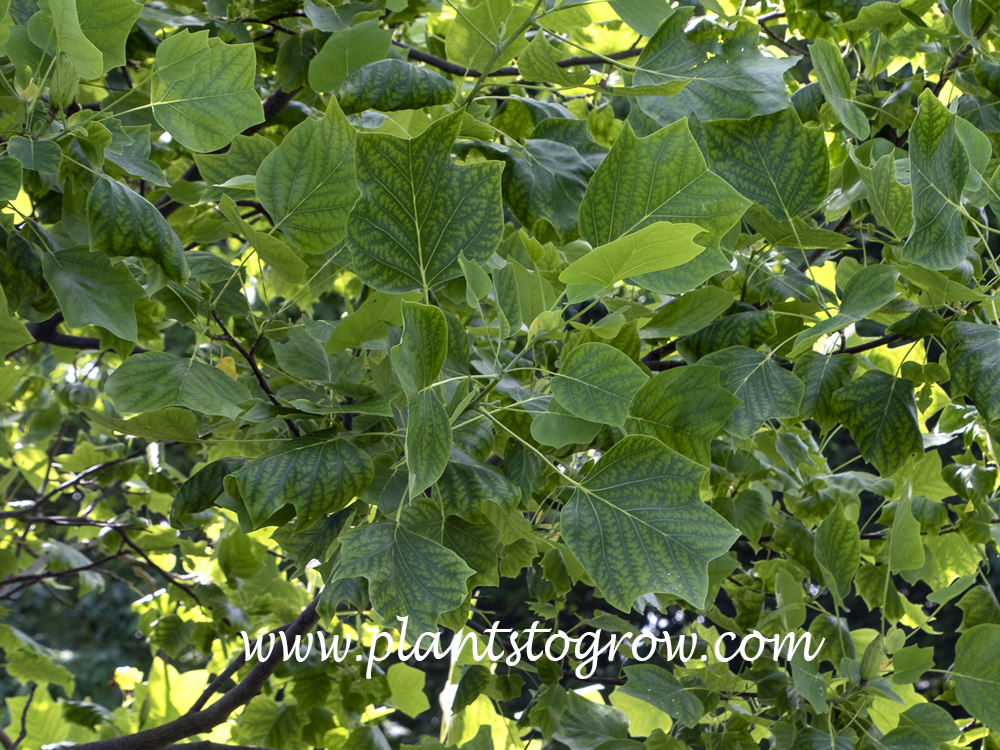
| Leaves | alternate simple leaves with truncated base, green changing to yellow golden yellow in the fall |
| Dimensions | 70-90 tall with a spread of 35-50, reaching much larger sizes, larger in the south |
| Propagation | cold stratified seeds, cuttings, cultivars are grafted |
| Cultivar Origin | Introduced in 1668. Earliest American citation 1737. |
| Misc Facts | AKA: Tulip Tree Magnolia, Tulip Poplar, Yellow Poplar, Whitewood, Canoe Wood |
| Author's Notes | At Boerner Botanical Gardens the tree is tucked into an area among other trees and shrubs. I would have never noticed it, if not for the flowers. |
| Notes & Reference | #1-Manual of Woody Landscape Plants (Michael Dirr), #39-The Natural History of Trees (Donald Cultrose Pattie), #93-North American Landscape Trees (Arthur Lee Jacobson), #108-Restoring American Gardens (Denise Wiles Adams) |

Cart