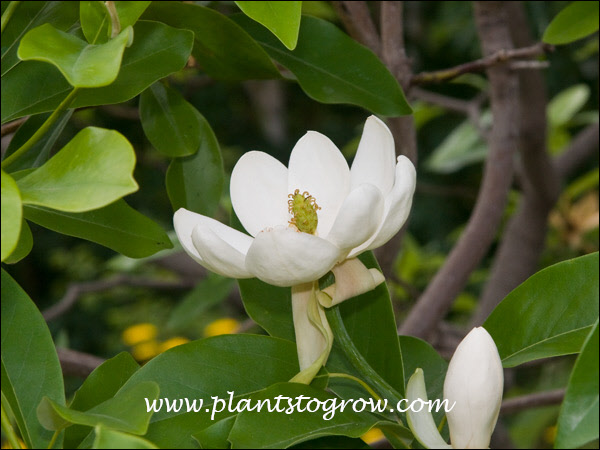
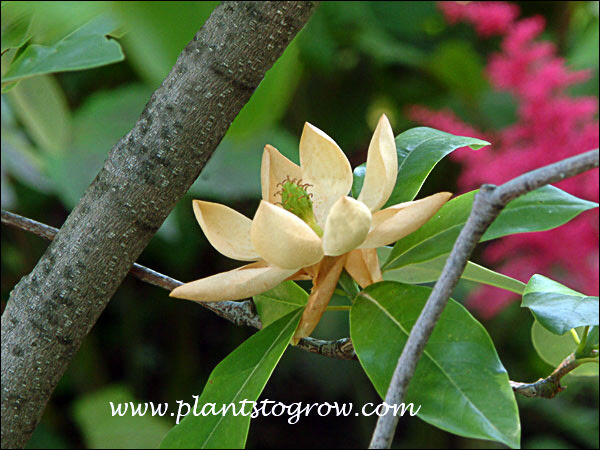
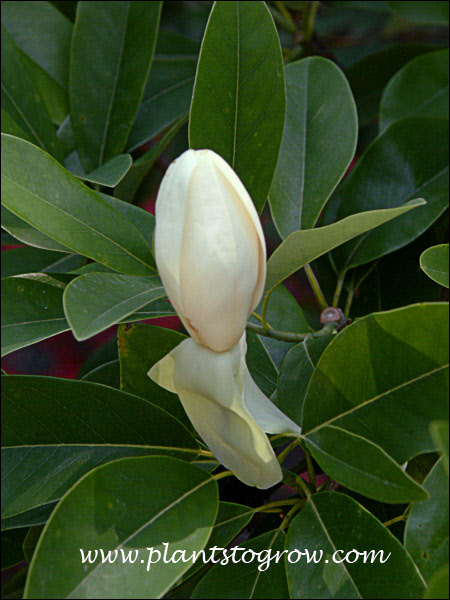
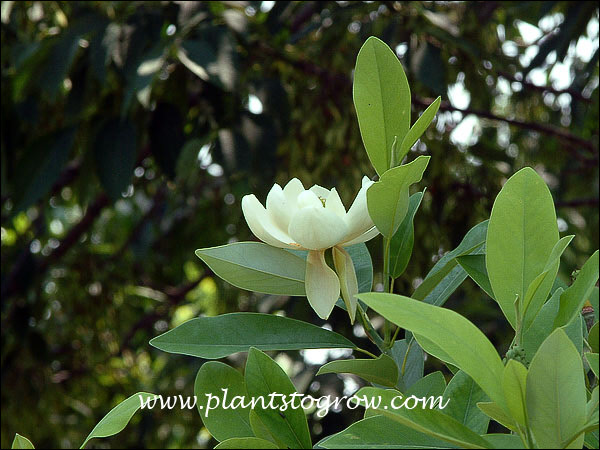
| Description | Sweet Magnolia (Magnolia virginiana) is a small native Magnolia with scented white flowers. |
|---|---|
| Pronunciation | (mag-NO-li-ah)(vir-jin-EE-ana) |
| Plant Type | Trees Deciduous |
| Hardiness Zone | (5)6-9 |
| Sunlight | full |
| Moisture | prefers moist wet soils wet acidic soils |
| Soil & Site | Average to moist, acidic, tolerating wet, swampy, and boggy soils. |
| Temperature | Zone #5 is probably on the northern fringes of its hardness range. Can survive to -20-25 degrees F |
| Flowers | Fragrant 2-3 inch white solitary flowers, sometimes up to 12 tepals. Flowers from June through August, depending on the region |
| Fruit | An aggregate of follicles with red to dark red seeds. |
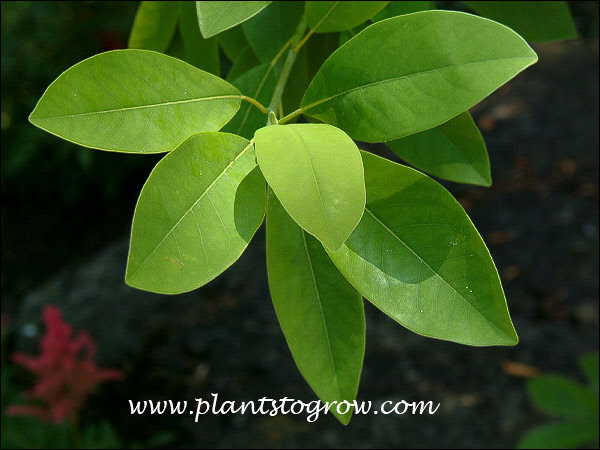
| Leaves | 5-inch oblong to elliptical leaves, glossy green, dark green 5 5-inch oblong to elliptical leaves on the upper surface and chalky white beneath. |
| Stems | Stems are pale green. pubescent, with stipule scars encircling the twig. The new stems have green terminal buds. Has thin, smooth, reddish-brown to gray bark |
| Dimensions | Reaches up to 10 to 35 feet tall, deciduous to evergreen, multi-stemmed shrub or tree. |
| Propagation | Since it is a native, it will be true from seeds. |
| Native Site | Native to the Piedmont regions of North America |
| Misc Facts | Introduced to Europe in the late 1600s, it was known as the "Beaver Tree" because colonists used its fleshy roots as bait to catch beavers in traps. The specific epithet, virginiana, is Latin and means "of Virginia." |
| Notes & Reference | #01-Manual of Woody Landscape Plants (Michael Dirr), #86-Magnolia A Gardener’s Guide (Gardiner), #270-North Carolina Extension Gardener Tool Box (https://plants.ces.ncsu.edu/plants) |

Cart