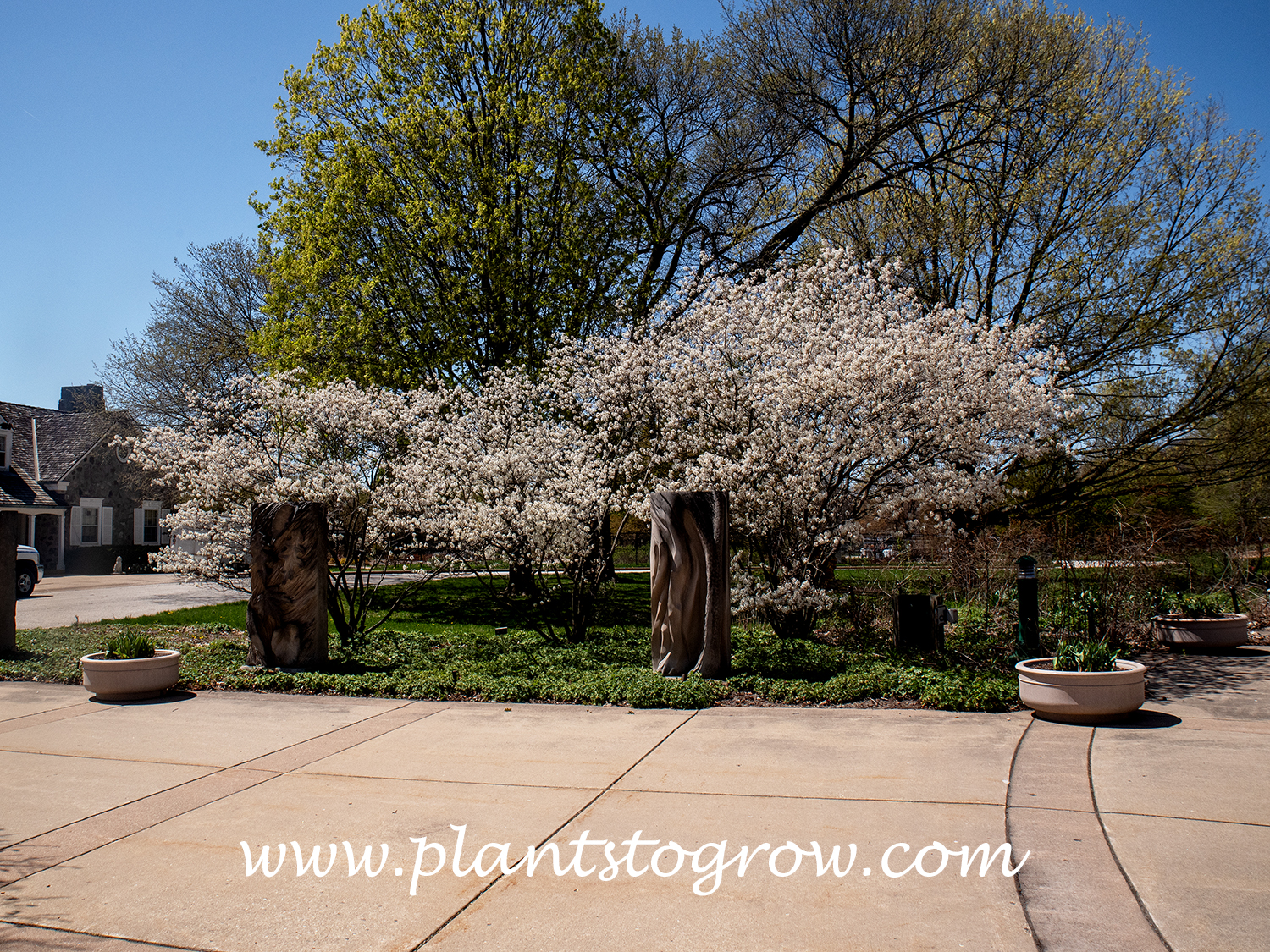
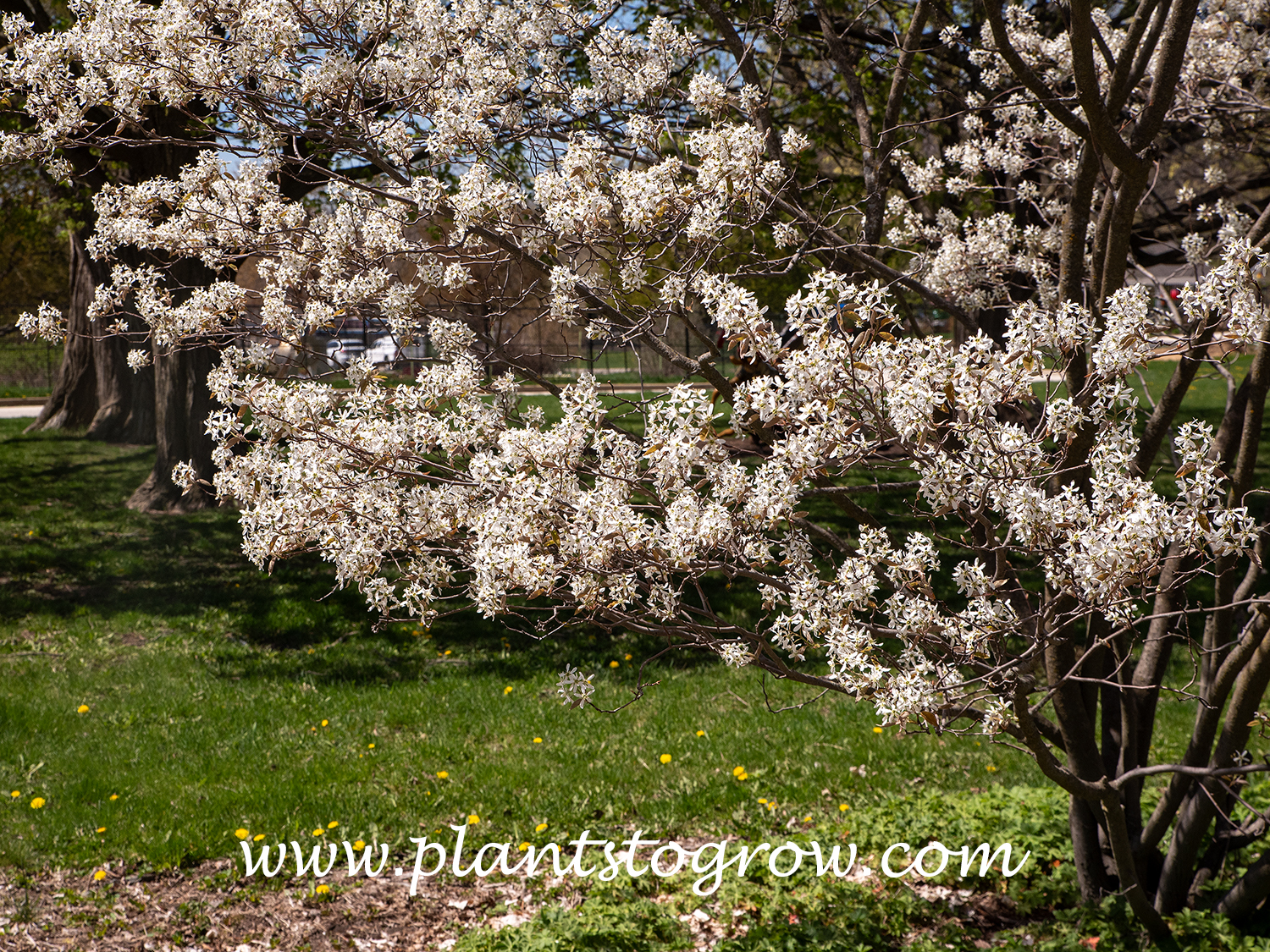
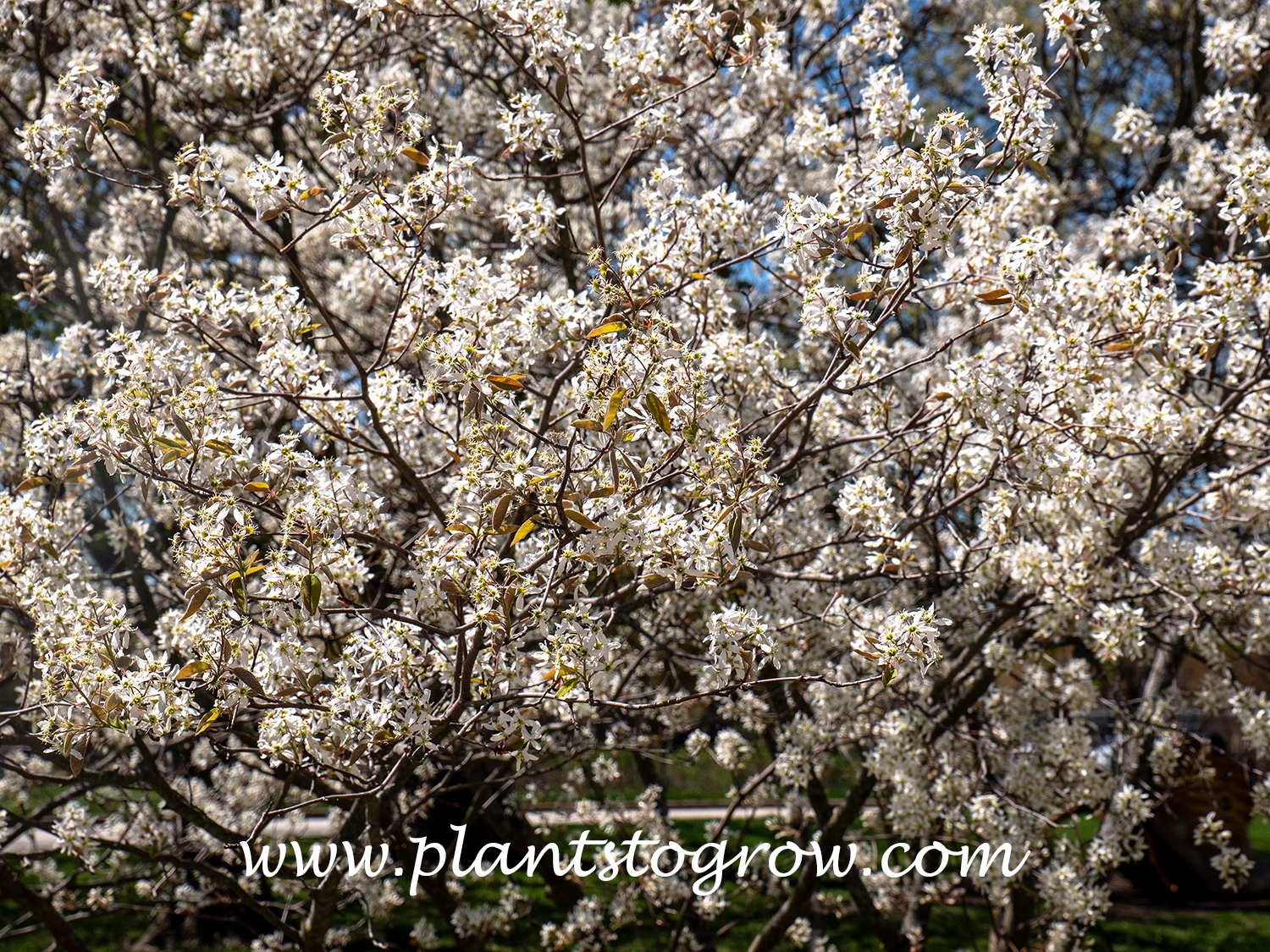
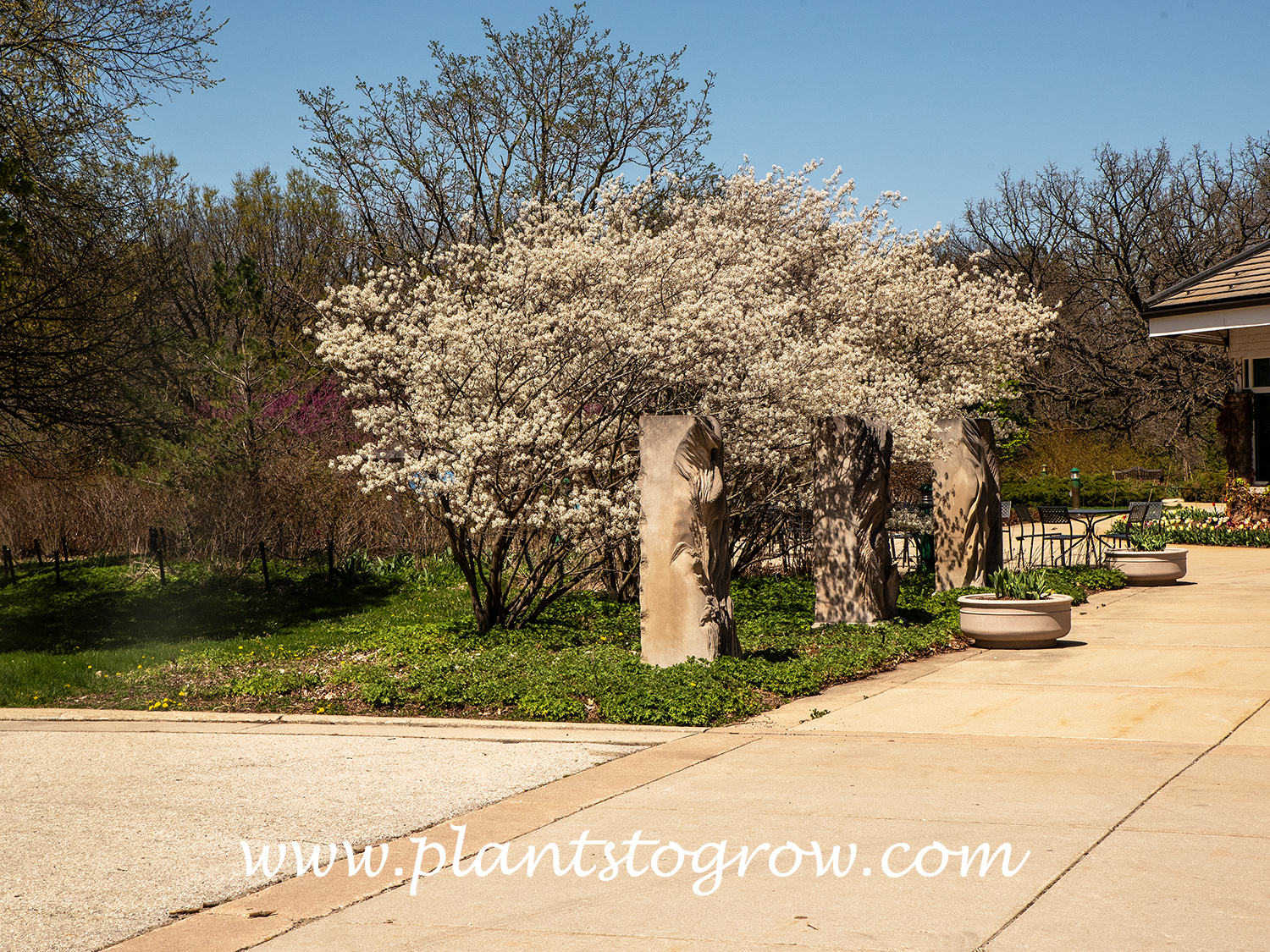

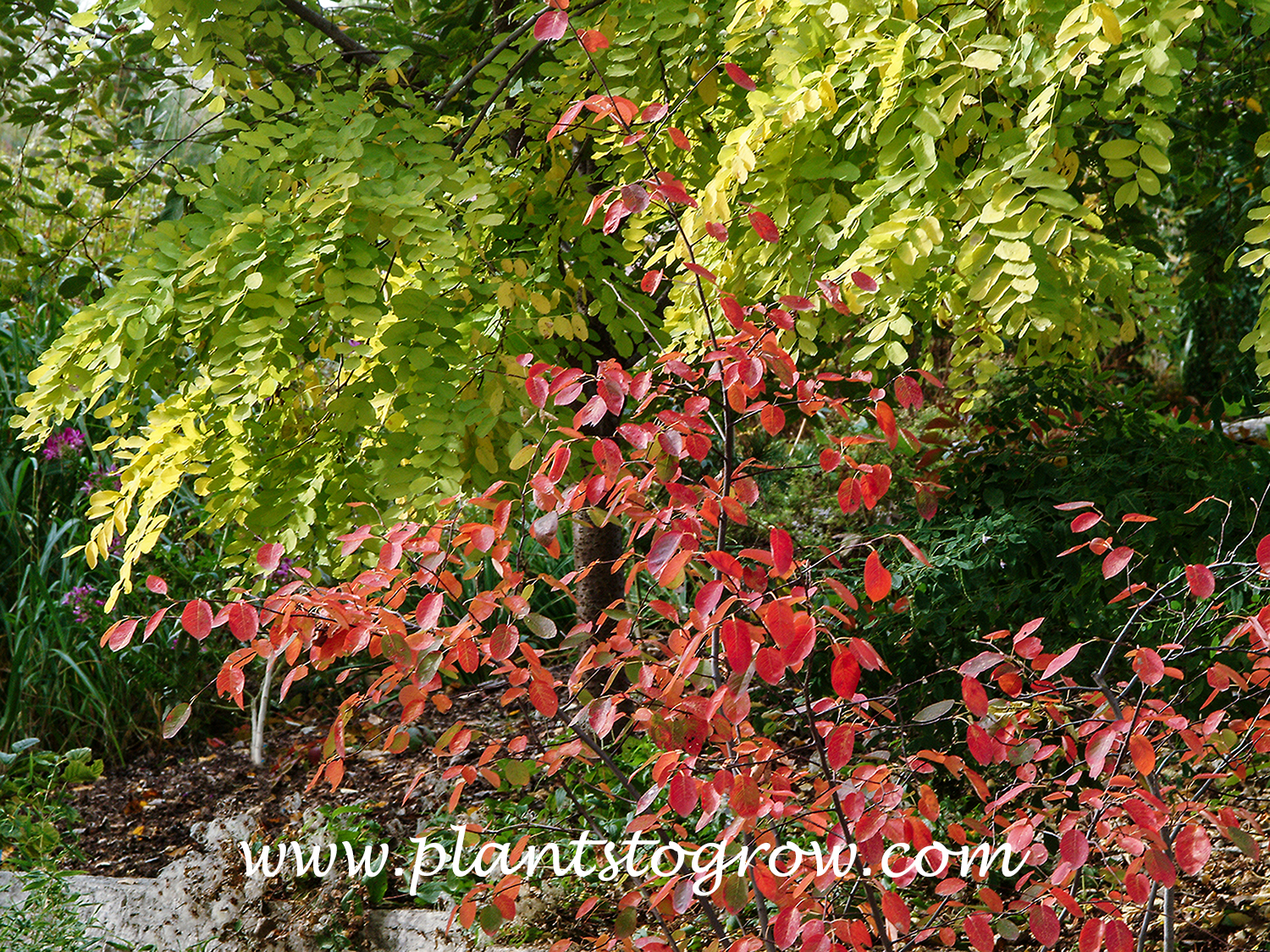
| Description | Prince Charles Serviceberry (Amelanchier laevis) can be considered a small tree or a large shrub. Has white flowers in the early spring, followed by edible fruit. Grows best in full sun to partial shade, moist sites, but seems to be tolerant of different conditions. |
|---|---|
| Pronunciation | (am-meh-LANG-kee-er)(LEE-viss) |
| Plant Type | Trees Deciduous |
| Hardiness Zone | 4-9 |
| Sunlight | Best in mostly sunny to partially shaded areas. |
| Moisture | average to moist |
| Soil & Site | average to moist, well-drained |
| Flowers | White, borne in pendulous racemes at the end of April, before the leaves have appeared. |
| Fruit | The tasty edible fruit starts green, turns red, and then ripens to purple, botanically a pome. Used to make plums or jams, used as a topping on cereals, or eaten right off the plant. Birds love this fruit. |
| Leaves | Simple, opposite, emerges as a grayish bronze color, changing to green; excellent fall color: yellows, reds, and oranges. |
| Stems | smooth and gray |
| Dimensions | 20-25 by 15 feet (HS) |
| Propagation | plant patent 6039, cuttings and tissue culture |
| Native Site | Usually a multi-trunked understory tree or tall shrub which is native to thickets, open woods, sheltered slopes, and wood margins in Eastern North America, where it typically grows 15-25. |
| Cultivar Origin | Prince Charles was selected by Tom Watson and Dr. Ed Hasselkuss, Madison, Wisconsin USA. Original plant is found the the University of Wisconsin Arboretum, Madison, Wisconsin USA |
| Misc Facts | The species plant has a few nicknames. Juneberry because the fruit ripens in June, Serviceberry because it blooms during the spring funeral services, also resembles the English fruit tree (Sorbus domestica) called service tree, and Shadblow because it blooms when the Shad runs in the spring. |
| Notes & Reference | #01-Manual of Woody Landscape Plants (Michael Dirr), #39-The Natural History of Trees (Donald Cultrose Pattie) |

Cart