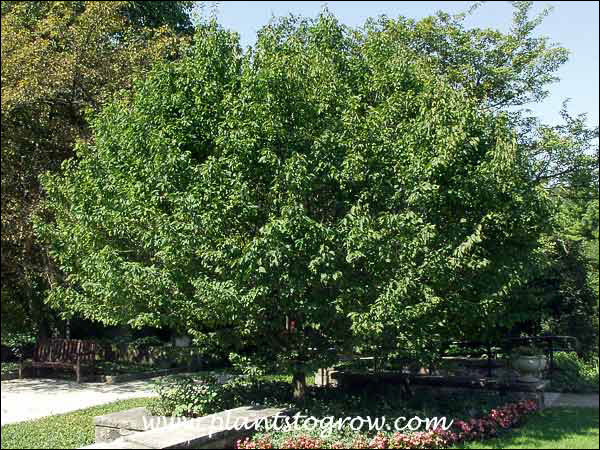
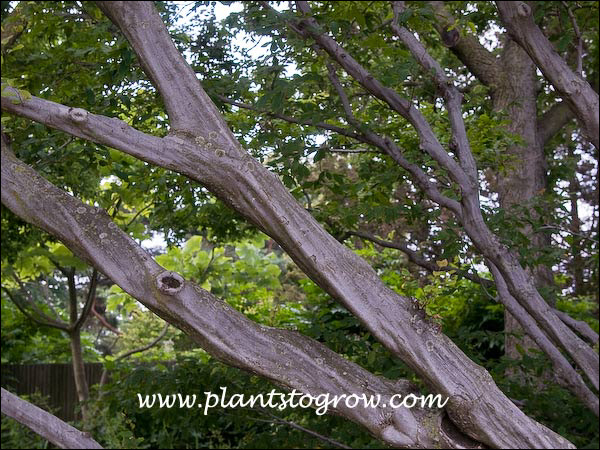
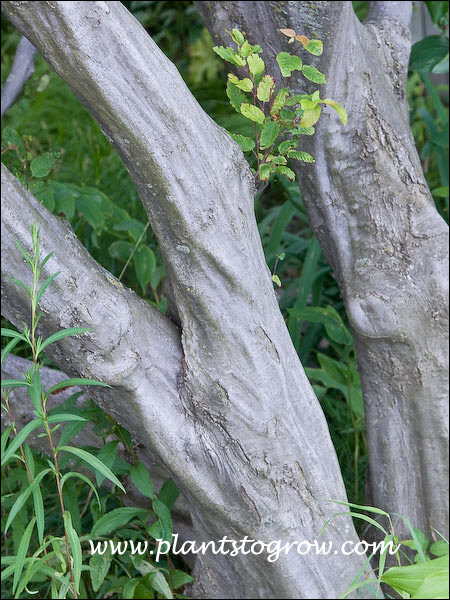
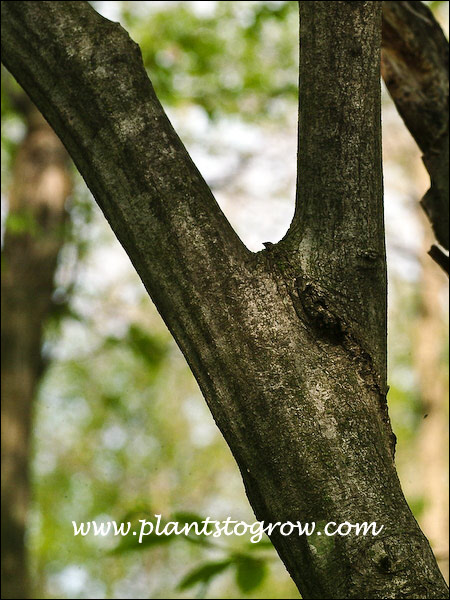
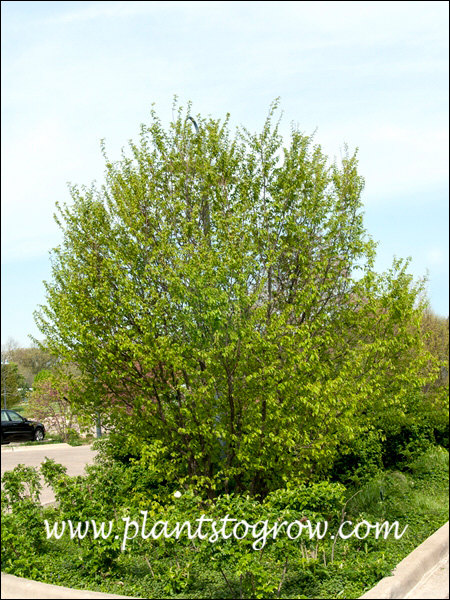
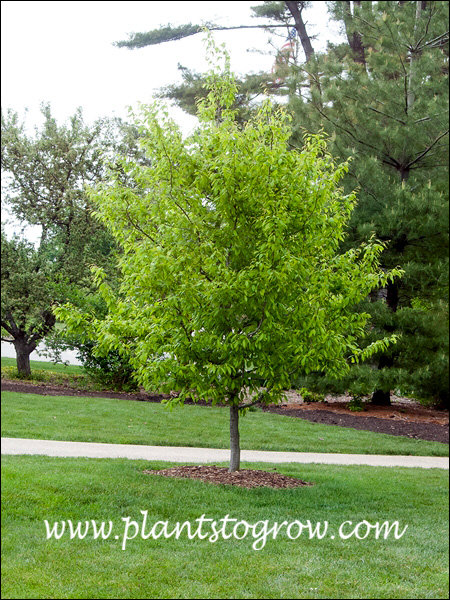
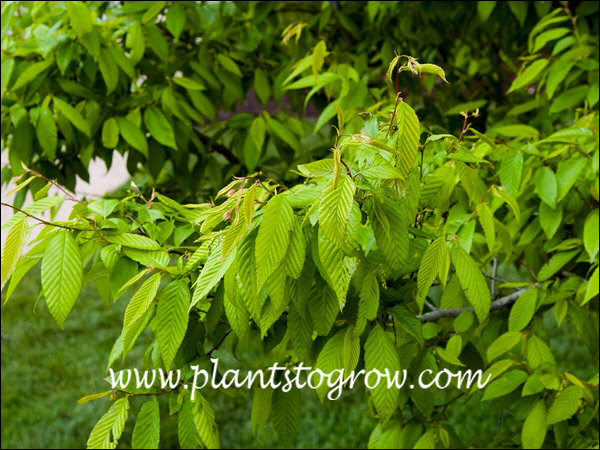
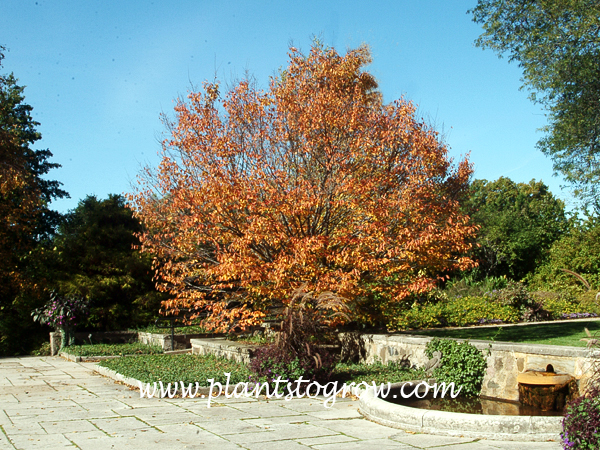
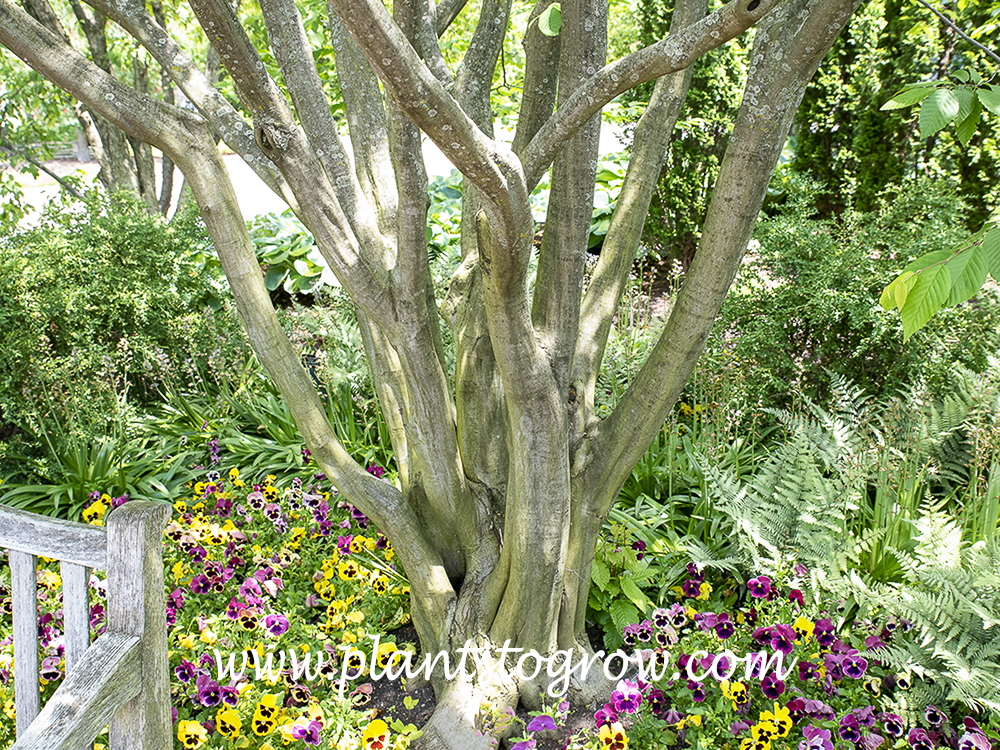
| Description | American Hornbeam (Carpinus caroliniana) is a small native tree that is often found growing as an understory. The stem has a muscle-like shape. |
|---|---|
| Pronunciation | (kar-PI-nus)(ka-ro-lin-i-A-na) |
| Plant Type | Trees Deciduous, Site author's observations |
| Hardiness Zone | (2)3-9 |
| Sunlight | Best in full sun but tolerates some shade. |
| Moisture | average, does well on moist soils and will tolerate flooding |
| Soil & Site | average, moist |
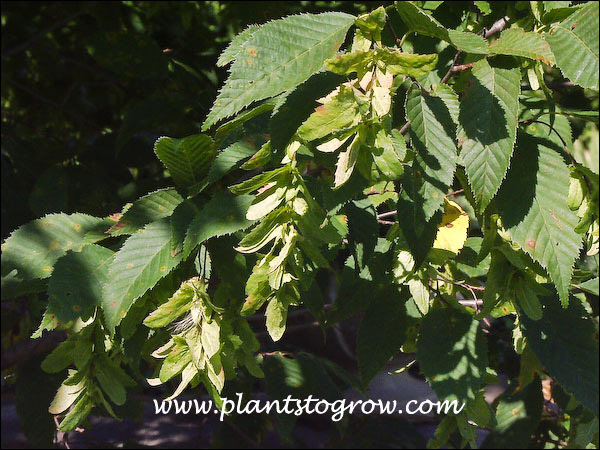
| Flowers | Flowers are in the form of a catkin, which has no scent or color to attract pollinators because they are wind-pollinated. |
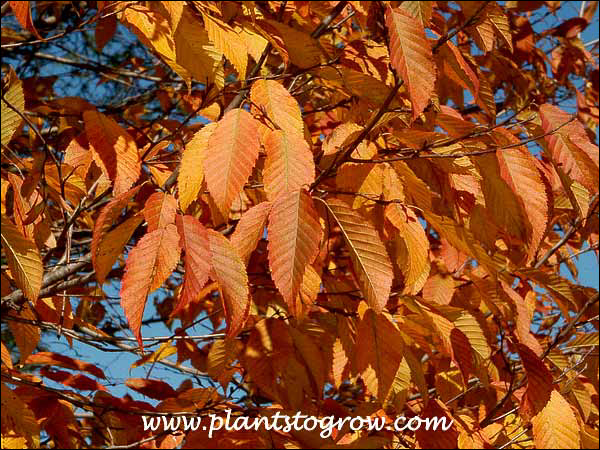
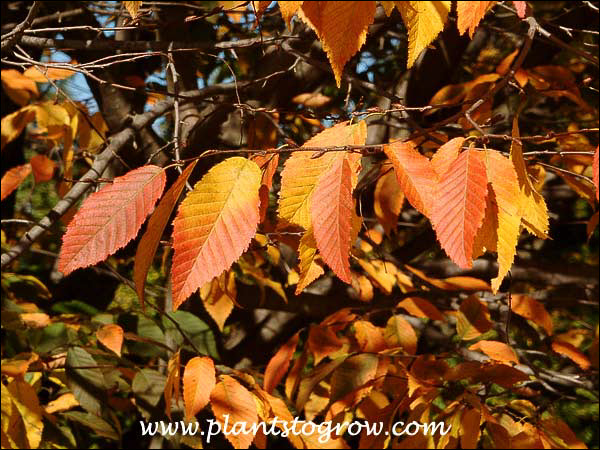
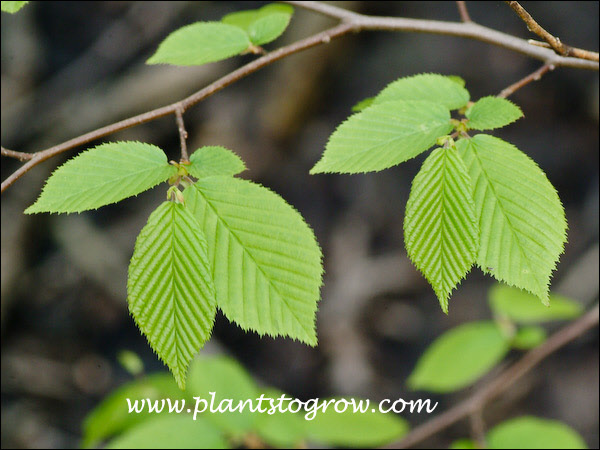
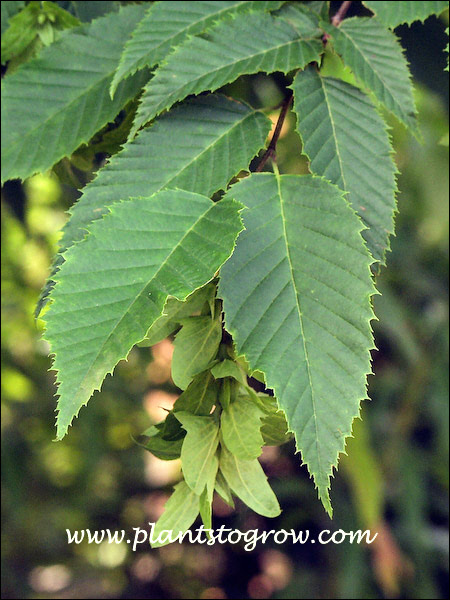
| Leaves | Green in summer, with yellow to orange fall color. |
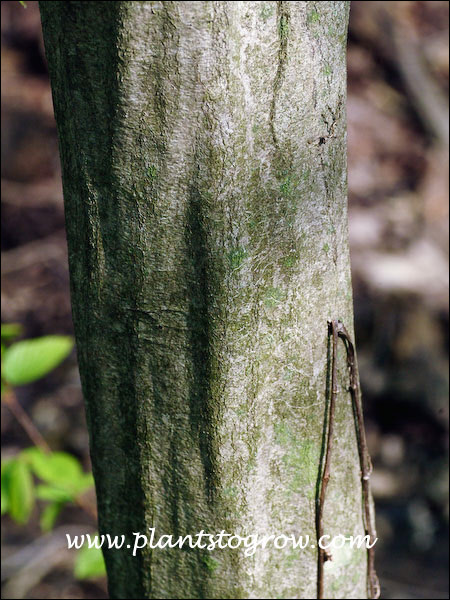
| Stems | Bark is smooth, gray, and fluted; wood is very hard and heavy. Many branches have zig-zag twigs. |
| Roots | shallow rooted |
| Dimensions | 20-30 feet growing in good sites, single or multiple stems |
| Propagation | It is propagated by seed, which requires complex, long-term cold-moist stratification or fall sowing for spring germination, as germination can be slow and sporadic, taking up to 18 months. Cuttings are difficult to root. |
| Native Site | Native to North America and Canada |
| Misc Facts | Hop Hornbeam comes from "horn" for toughness and "beam," an old word for tree. |
| Author's Notes | Every spring, I like to walk through the Martins Woods Conservancy in Big Bend, Wisconsin (USA). This tree is prominent as an understory and many have the muscle like ridges on the stem. The area they grow is moist and shaded. |
| Notes & Reference | #01-Manual of Woody Landscape Plants (Michael Dirr), #181-Native Trees for North America (Guy Sternberg), #184-Michigan Trees (Burton V. Barnes, Warren H. Wagner), #274-Site Authors' observations in natural and landscape use |

Cart