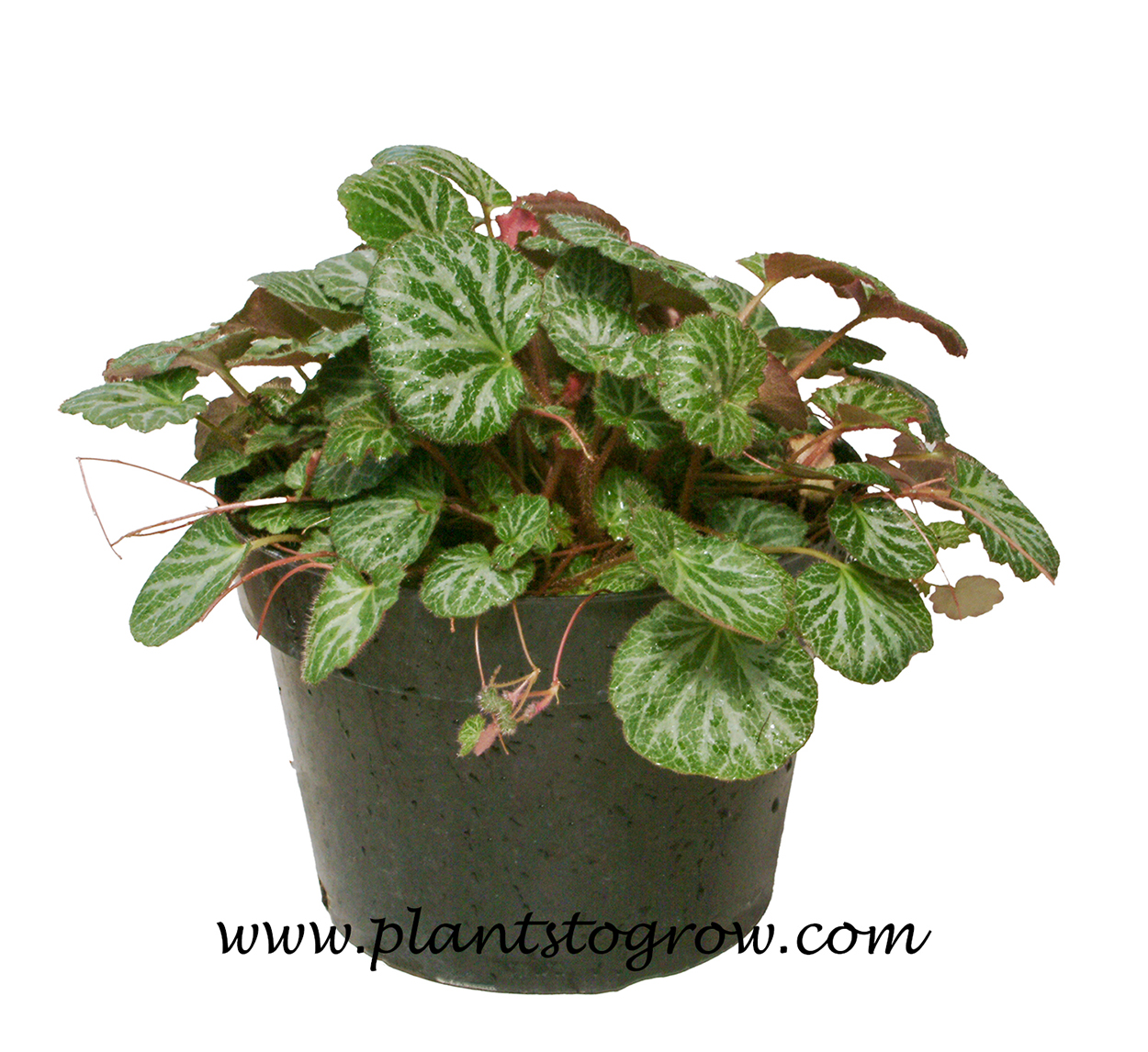
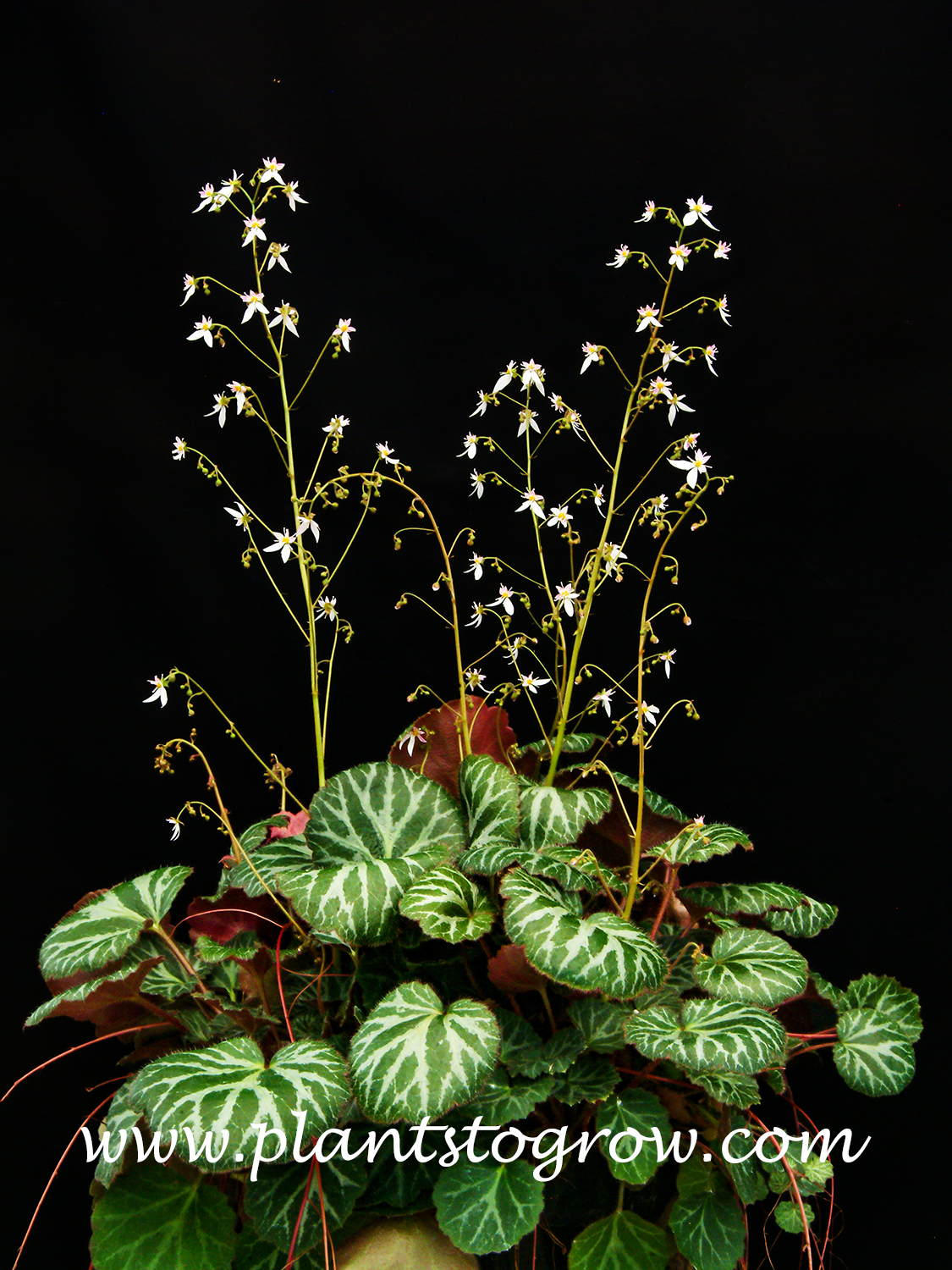
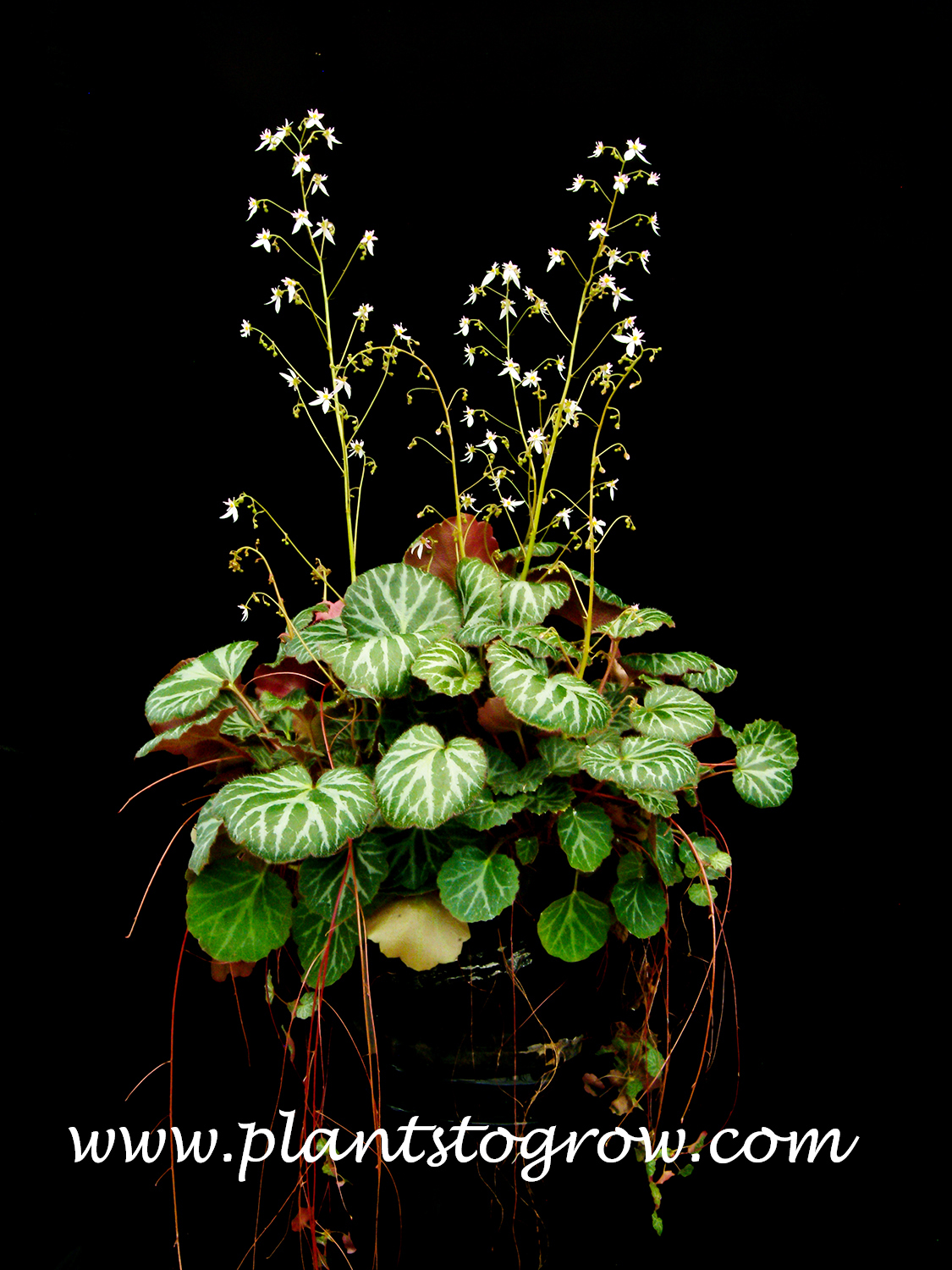
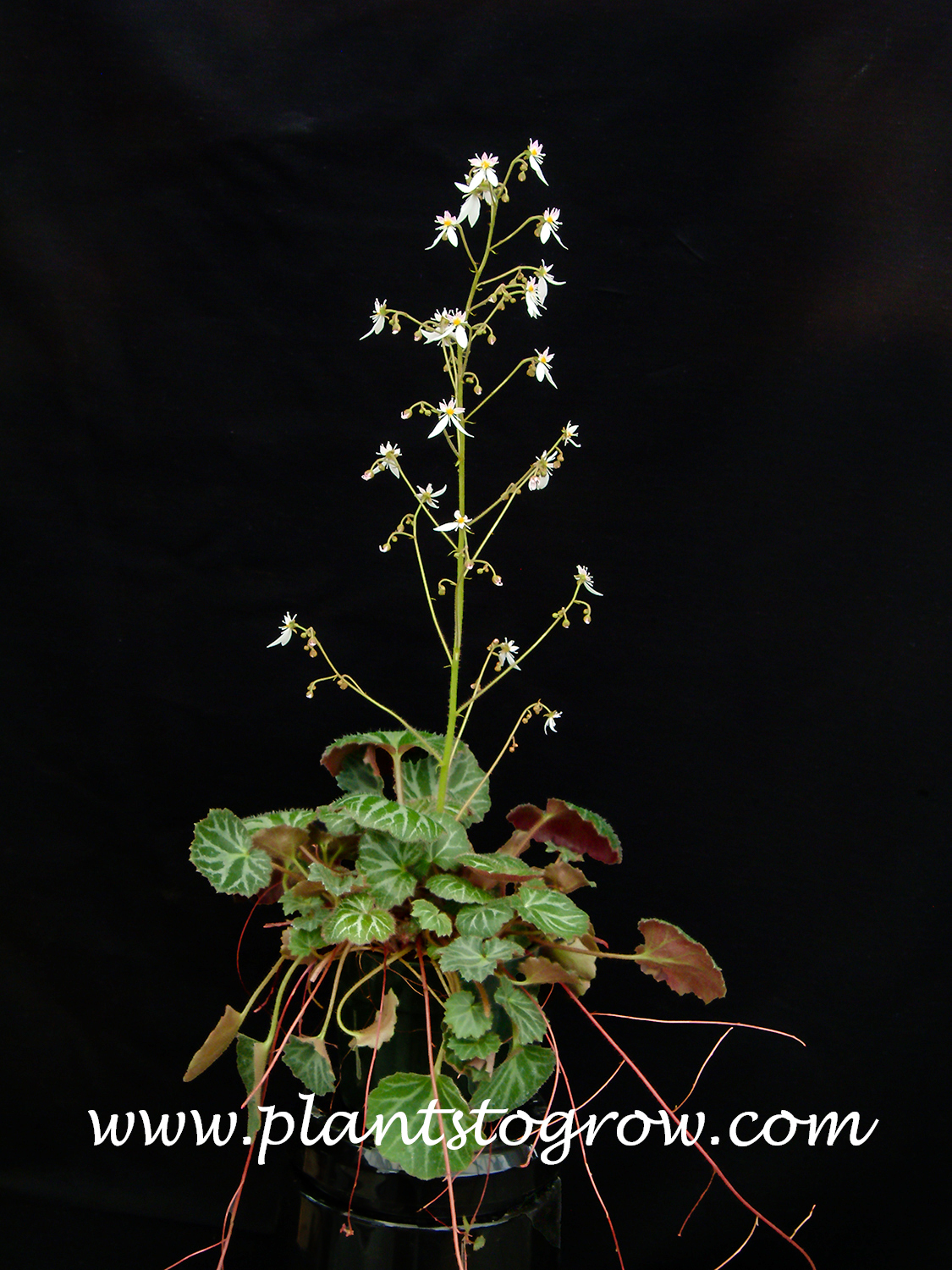
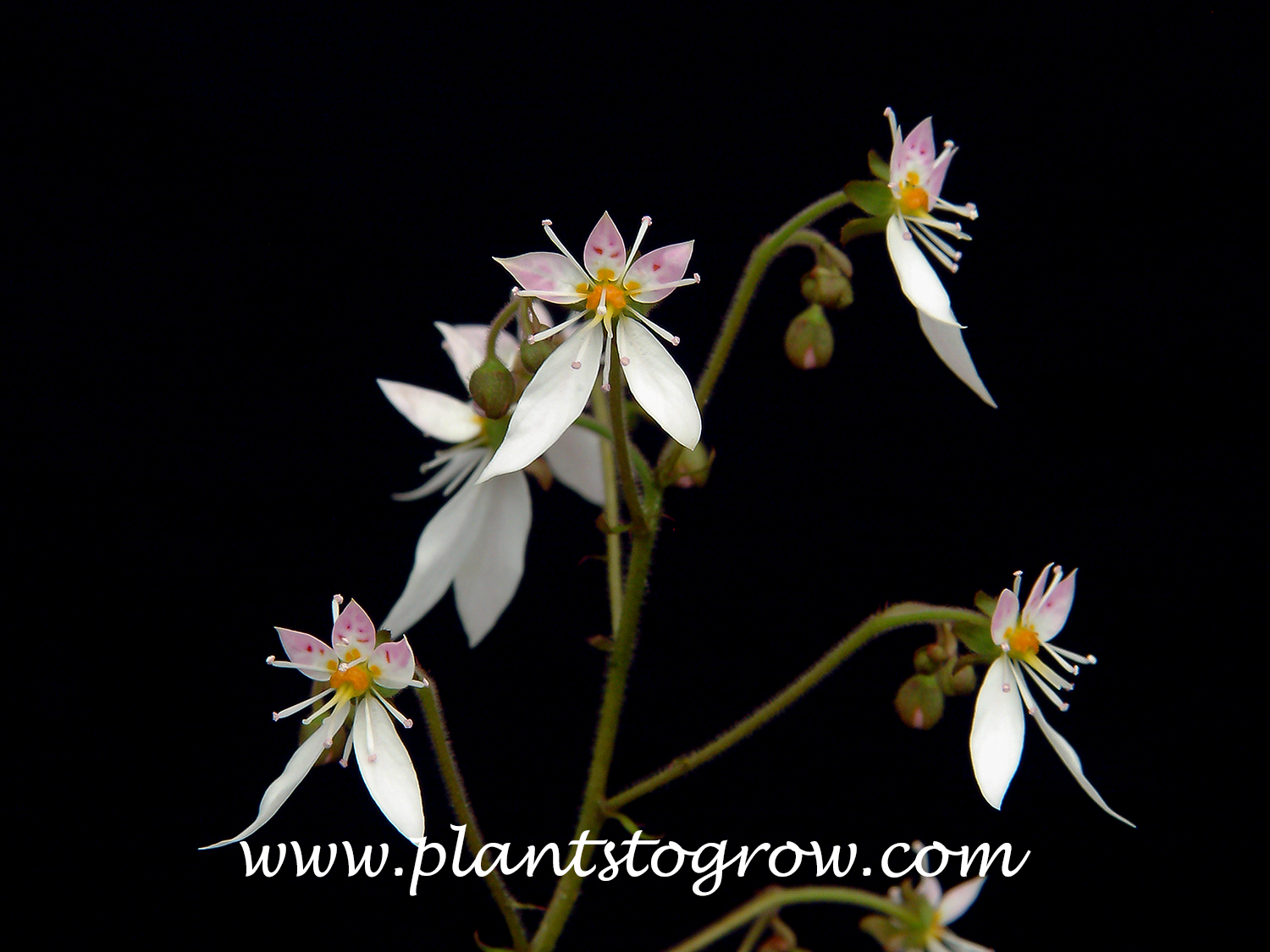
| Description | Strawberry Begonia (Saxifraga stolonifera) A relatively easy plant to grow. It produces many strawberry-like runners from the mother plant, and each runner will produce a small plantlet. Grows best in bright to moderate light conditions. It isn't a strawberry or Begonia. |
|---|---|
| Pronunciation | (saks-IH-frag-ah)(stoh-lon-NIF-er-ra) |
| Plant Type | Indoor Foliage, Perennial Tender, Site author's observations |
| Hardiness Zone | 6-7 |
| Sunlight | bright-moderate, no direct |
| Moisture | evenly moist |
| Growing Media | average house |
| Temperature | average house to cool |
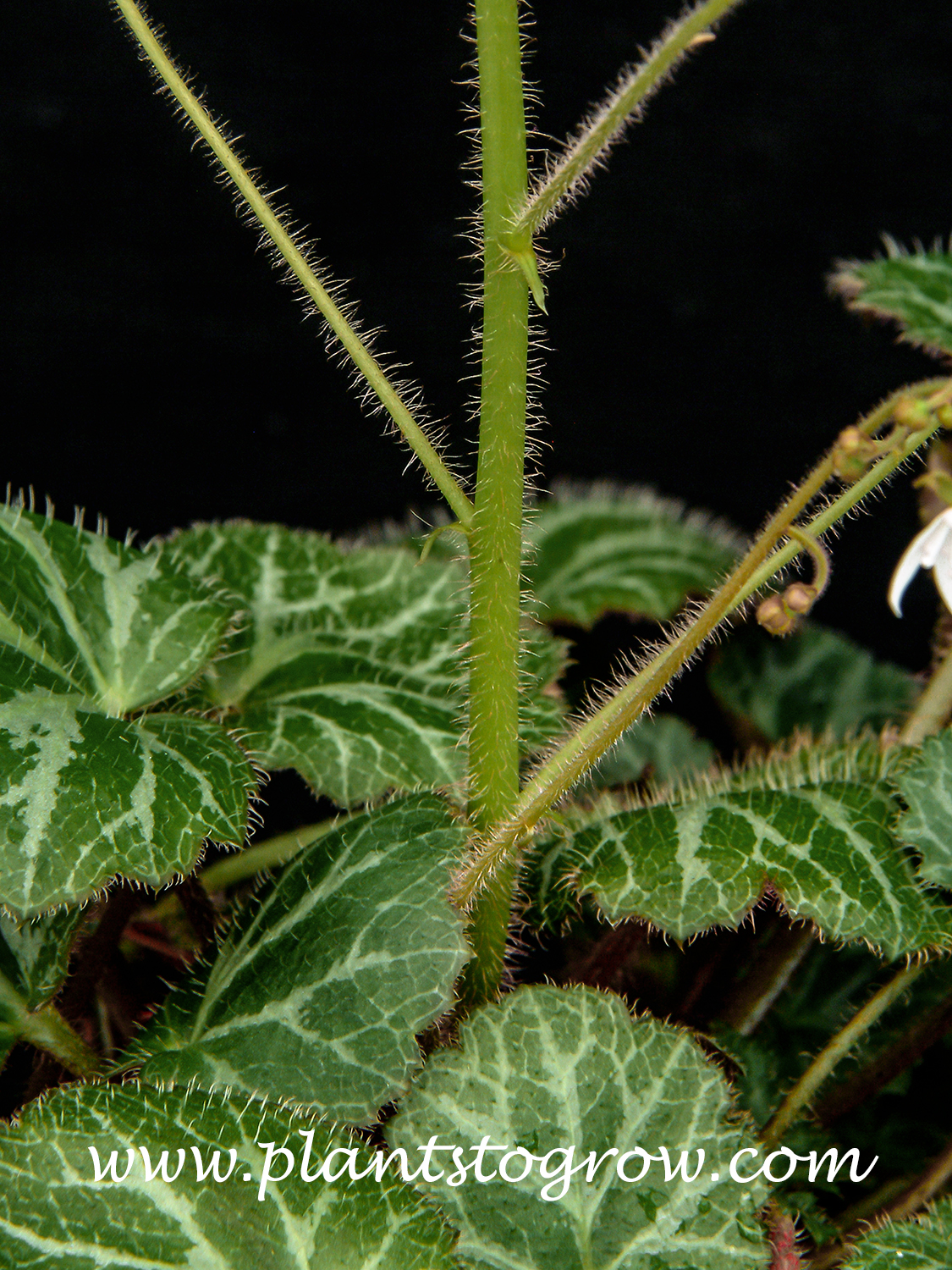
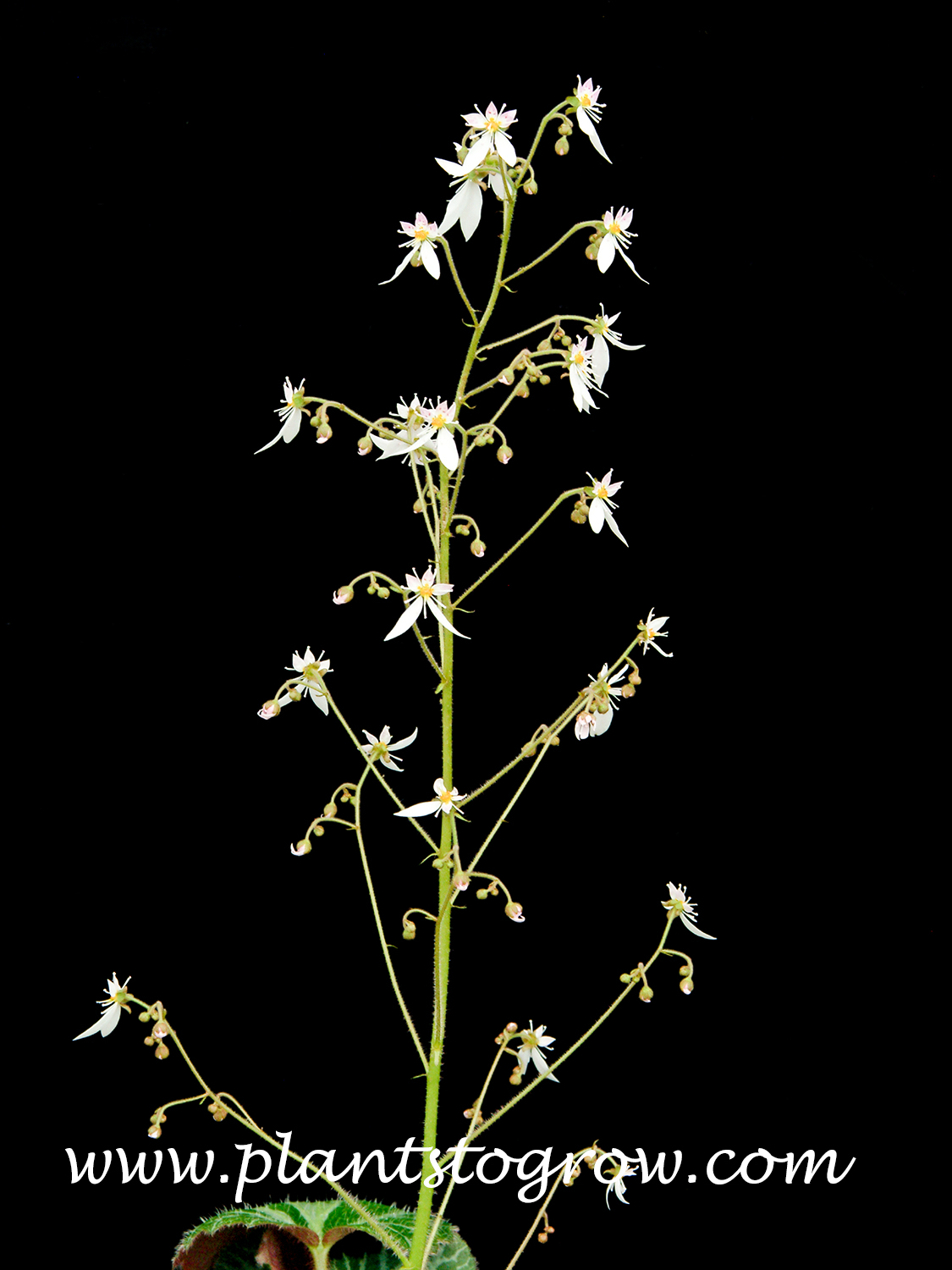
| Flowers | The flower inflorescence is an airy panicle. The white flowers are asymmetrical, each with two large lower petals and 3-4 smaller upper petals. |
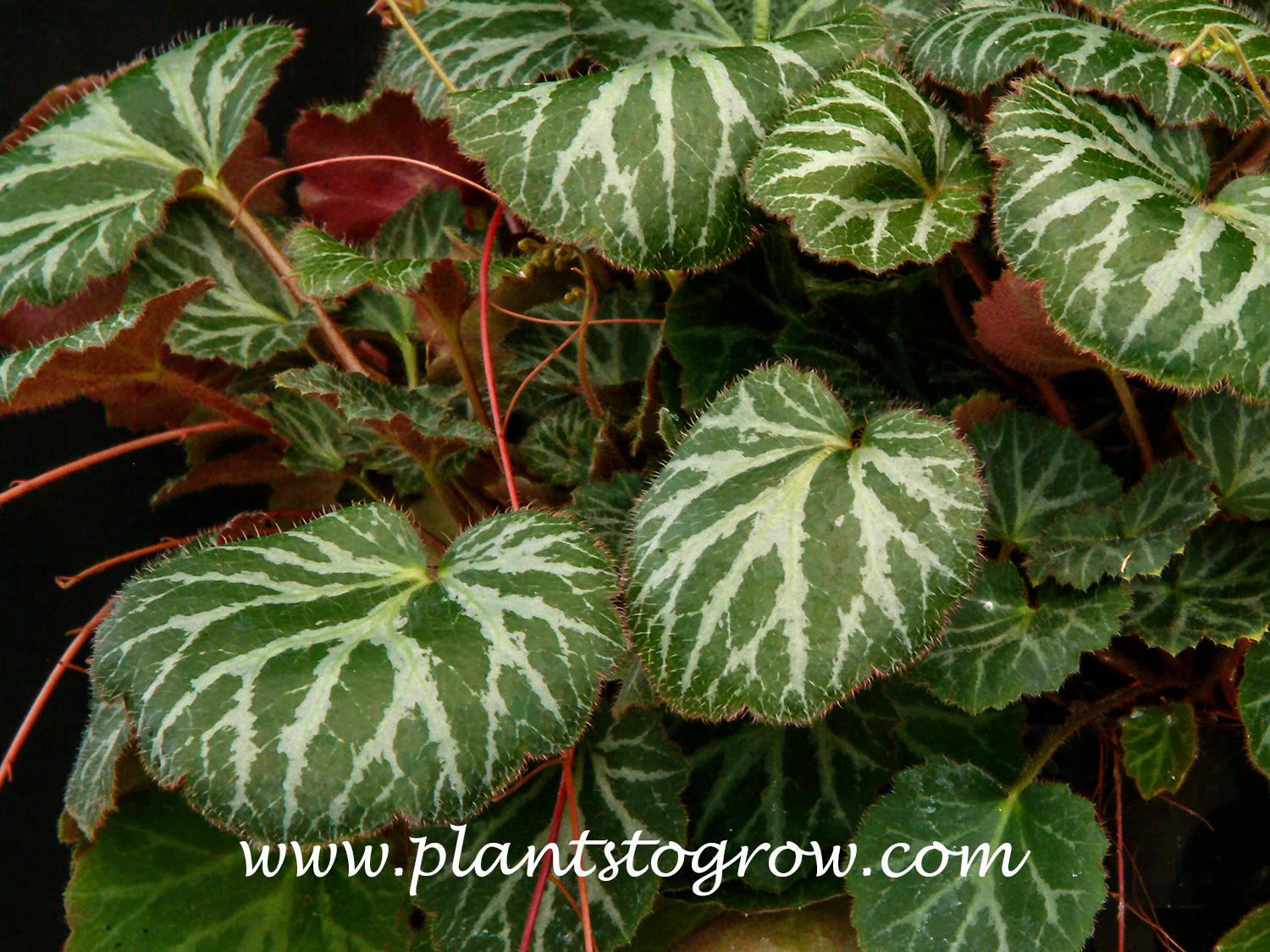
| Leaves | The leaves are reddish green, with silver veins and a purple underside. |
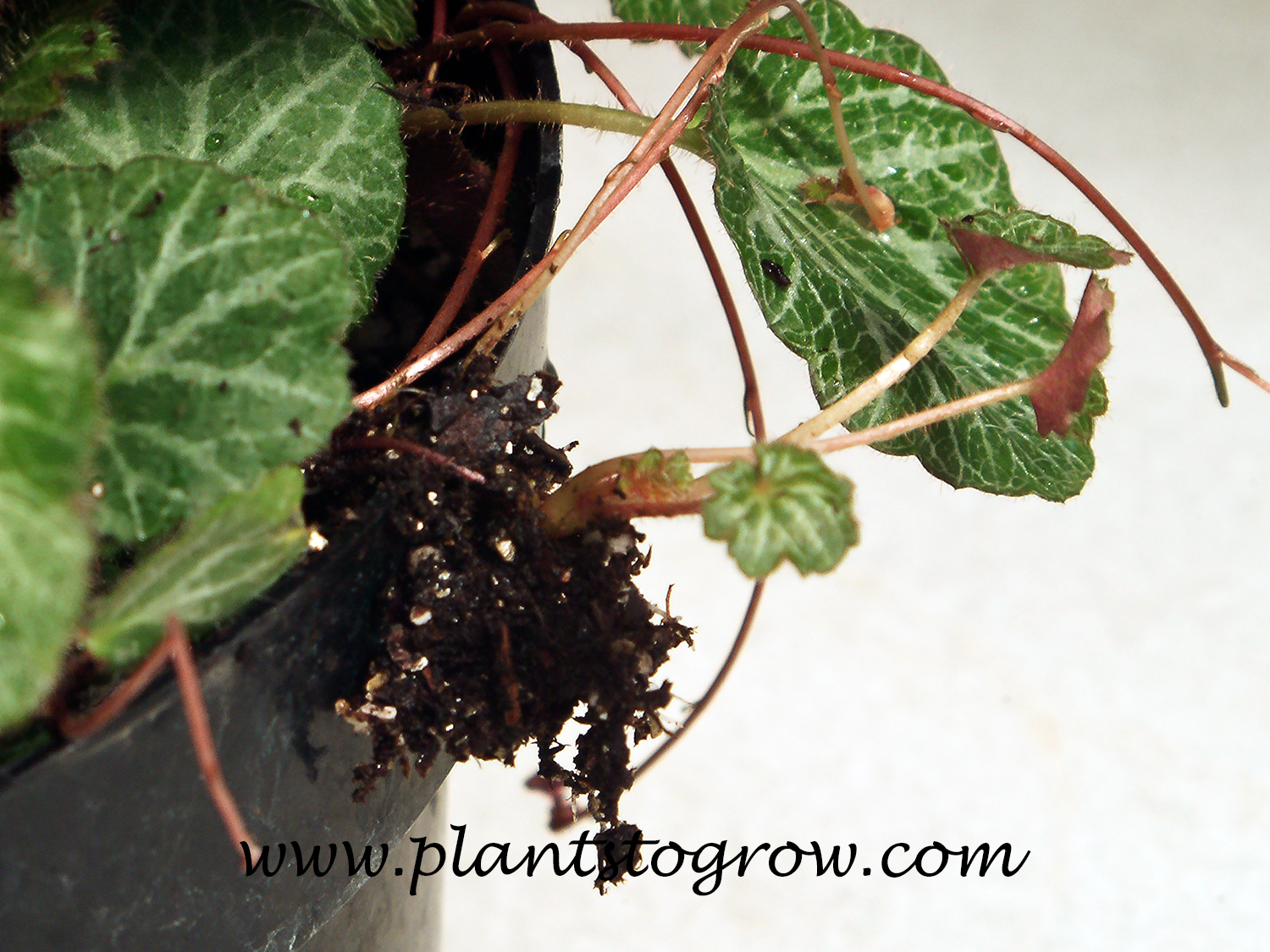
| Stems | It produces many red strawberry-like stolons, each terminating in a plantlet. |
| Dimensions | With constant division it can be kept in smaller pots or let to fill out larger ones. I have had them easily fill out 10-12" pots. |
| Maintenance | Needs to be divided to control size and rejuvenate the plant. |
| Propagation | Rooting of the plantlets is one of the main ways to increase this plant. Either detach a large plantlet and place on some rooting media or leave the plantlet attached to the mother plant and place it on the surface of some media in another pot and it will quickly root. The plant is very shallow rooted, pulling off clumps (division) is rather easy. |
| Native Site | Japan and China |
| Misc Facts | The genus name comes from the Latin words saxum, meaning rock, and frangere, meaning to break, referring to the plant growing in rock fissures and, over time, breaking the rock apart. The species name means "having stolons". AKA: Mother-of-Thousands, Strawberry Begonia, Strawberry Geranium |
| Author's Notes | Grew 100's of these plants at the high school greenhouse where I taught Horticulture. East to grow and propagate. |
| Notes & Reference | #275-North Carolina Botanical Garden (ces.ncsu.edu/find_a_plant/), #274-Site Authors' observations and growing experiences |

Cart