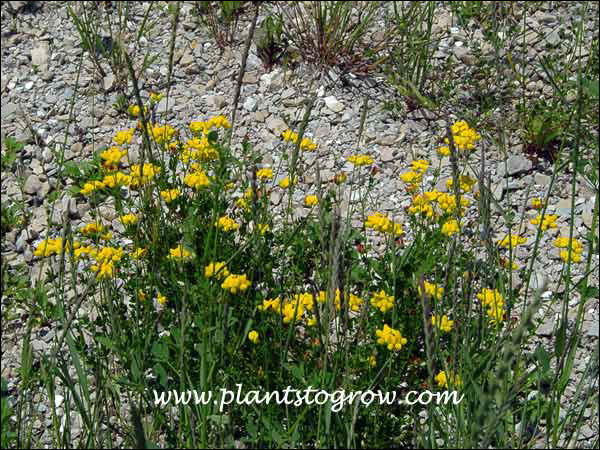
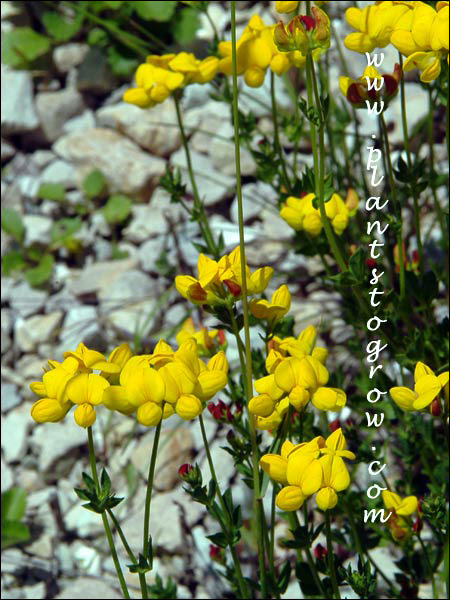
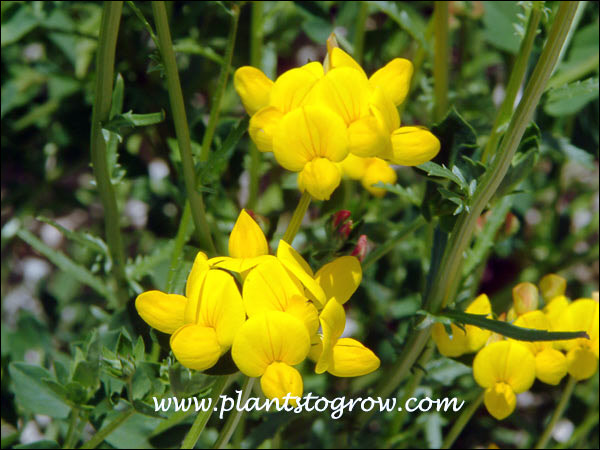
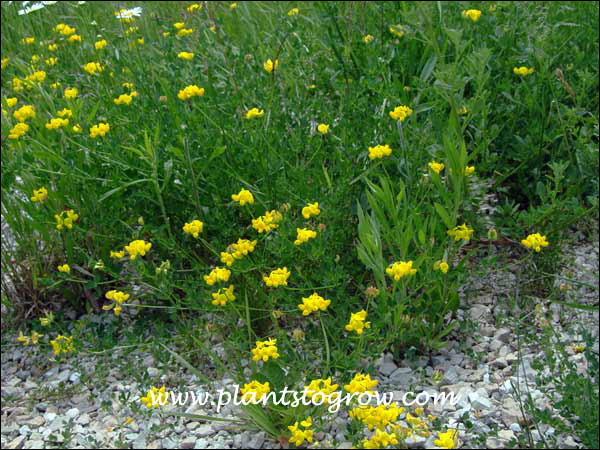
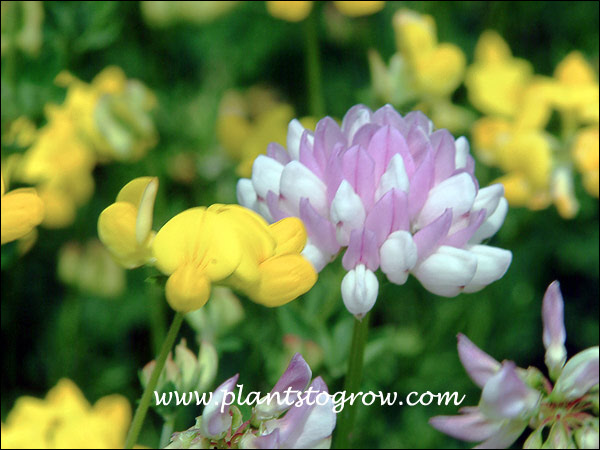
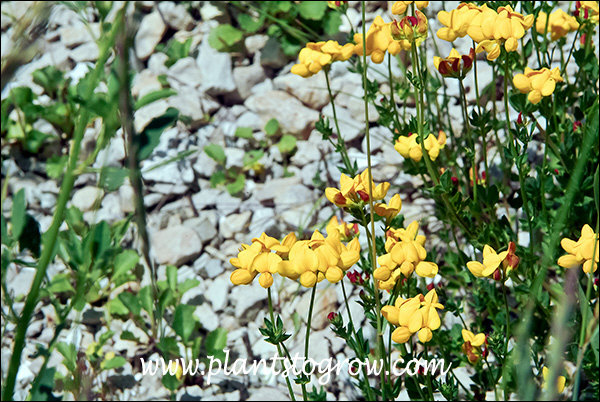
| Description | An introduced yellow flowering ground cover that has escaped and become ecologically invasive. |
|---|---|
| Plant Type | All Plants, Weeds |
| Hardiness Zone | 5 |
| Sunlight | full |
| Moisture | average to dry, very adaptable |
| Soil & Site | disturbed areas, average, poor and dry, very adaptable |
| Flowers | pea-like, bright yellow changing to orange, sometimes with red streaks; borne in flat top clusters (umbel), 4-8 at the terminal |
| Fruit | resembles a bird's foot |
| Leaves | 5 part leaves, pinnately compound, 3 terminal oval leaflets, 2 smaller leaflet like stipules at the base |
| Stems | spreading by above ground runners (rhizomes) |
| Roots | deep penetrating tap root, |
| Dimensions | 6-12 inches plus in height, spreads |
| Maintenance | can be very invasive spreading by seeds |
| Propagation | seeds, spreads by rhizomes |
| Misc Facts | Lotus from Greek, referring to a fruit that when tasted will cause the loss of memory of their home. Corniculata refers to the horns on the flower. |
| Author's Notes | To me this plant is most visible in the dry times of the summer when grass is brown and along the roadsides the Birds Foot Trefoil is blooming. Pretty but invasive!! It's the yellow version of the invasive Crown Vetch. I have found over 24 common names and spellings for this plant and there are over 70 in the British Isles. |
| Notes & Reference | #49-The History and Folklore of North American Wildflowers(Timothy Coffey), #100-Wildflowers of Wisconsin and the Upper Midwest (Black and Judziewicz), #101-Invasive Plants of the Upper Midwest (Betty Czarapata)) |

Cart