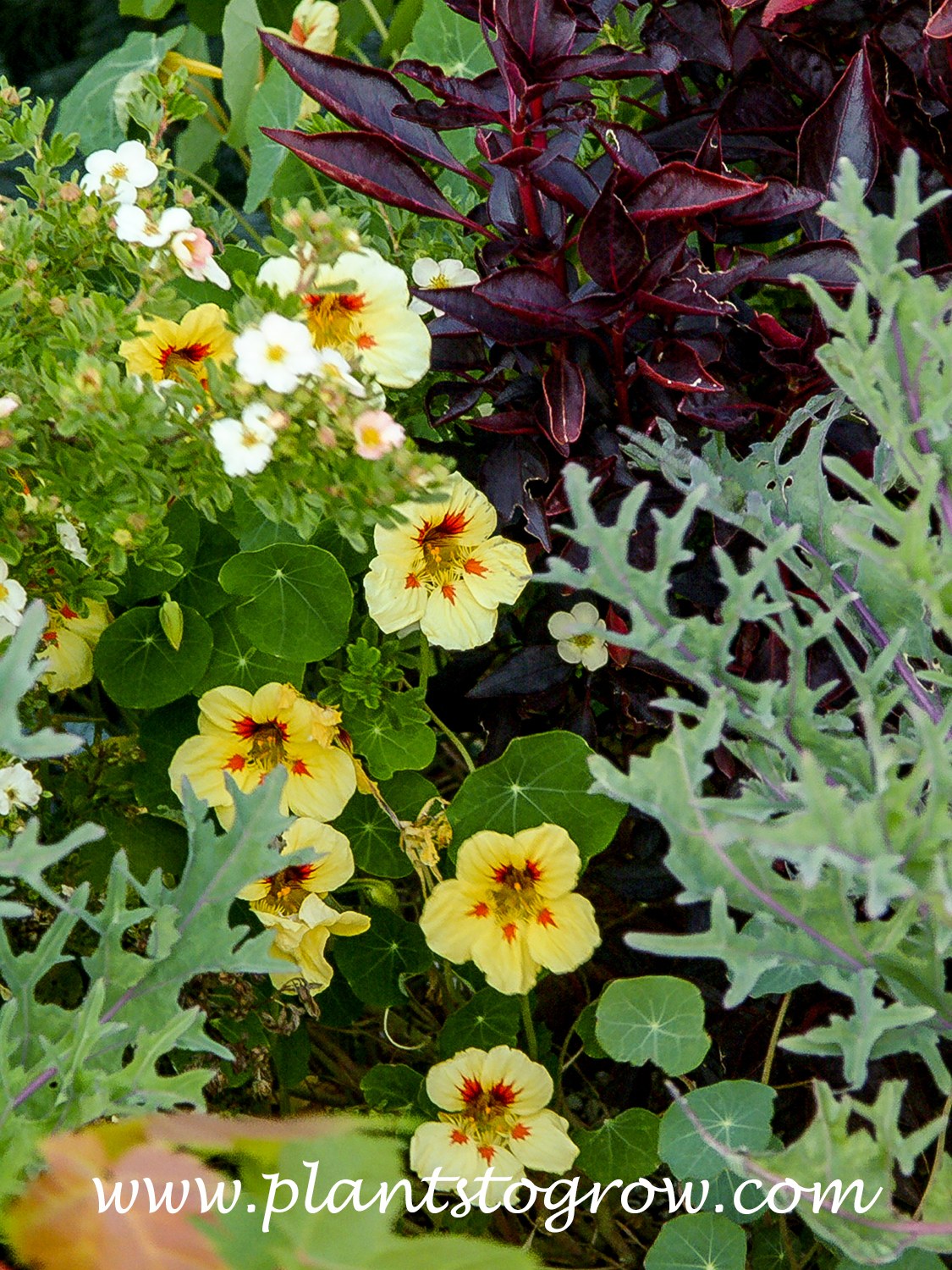
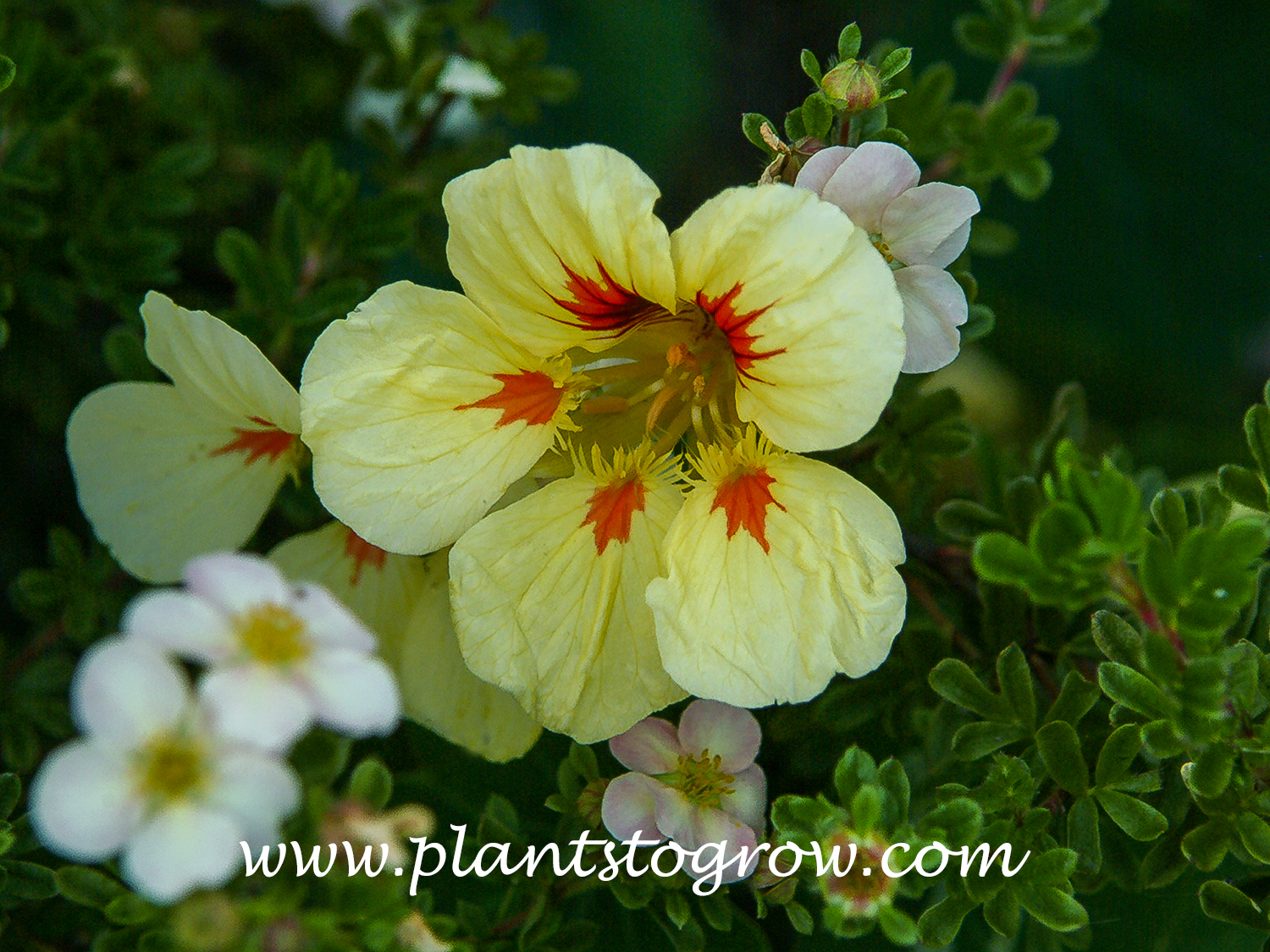
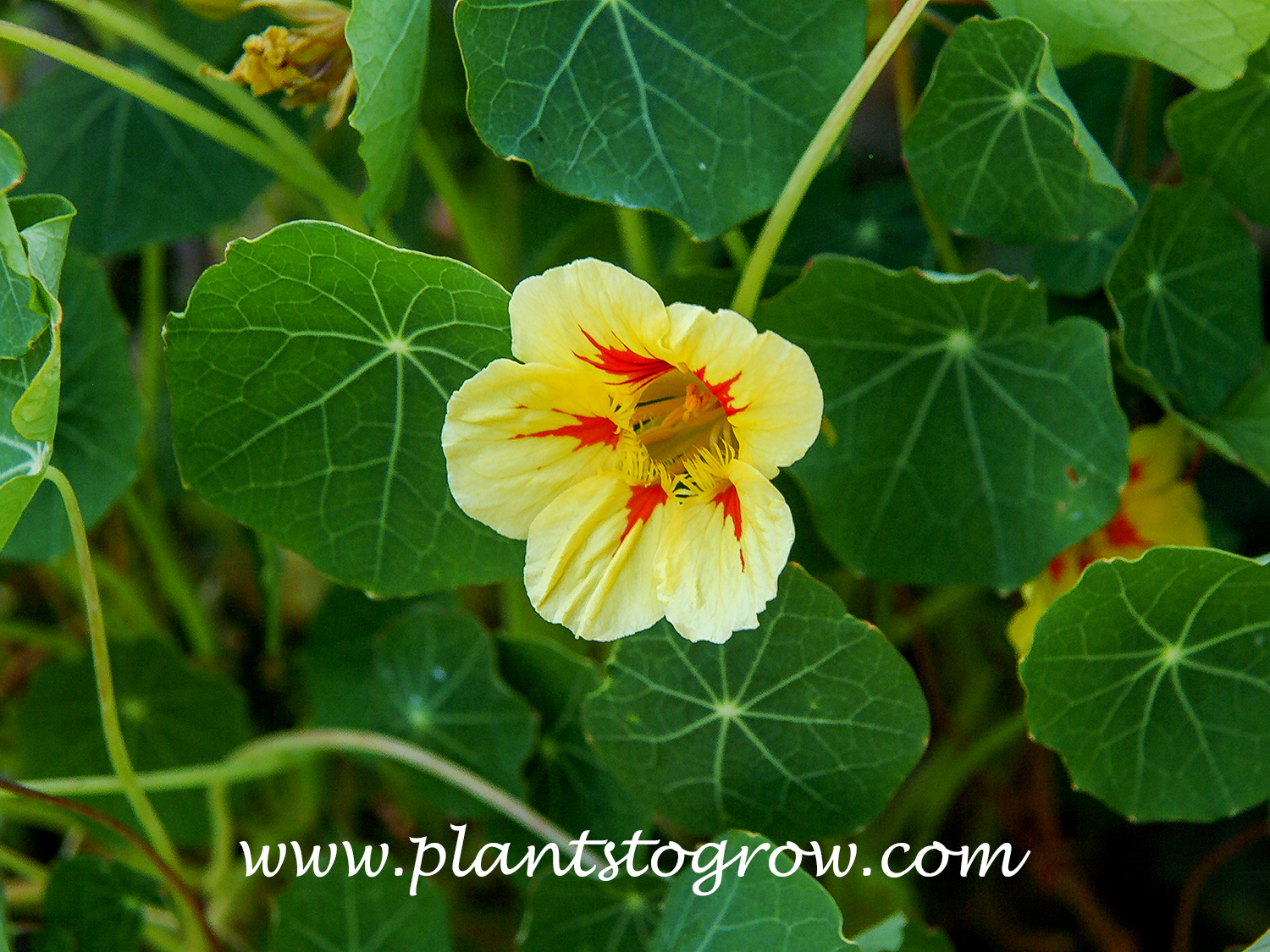
| Description | Nasturtium Peach Melba Superior (Tropaeolum majus nanum) a florific Nasturtium with cream to yellow flowers. |
|---|---|
| Pronunciation | (troo-PEE-oo-lum)(MA-jus)(nah-STER-shum) |
| Plant Type | Annuals, Perennial Tender, Tender perennials often grown as annuals |
| Hardiness Zone | 9-11, annual else where |
| Sunlight | full sun, light shade |
| Moisture | Prefers evenly moist, quickly wilts if too dry, easily rots if too wet |
| Soil & Site | average, well drained |
| Growing Media | average container media |
| Temperature | Tolerates colder temperatures; newer growth will be damaged in freezing conditions. |
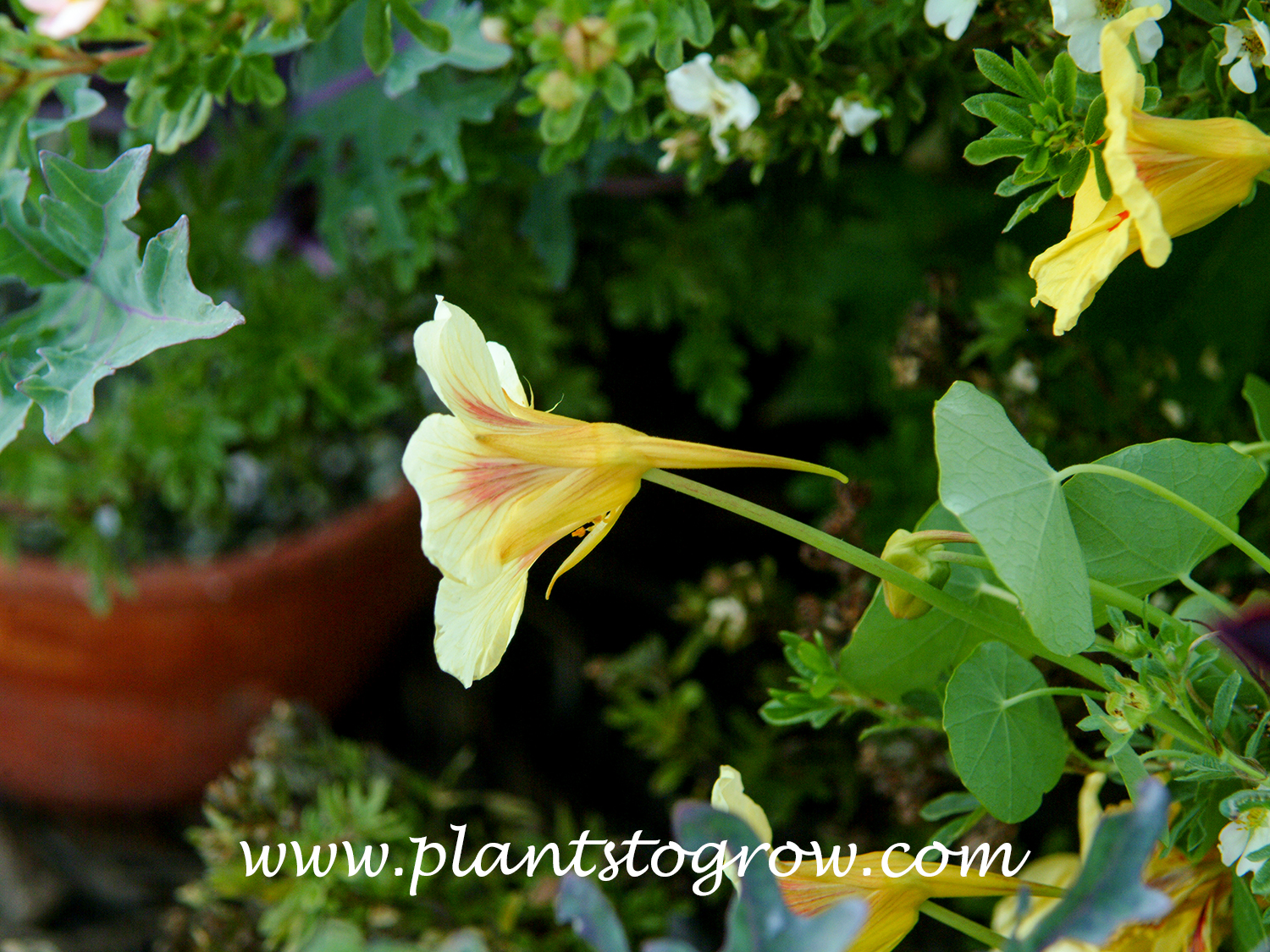
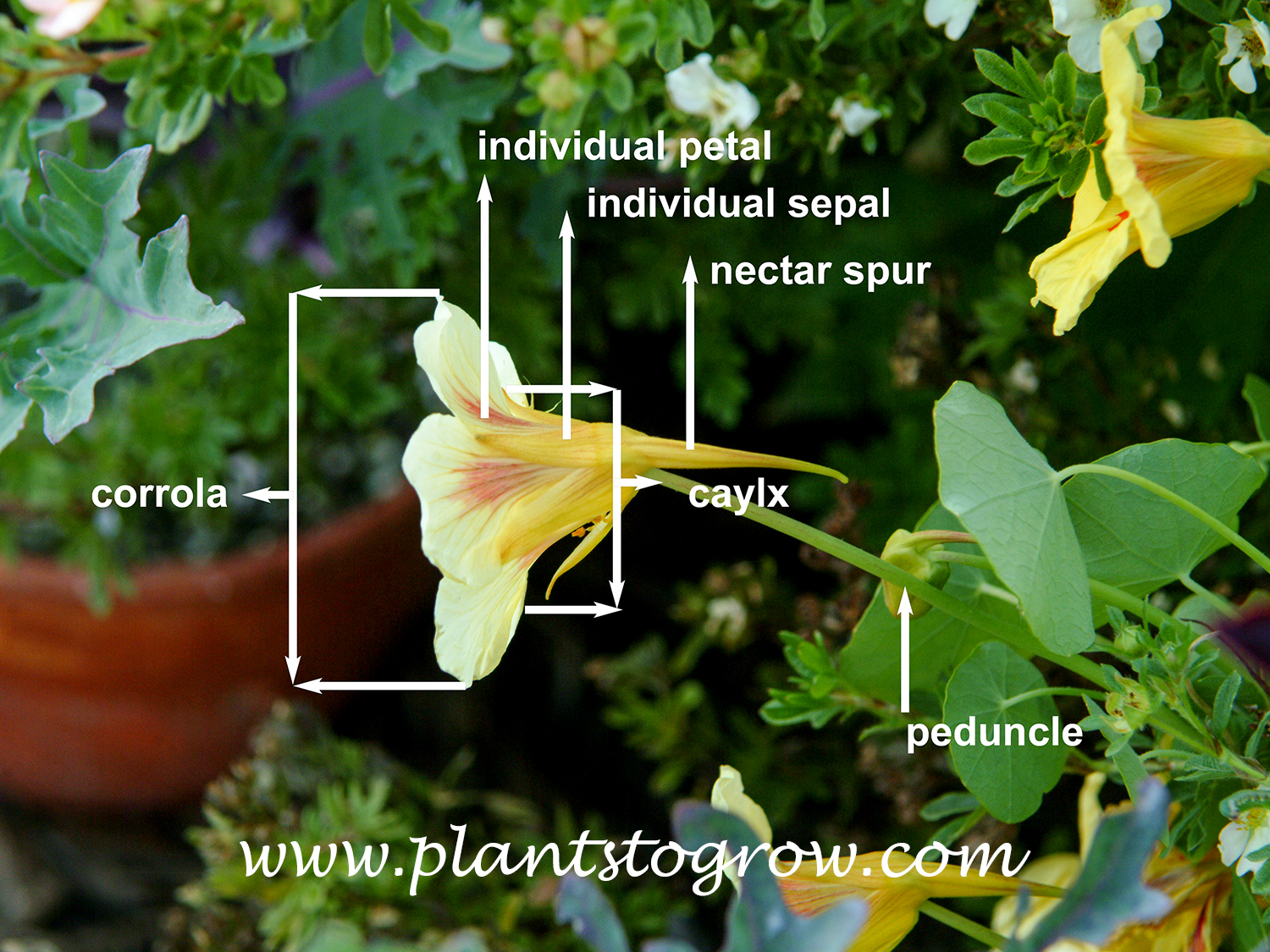
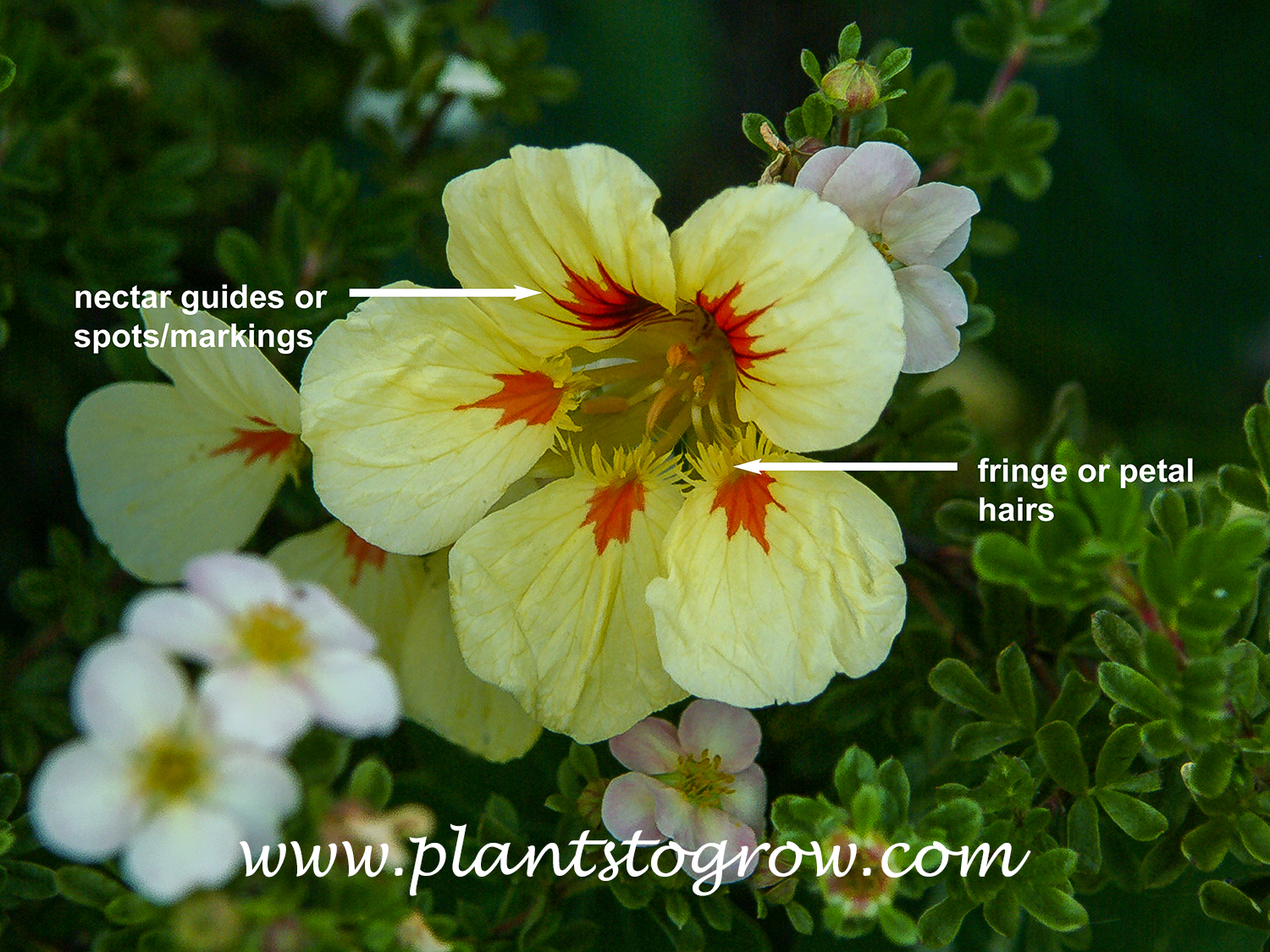
| Flowers | Flowers have 5 petals, 2-2 1/2" across, colors: cream to yellow with occasional pink peach color, red to maroon blotches (nectar guide) inside the throat at the base of the petals. Funnel-shaped with large nectar spurs off the back of the flower. |
| Fruit | The fruit is called a schizocarp. It consists of three segmented, wrinkled, green pods, each containing a single, wrinkled, large brown seed. |
| Leaves | Rounded (obicular), green, reminds me of a lily pad. The leaves contain mustard oil, used in salads along with the flowers and buds |
| Stems | They are long, smooth, and succulent, and herbaceous. The stems are typical of the plant's tender annual growth, as a trailing, spilling plant. |
| Dimensions | Around 12" tall by equal spread, has a floppy growing habit |
| Maintenance | Plants tend to flop; pruning is needed to maintain good form. |
| Propagation | Seeds are very large; they can be planted "in situ" after the danger of frost has passed, or direct-seeded into a peat pot. Soaking may help germination. |
| Native Site | Native range is the cool highlands of Mexico and Central America. |
| Misc Facts | Traeolum comes from the Latin word tropaeum, meaning “a trophy”. The leaves were thought to resemble the helmets and shields that were present at Roman triumphs. Nasturtium means bitter leaves. |
| Author's Notes | I have grown many different Nasturium. I always liked the flowers, but they all have the same growth habit; they tend to flop. Work nicely in the garden where they can mingle and grow among the flowers. Works well as a spiller in containers. |
| Notes & Reference | #27-Rodale's Annual Gardens (Paul Loewer), #28-Cottage Garden Annuals(Clive Lane), #40-Herbaceous Ornamental Plants (Steven Stills), #274-Site Authors' observations and experiences of growing Nasturtium |

Cart