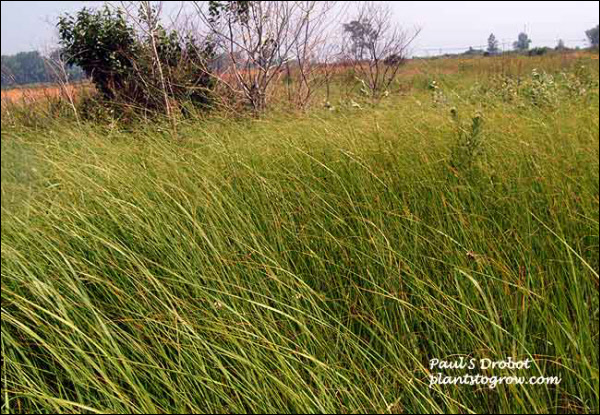
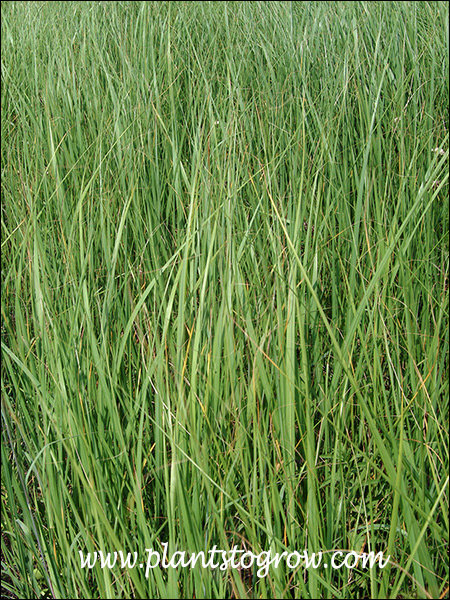
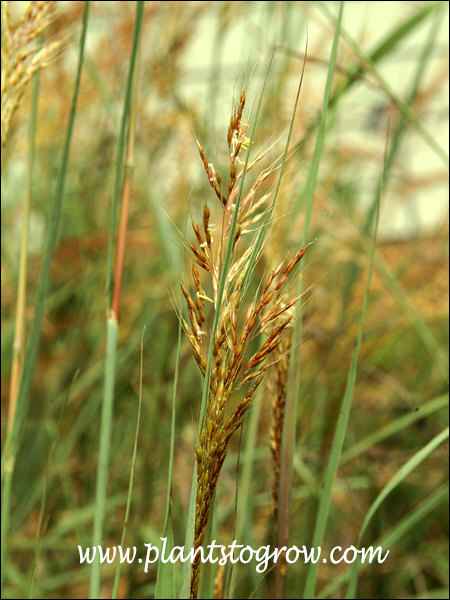
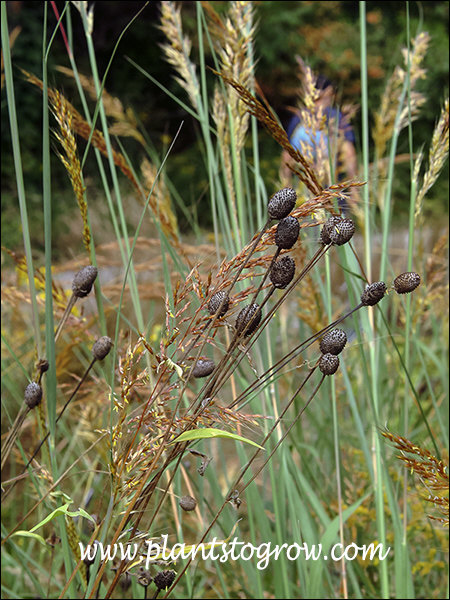
| Description | Prairie Cord Grass (Spartina pectinata) is a thicket-forming, rhizome-spreading grass native to wet areas. |
|---|---|
| Plant Type | All Plants, Grass Ornamental |
| Hardiness Zone | 4 - 8 |
| Sunlight | full |
| Moisture | Prefers moist to wet but may tolerate drier conditions. |
| Soil & Site | Found growing in wet prairies, in sloughs, around ponds and swamps. |
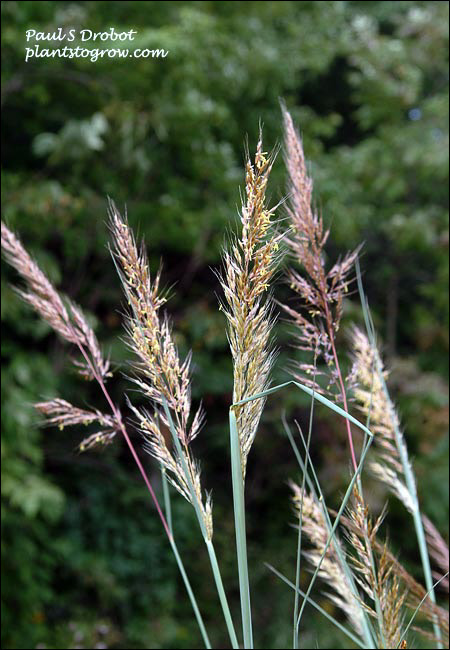
| Flowers | Flowers borne on a panicle inflorescence with many distinct one-sided spikes |
| Fruit | Forms a caryopsis, which is also called a grain. |
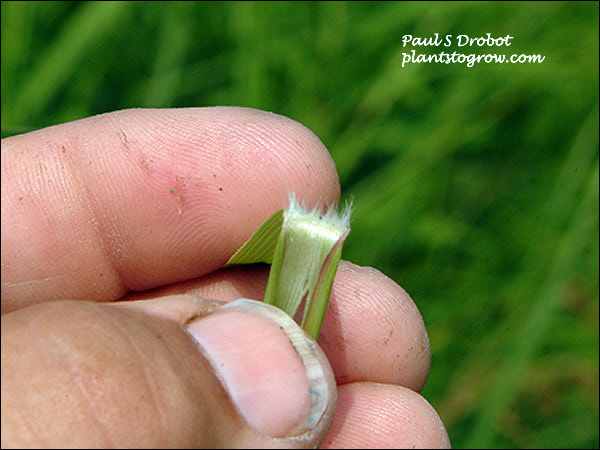
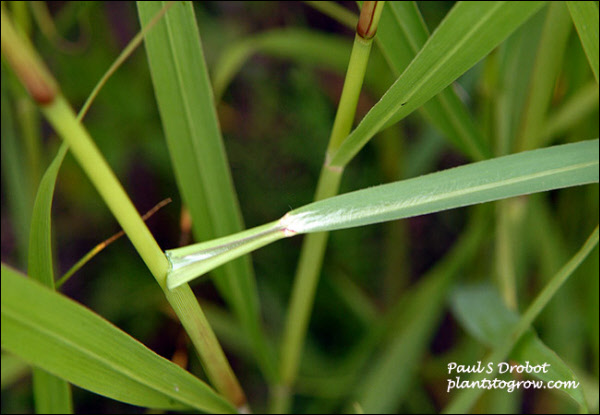
| Leaves | Green, narrow, long, with a rough cutting edge, up to 4 feet long. May turn red to light straw-yellow in the fall. They can easily cut your fingers. Its leaves have coarsely serrate, saw-like margins that are sharp enough to cut skin if handled improperly. |
| Stems | Forms stout, creeping rhizomes. that form a mon |
| Roots | fibrous system |
| Dimensions | Grows up to 4 feet tall, spreading to form thick patches via stout rhizomes. |
| Maintenance | Use in an area where the aggressive spreading can be tolerated. Otherwise, there will be a never-ending chore of controlling the spread. |
| Propagation | division, seeds |
| Native Site | Native to much of North America, including central and eastern Canada and most of the contiguous United States, except for the southwestern and southeastern regions |
| Misc Facts | American Indians and pioneers used the long leaves and stout stems of Prairie Cordgrass for thatching roofs and lodges. The common nickname "sloughgrass," given to Prairie Cordgrass, refers to the wet conditions in which it grows. The nickname "Rip Gut" refers to the serrated edges that can cut skin. It spreads, forming a monocultured patch of plants. |
| Author's Notes | I grew up playing baseball on a field we made next to my house. Running parallel to the right field line was a deep ditch filled with Prairie Cord Grass. Every time a ball needed to be retrieved from the ditch, the grass would inflict many small cuts on your arms and hands from the edge of the grass leaf.' It was a very aggressive plant forming thick patches of grass in the wet drainage ditch. |
| Notes & Reference | #46-Wetland Plants and Plant Communities of Minnesota and Wisconsin (Eggers and Reed), #191-Minnesota Wild Flowers (www.minnesotawildflowers.info), #274-Site Authors' observations and growing this plant |

Cart