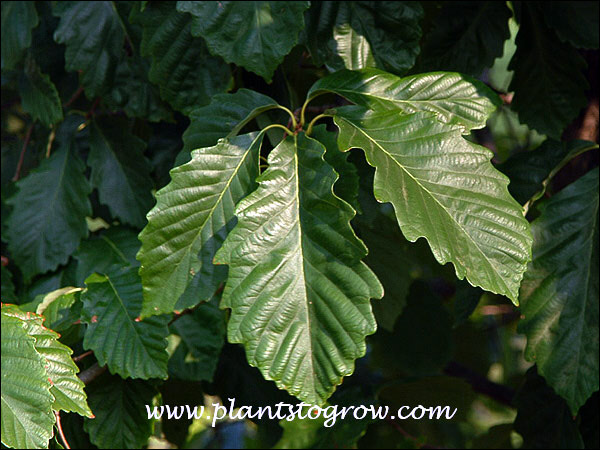
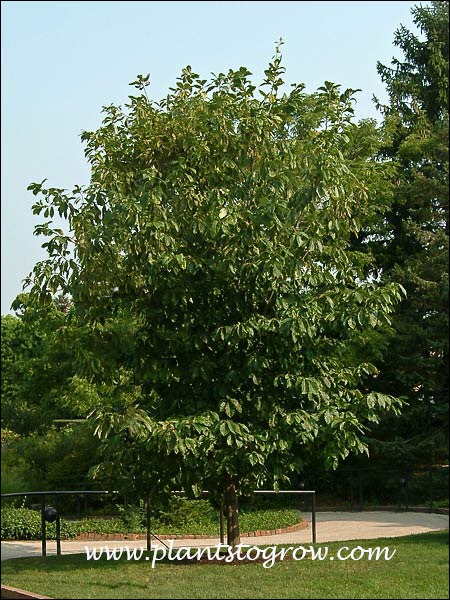
| Description | Chestnut Oak (Quercus prinus) is a native Oak. |
|---|---|
| Pronunciation | (KWER-kuss)(PRI-nus) |
| Plant Type | All Plants, Trees Deciduous |
| Hardiness Zone | 4-8 |
| Sunlight | full |
| Moisture | average to dry |
| Soil & Site | found mostly on poor dry soils. |
| Fruit | 1-2 to 1 inch oval acorn, enclosed in a thin cup 1/3 of the length |
| Leaves | simple, alternate, mostly elliptical coarsely toothed with rounded teeth, fall coloration yellowish to dull orange |
| Roots | deep taproot, can make transplanting difficult |
| Dimensions | A broadly rounded crown, short trunk reaching 40-60 feet tall with a trunk diameter of 2-3 feet. |
| Maintenance | prune oaks in the dormant season to avoid attracting beetles that may carry oak wilt |
| Propagation | acorns |
| Native Site | Eastern N. America - Maine to Georgia and Alabama (USA) |
| Misc Facts | Used for many of the same purposes as White Oak. (syn Quercus montana), AKA: Rock Chestnut Oak, Chestnut Oak, Basket Oak, Rock Oak, Tannin Bark Oak |
| Notes & Reference | #01-Manual of Woody Landscape Plants (Michael Dirr), #93-North American Landscape Trees (Arthur Lee Jacobson), #94-Trees of the Eastern and Central United States and Canada, #144-Missouri Botanical Gardens web site (www.missouribotanicalgarden.org), #178-Morton Arboretum ( www.mortonarb.org) |

Cart