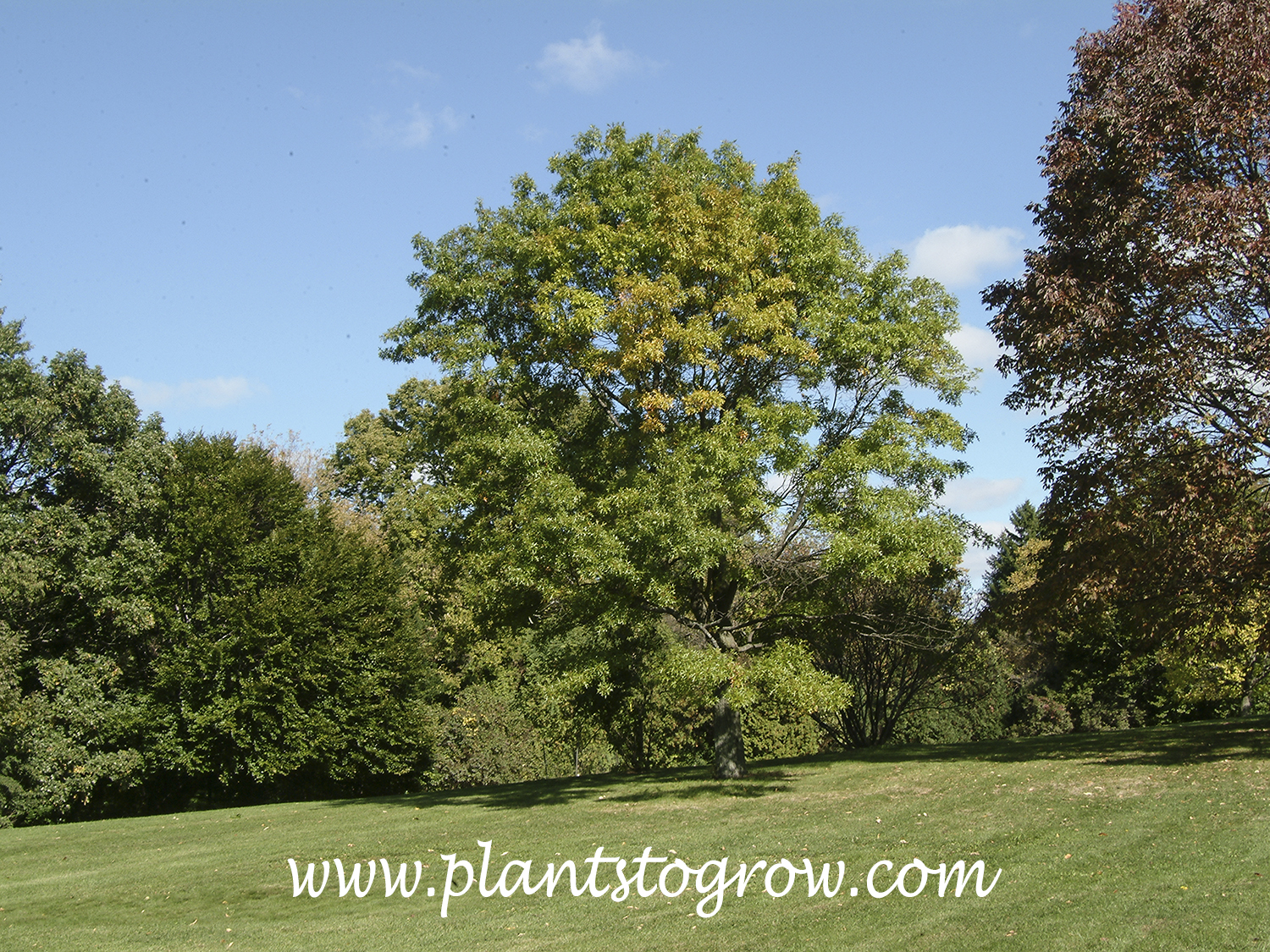
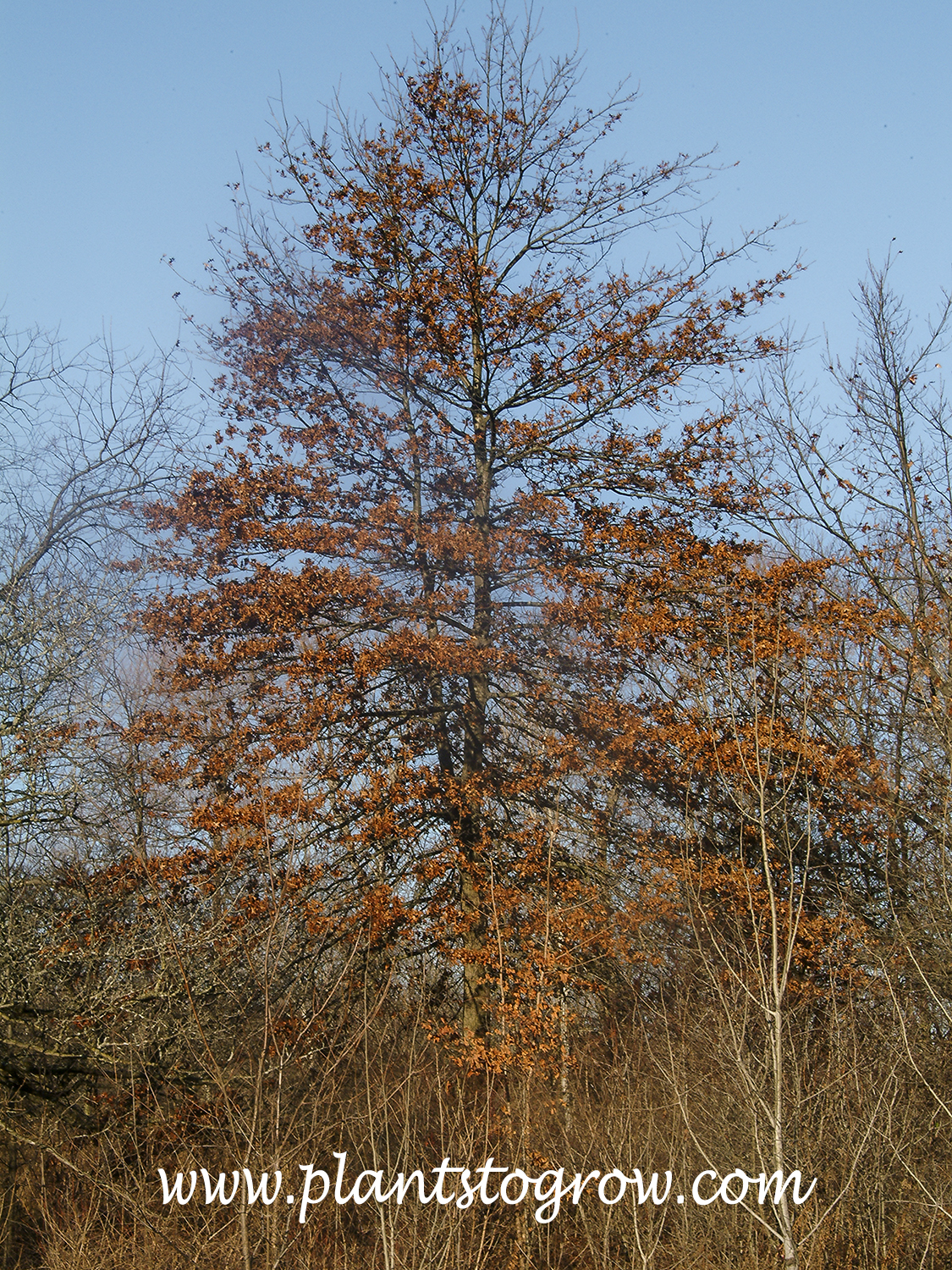
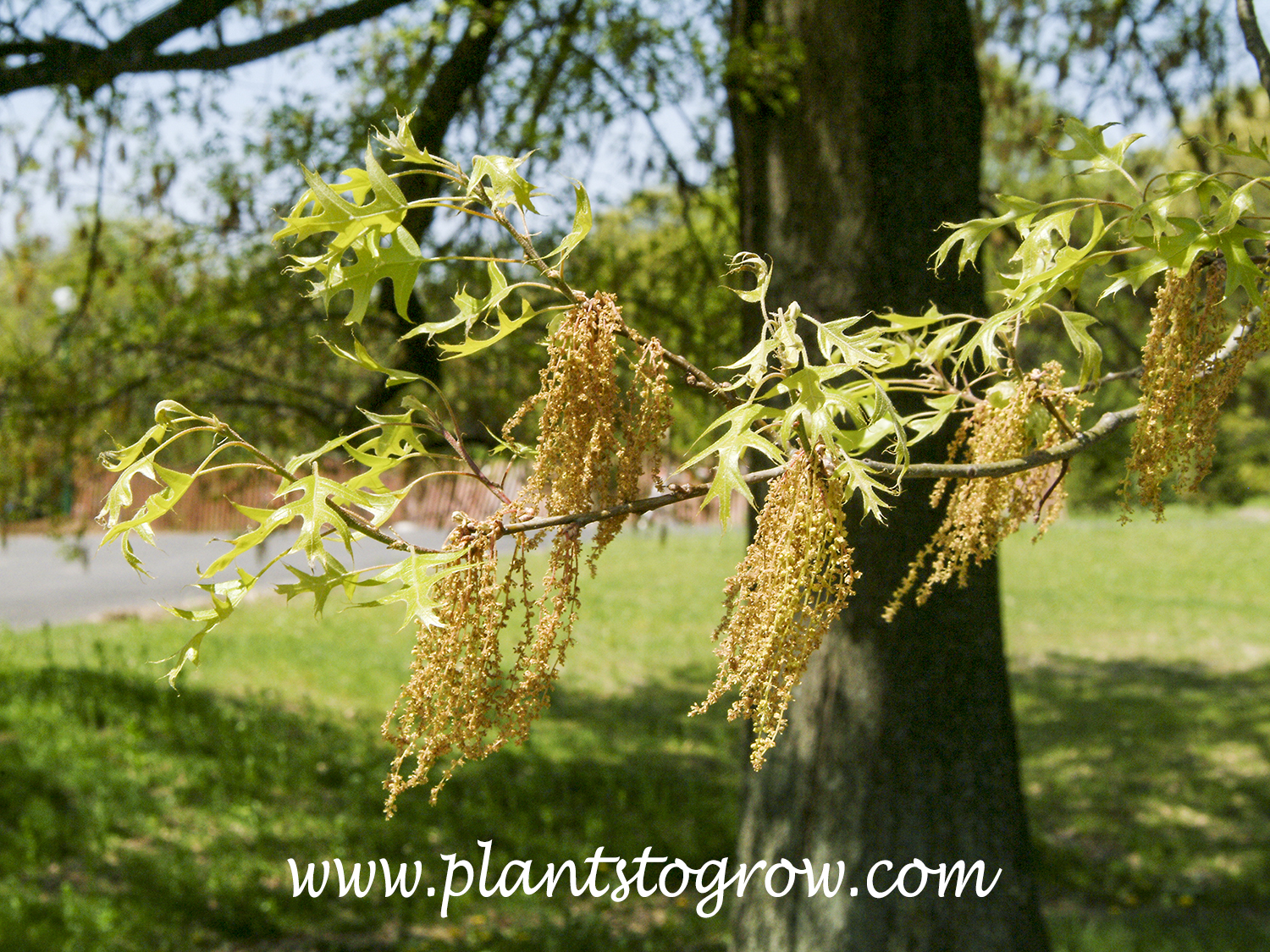
| Description | Pin Oak (Quercus palustris) is a fast-growing and strongly pyramidal in youth. With age, it will lose its pyramidal shape—one of the last trees to drop its leaves in the fall. |
|---|---|
| Plant Type | Trees Deciduous |
| Hardiness Zone | 4-8 |
| Sunlight | full |
| Moisture | average |
| Soil & Site | It is intolerant of high-pH soils, causing severe chlorosis. Avoid trying to grow in basic soils (soils above 7.0). Somewhat tolerant of wet soils. |
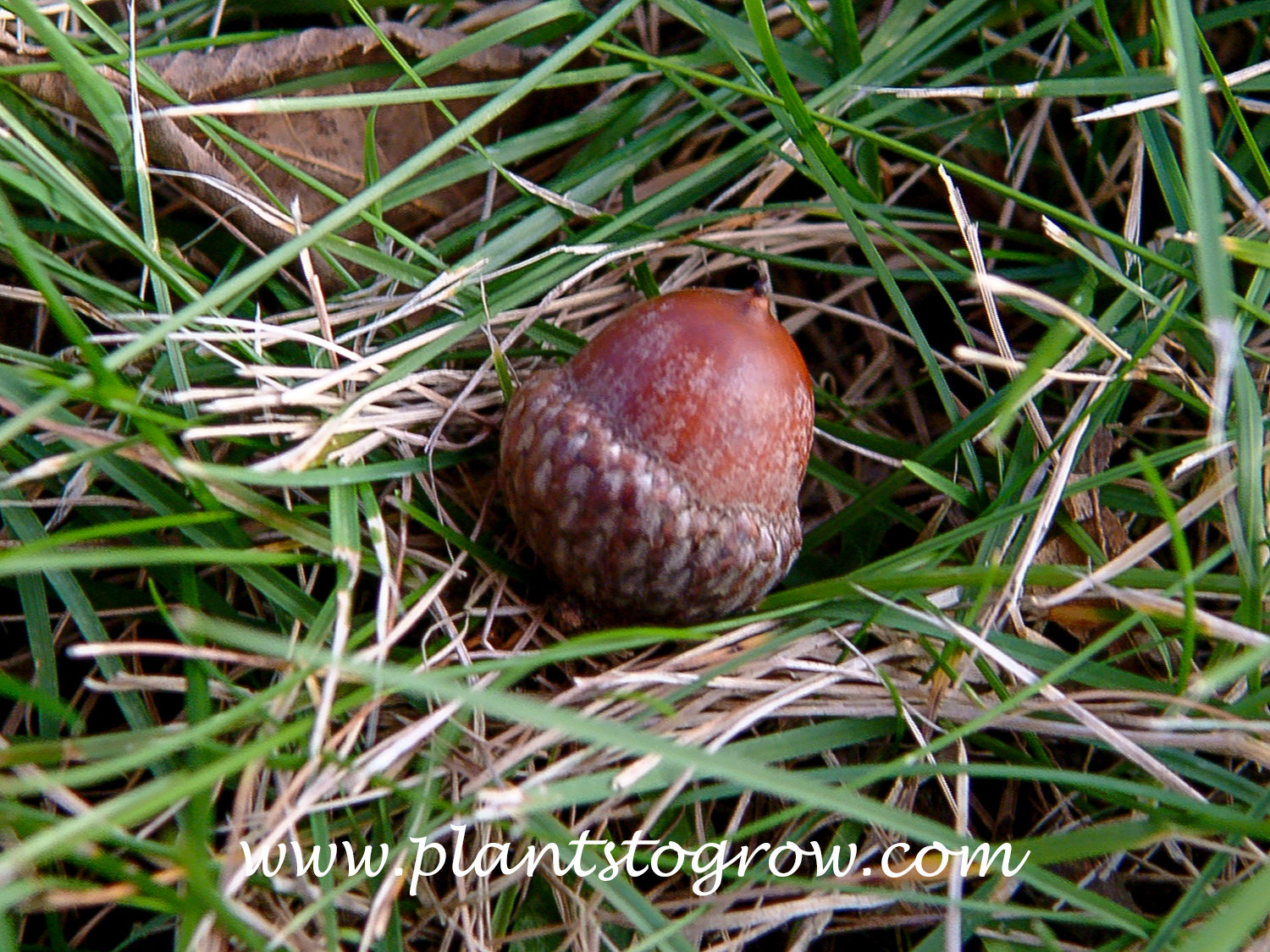
| Fruit | Has roundish acorns in a thin, shallow cup |
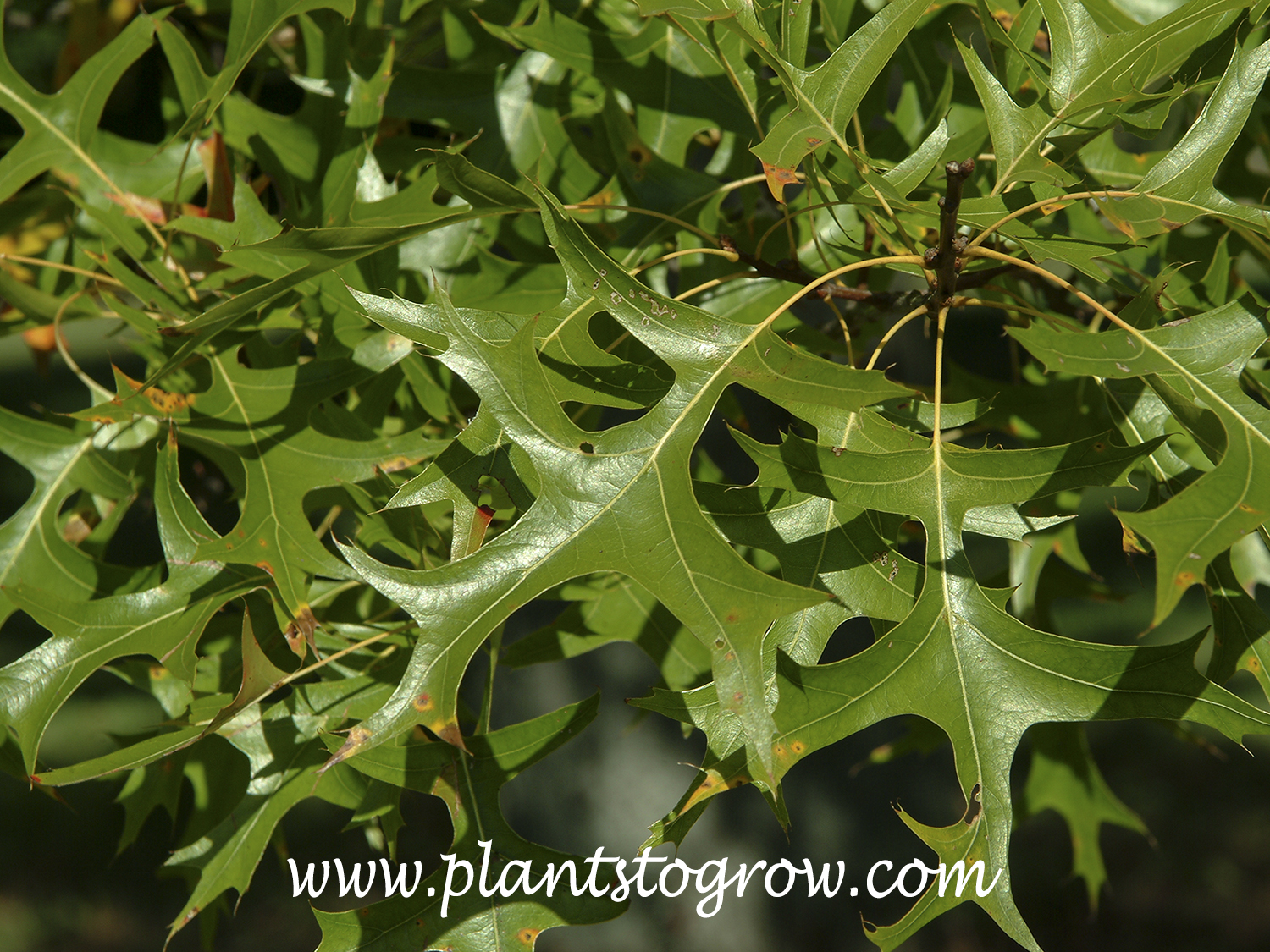
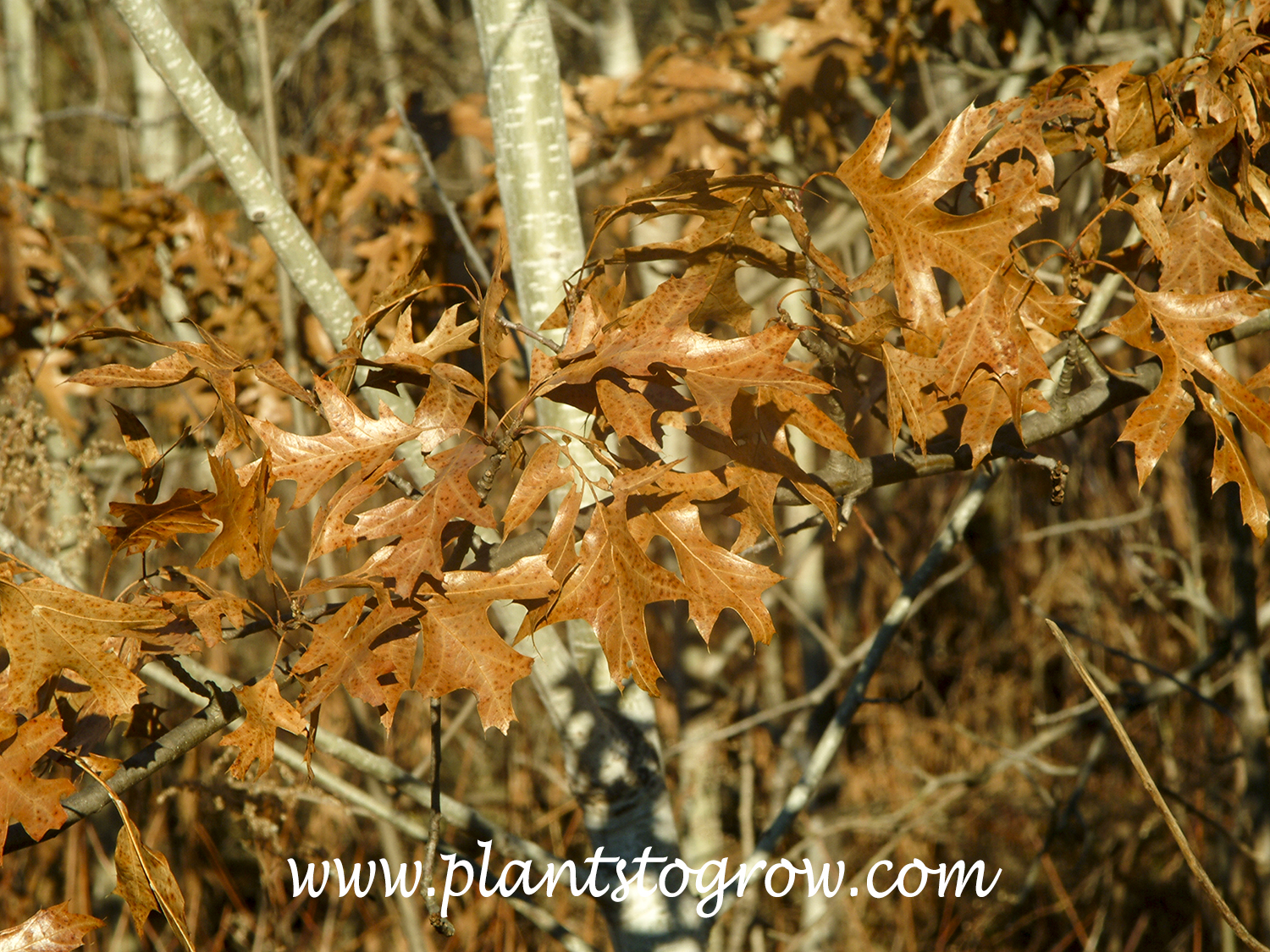
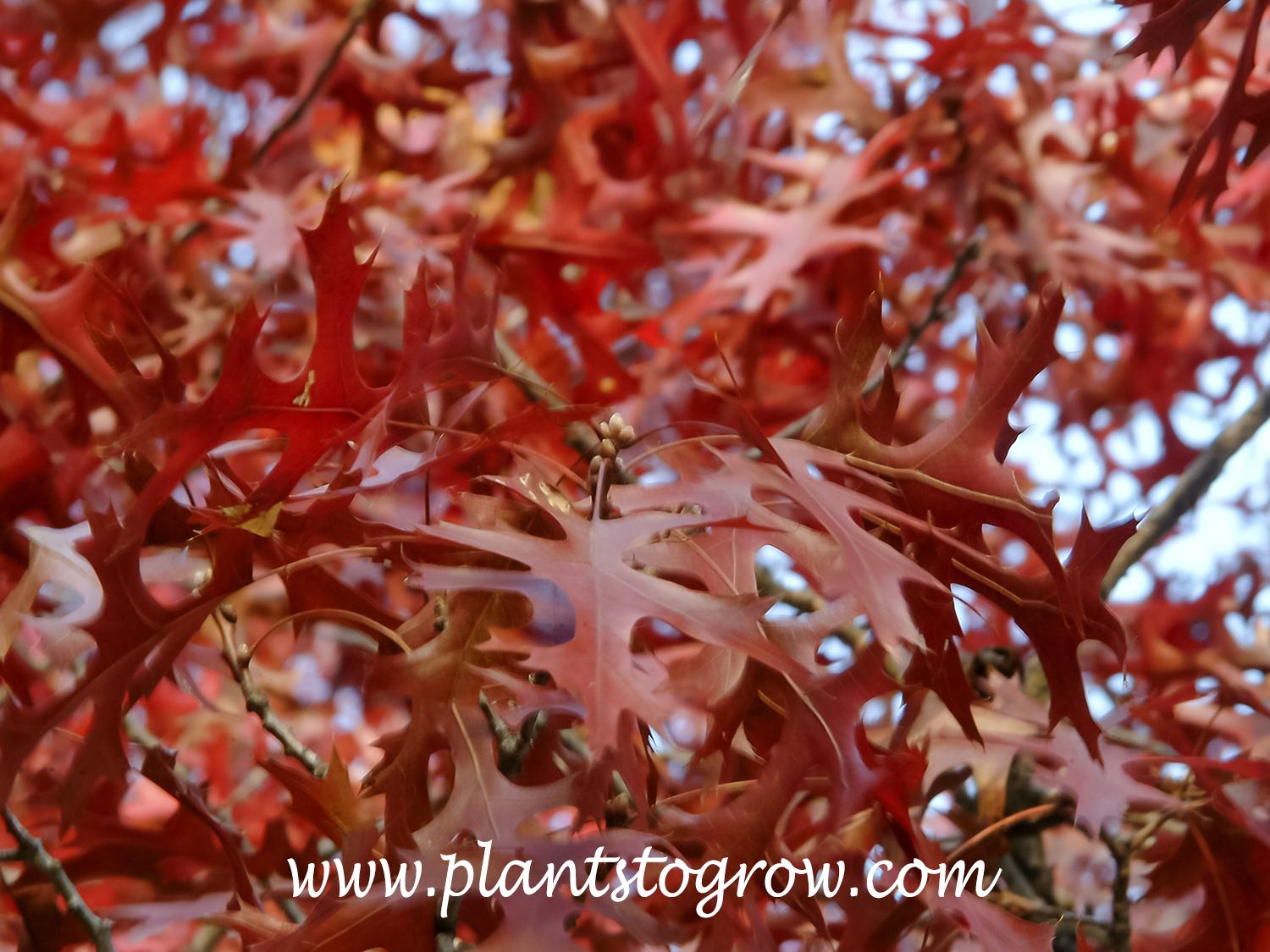
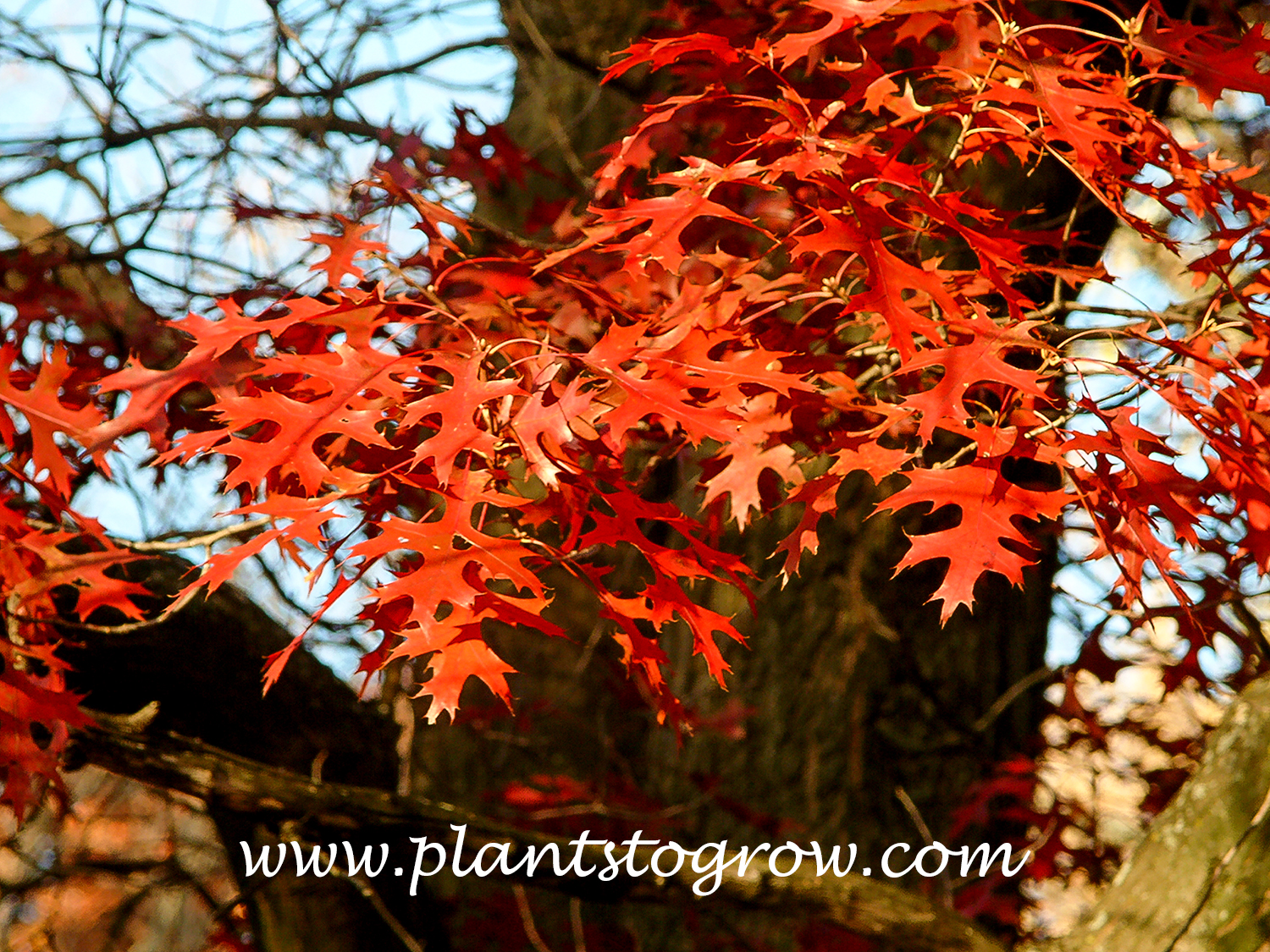
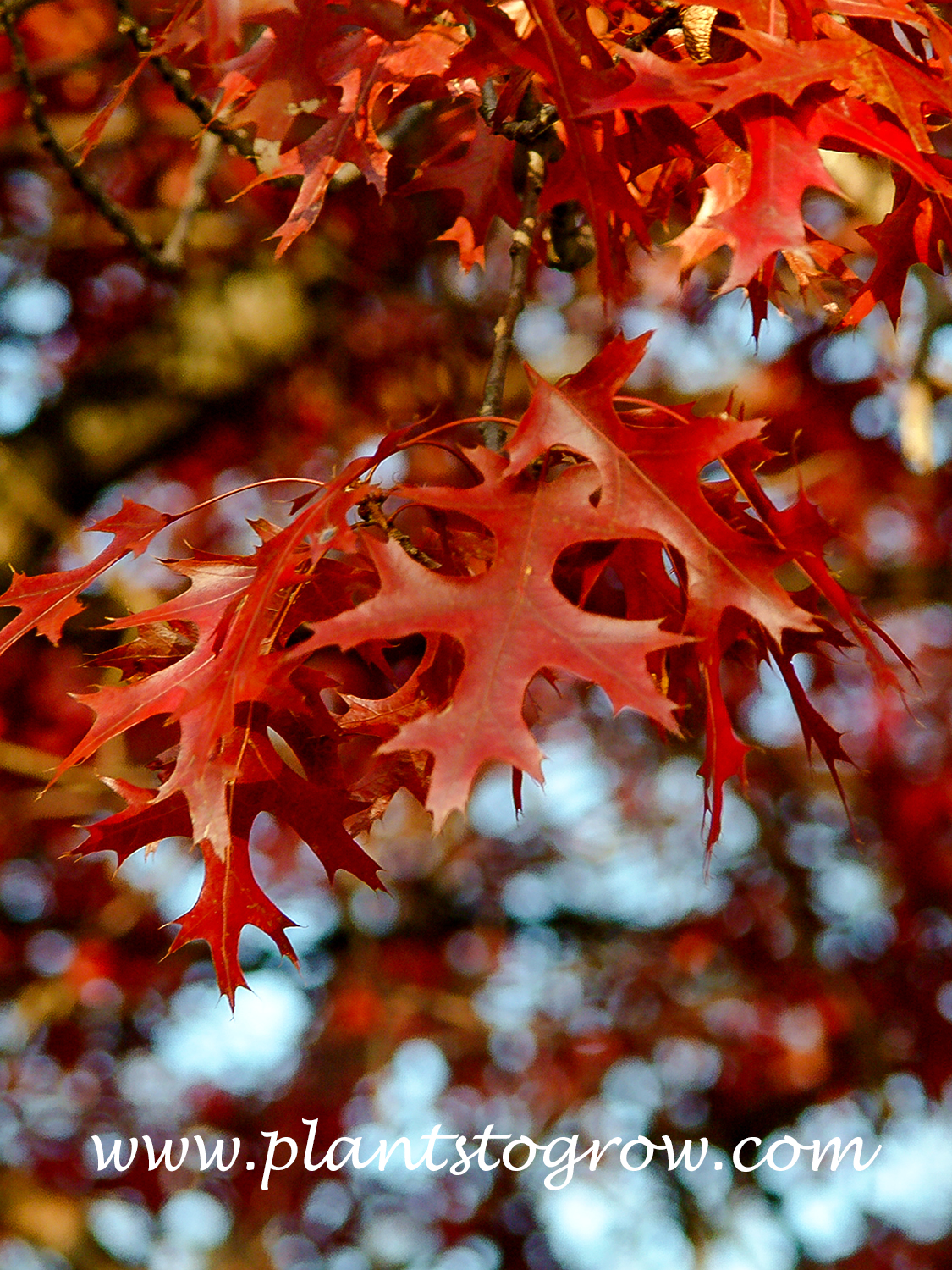
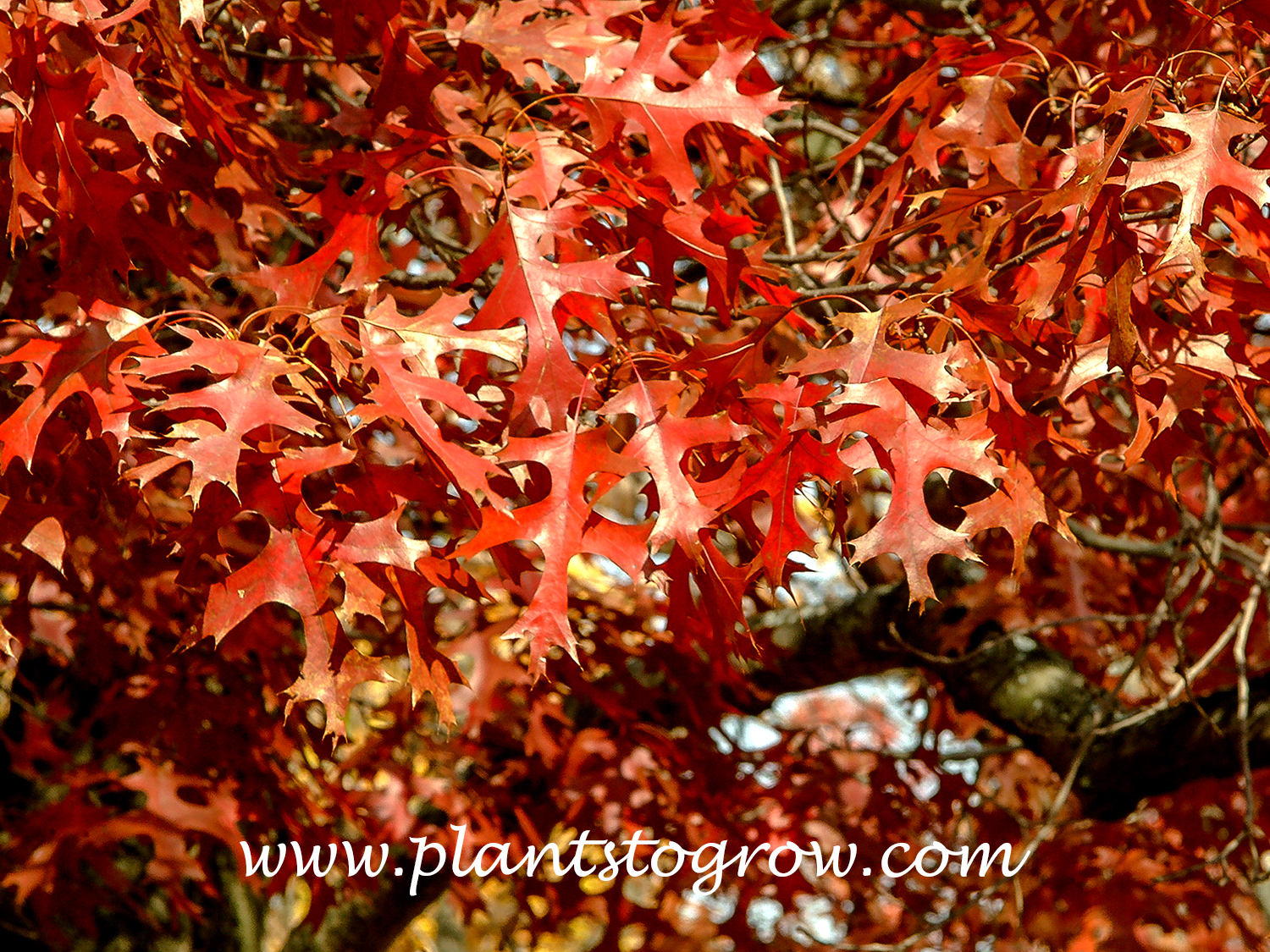
| Leaves | Green, simple, alternate, 5-7 deep, narrow, pointed lobes, green turning to russet to brown or shades of red in the fall. Many trees retain their leaves throughout the winter; this is called marcescence. |
| Dimensions | Strongly pyramidal at youth maturing to an oval pyramidal shape. Reaches 60-70 feet tall with a spread of 25-30 feet |
| Propagation | acorns |
| Native Site | North America, mainly in the eastern United States |
| Misc Facts | Palustris is Latin for "swamp" or "marsh," and quercus refers to Oaks. AKA: Swamp Oak, Spanish Swamp Oak; Spanish Oak |
| Author's Notes | I have seen many of the species Pin Oak trees growing in native areas of Wisconsin (USA). When all of the deciduous trees have lost their leaves the Pin Oaks will still hold on to them. This is obvious during the fall and winter. |
| Notes & Reference | #01-Manual of Woody Landscape Plants (Michael Dirr), #93-North American Landscape Trees (Arthur Lee Jacobson), #94-Trees of the Eastern and Central United States and Canada |

Cart