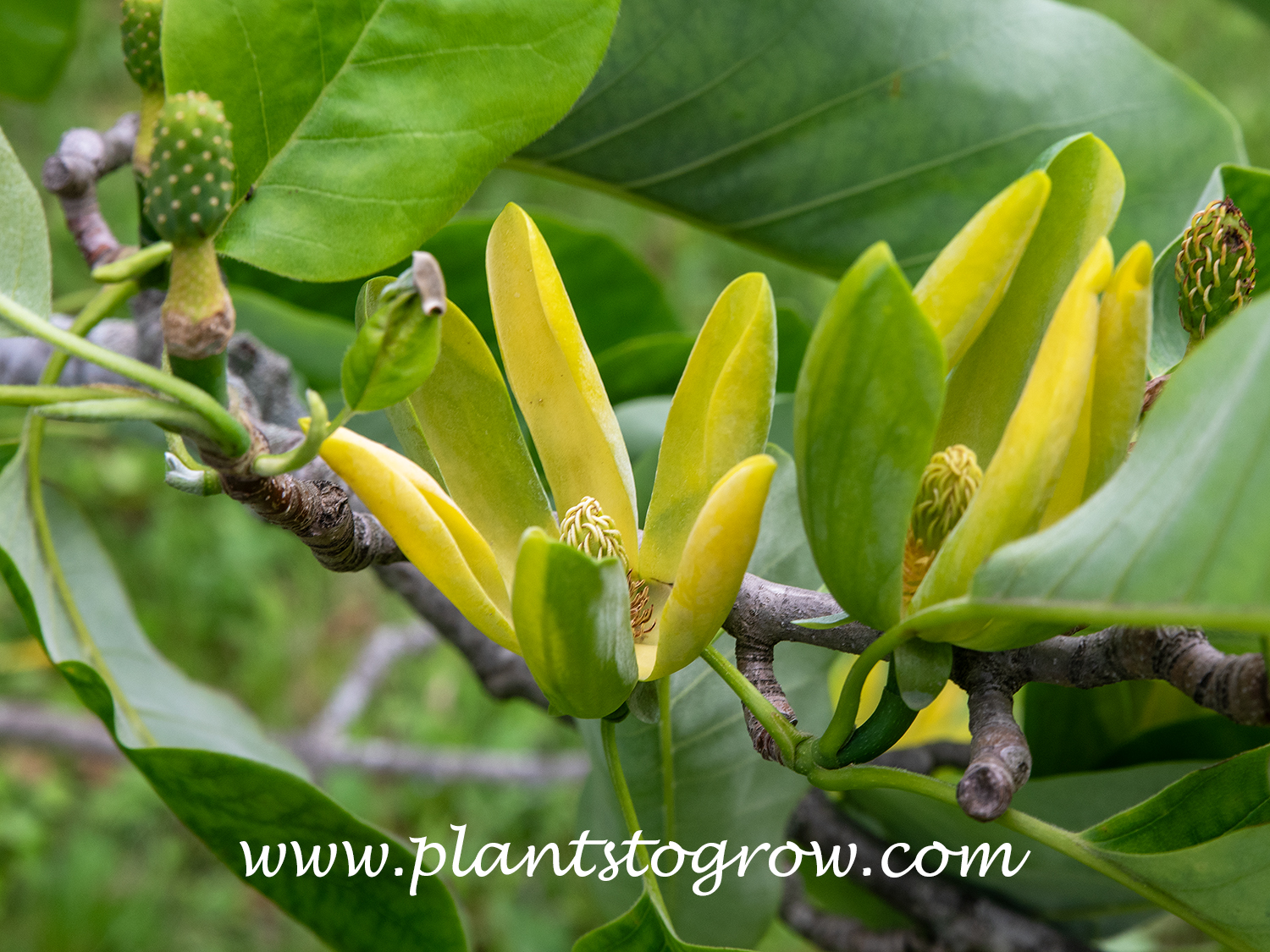
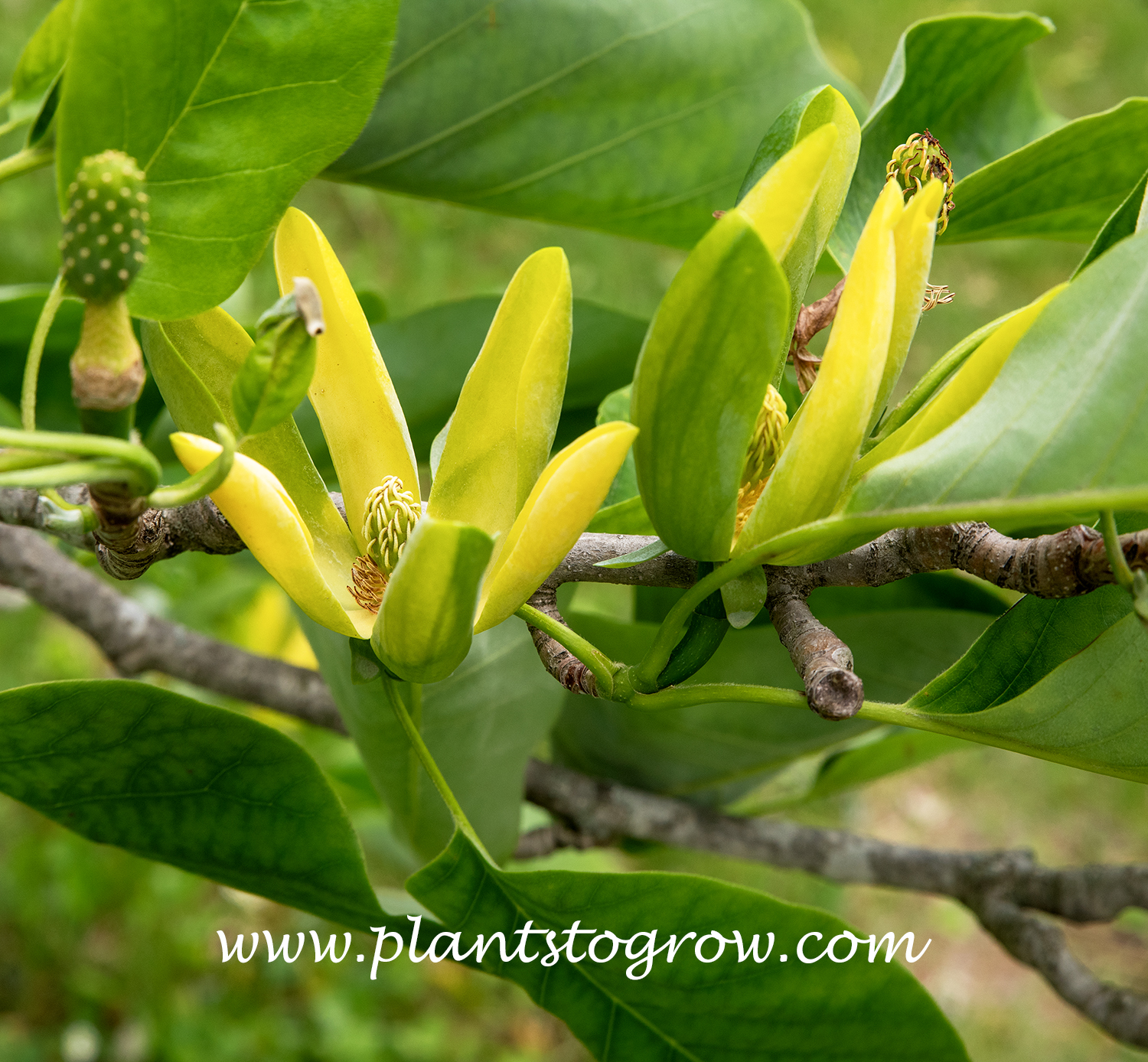
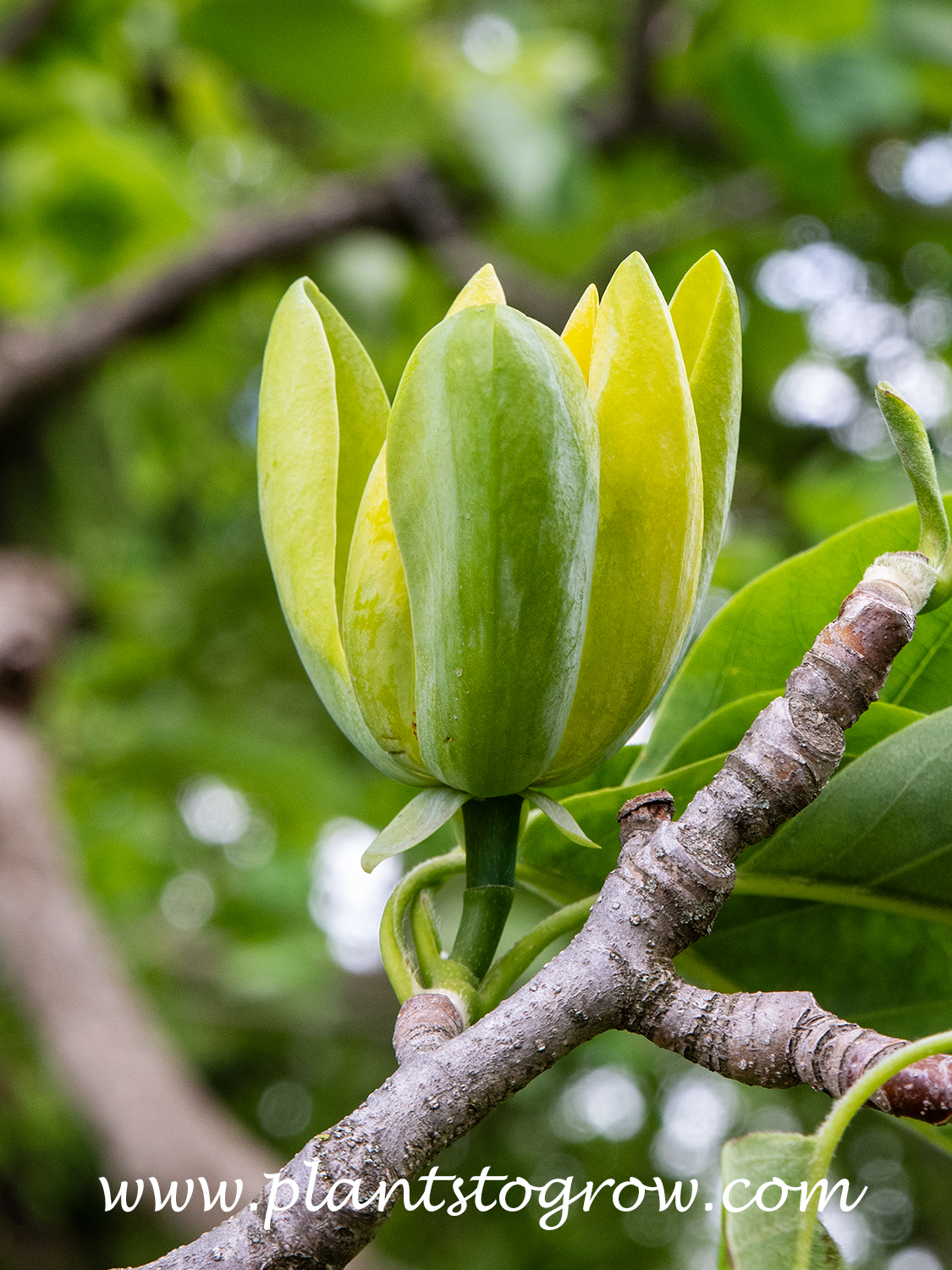
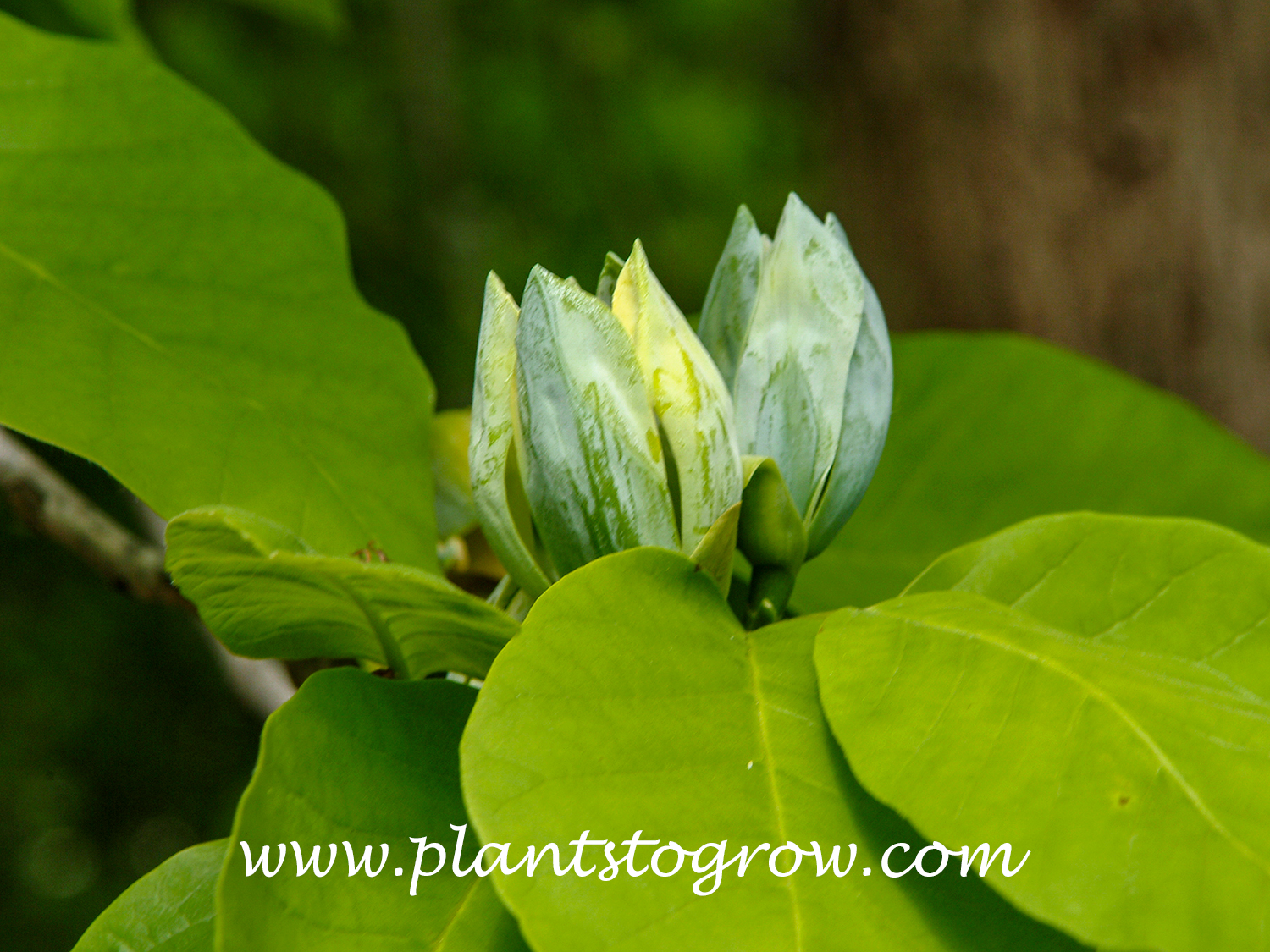
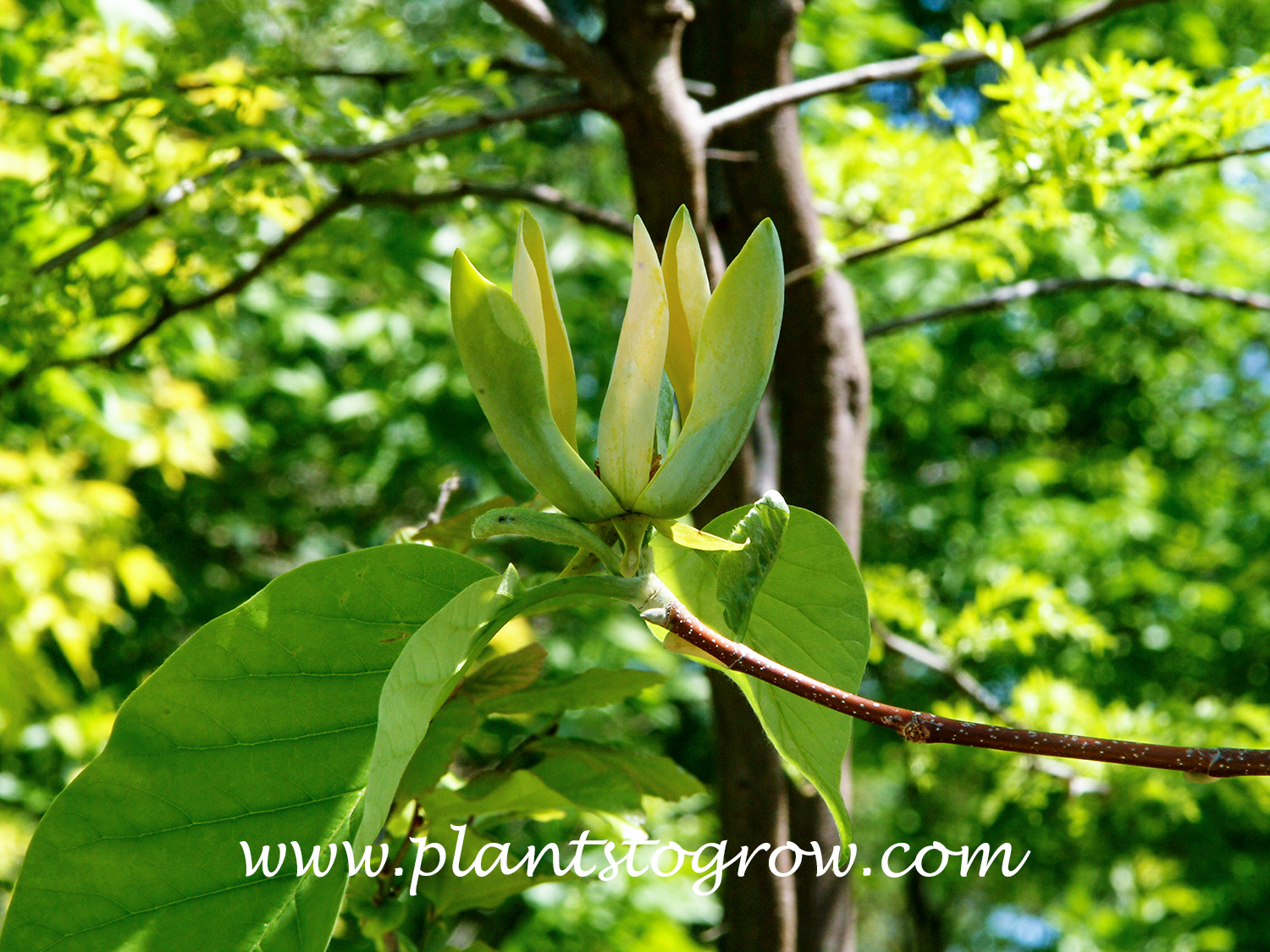
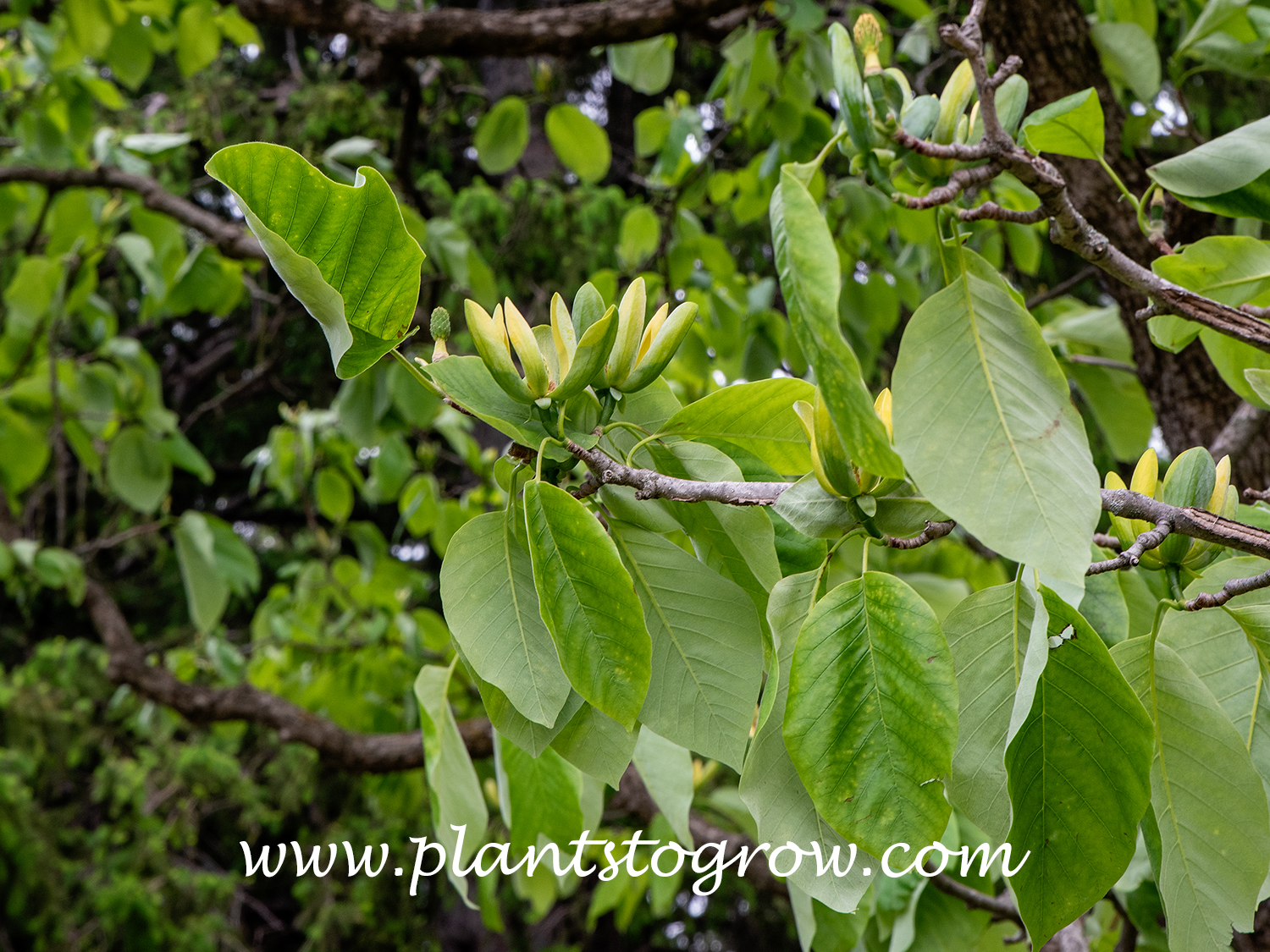
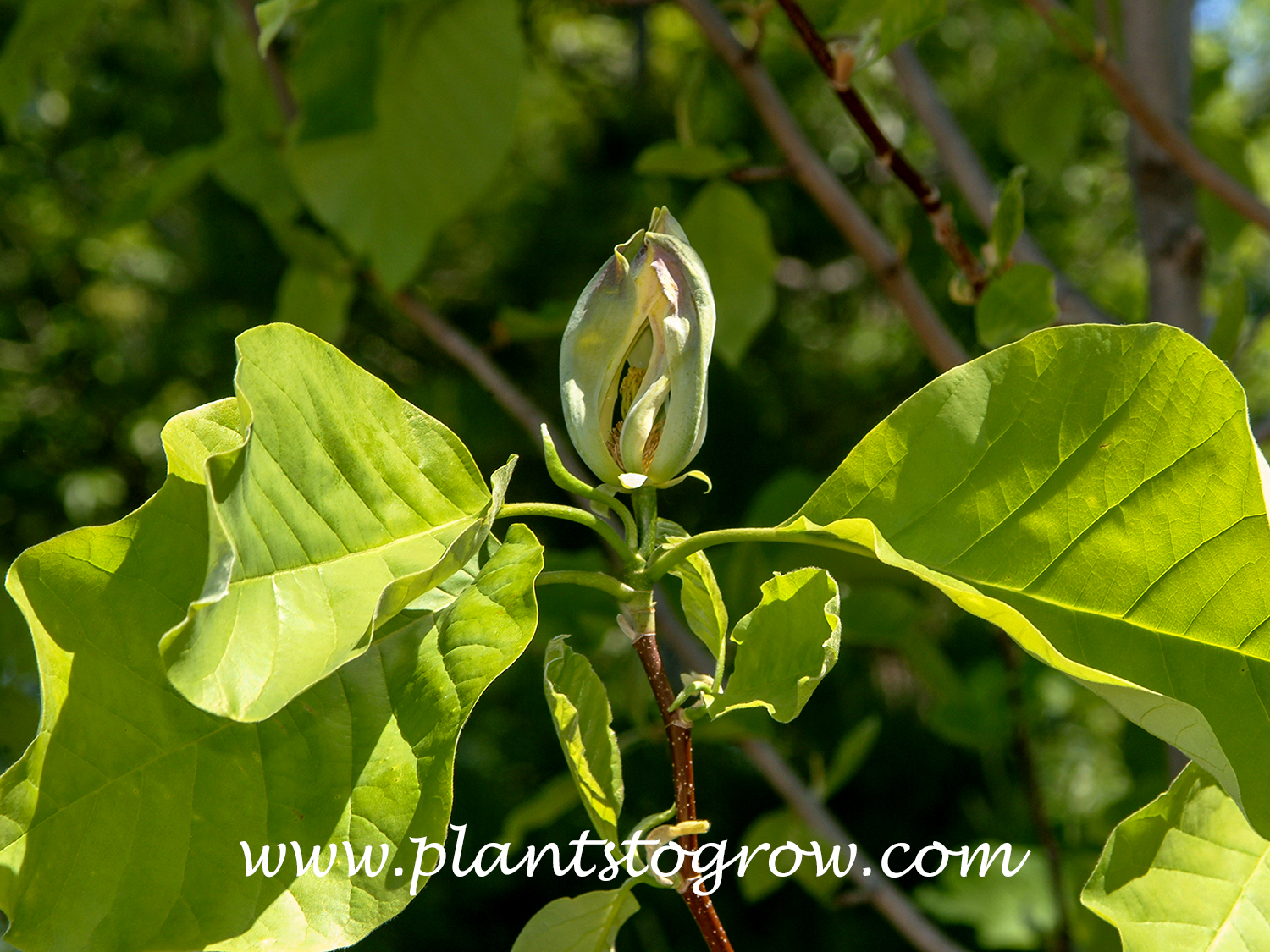
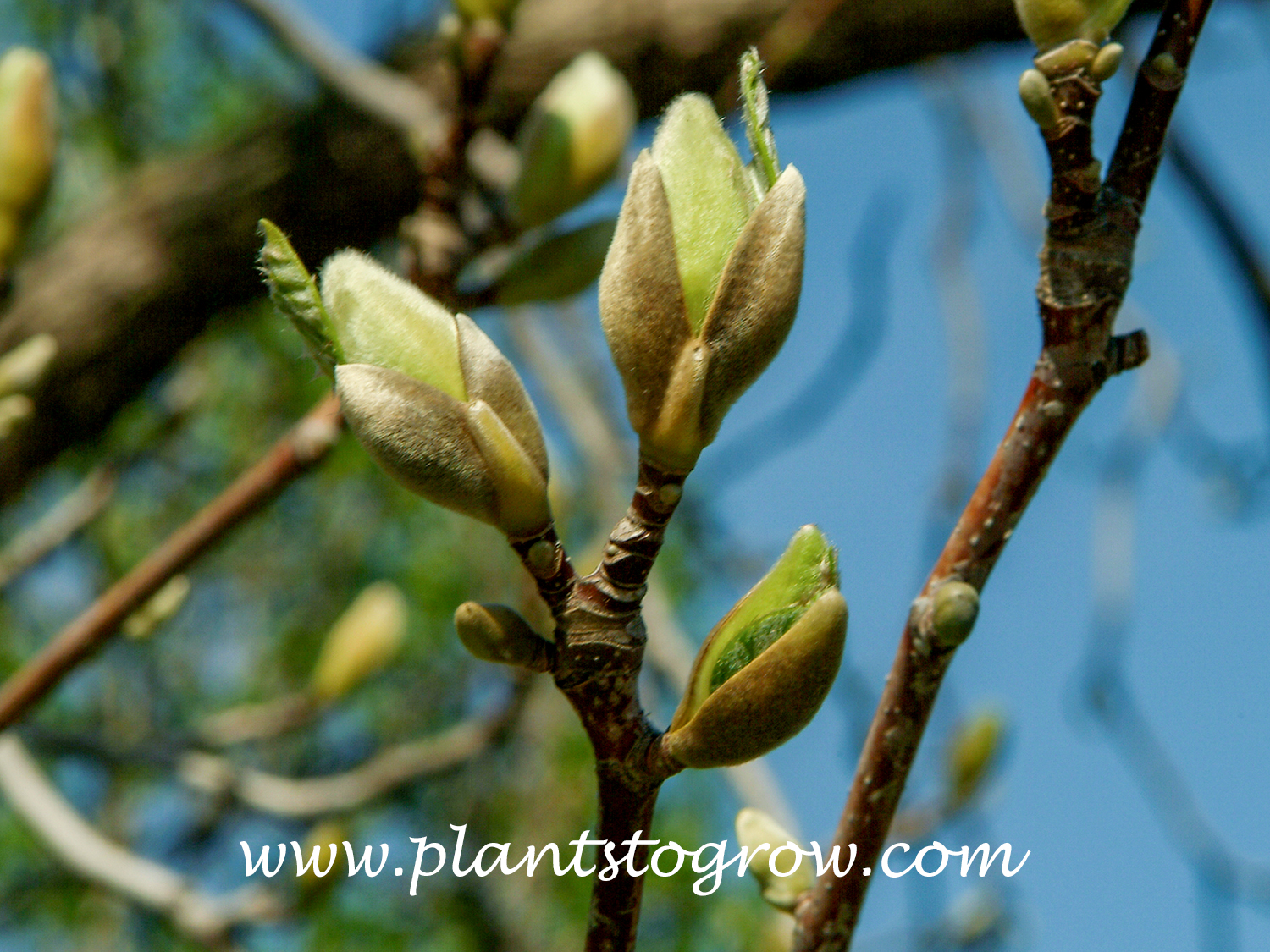
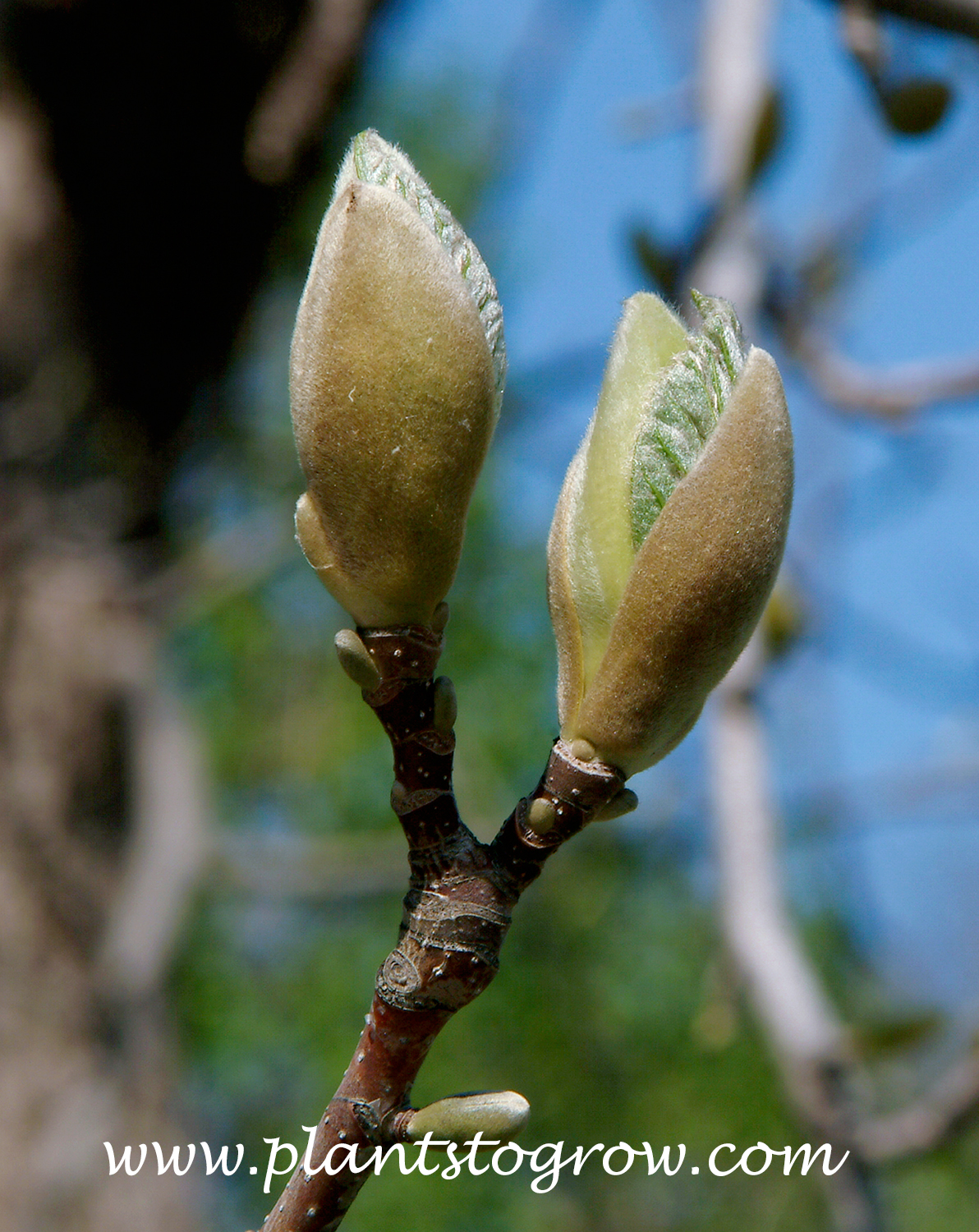
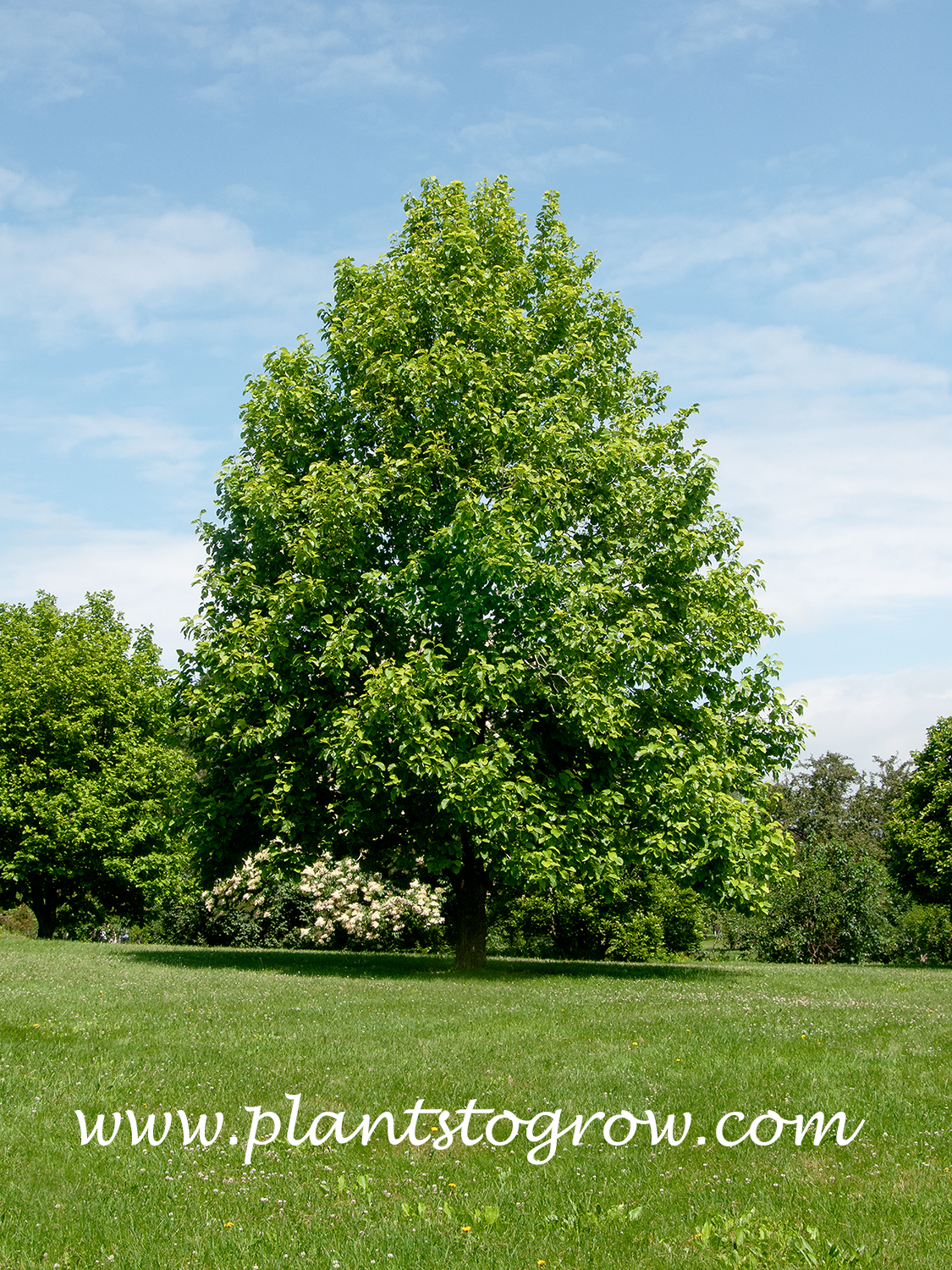
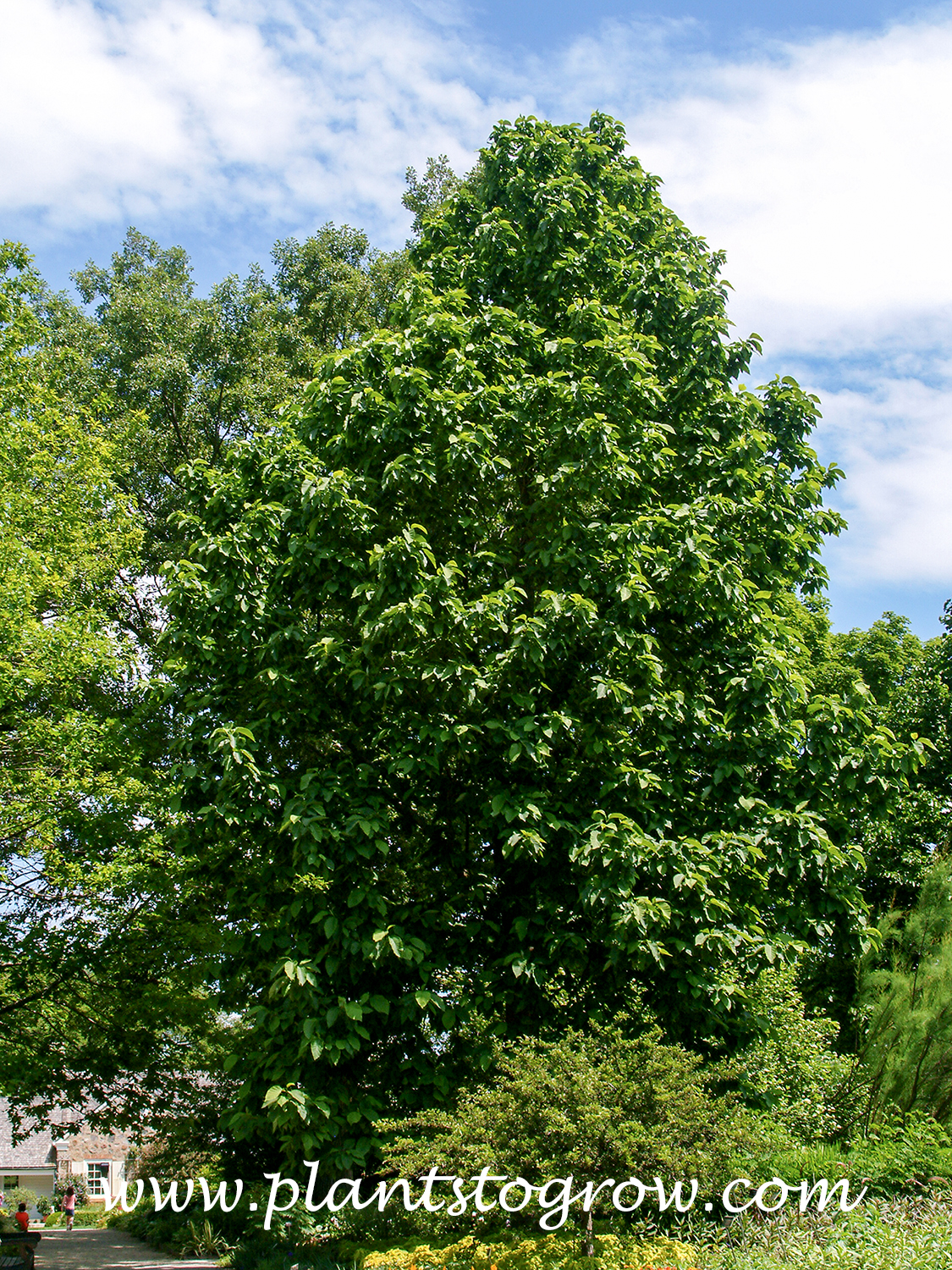
| Description | Cucumber Tree Magnolia (Magnolia acuminata) is a large deciduous tree with yellow, tulip-like flowers. It was grown by Thomas Jefferson at Monticello in the early 1800s. |
|---|---|
| Pronunciation | (mag-NO-li-a)(a-ku-mi-NA-ta) |
| Plant Type | Trees Deciduous |
| Hardiness Zone | 4-8 |
| Sunlight | full sun to partial shade |
| Moisture | average, doesn't tolerate draught or wet |
| Soil & Site | prefers moist, rich slightly acid, tolerable |
| Flowers | The flowers are solitary, with two sets of three greenish-yellow petals along with sepals, from May to June. |
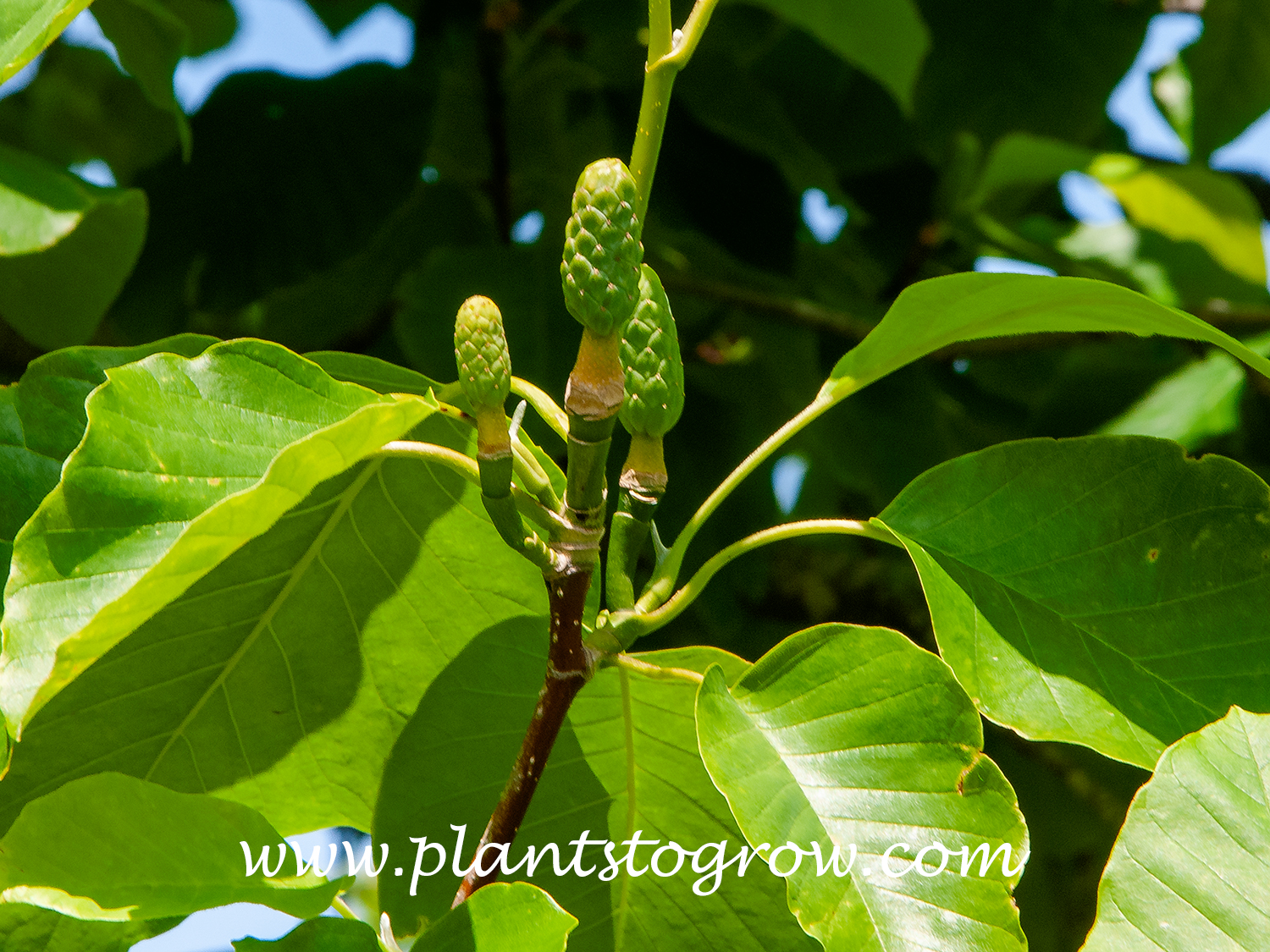
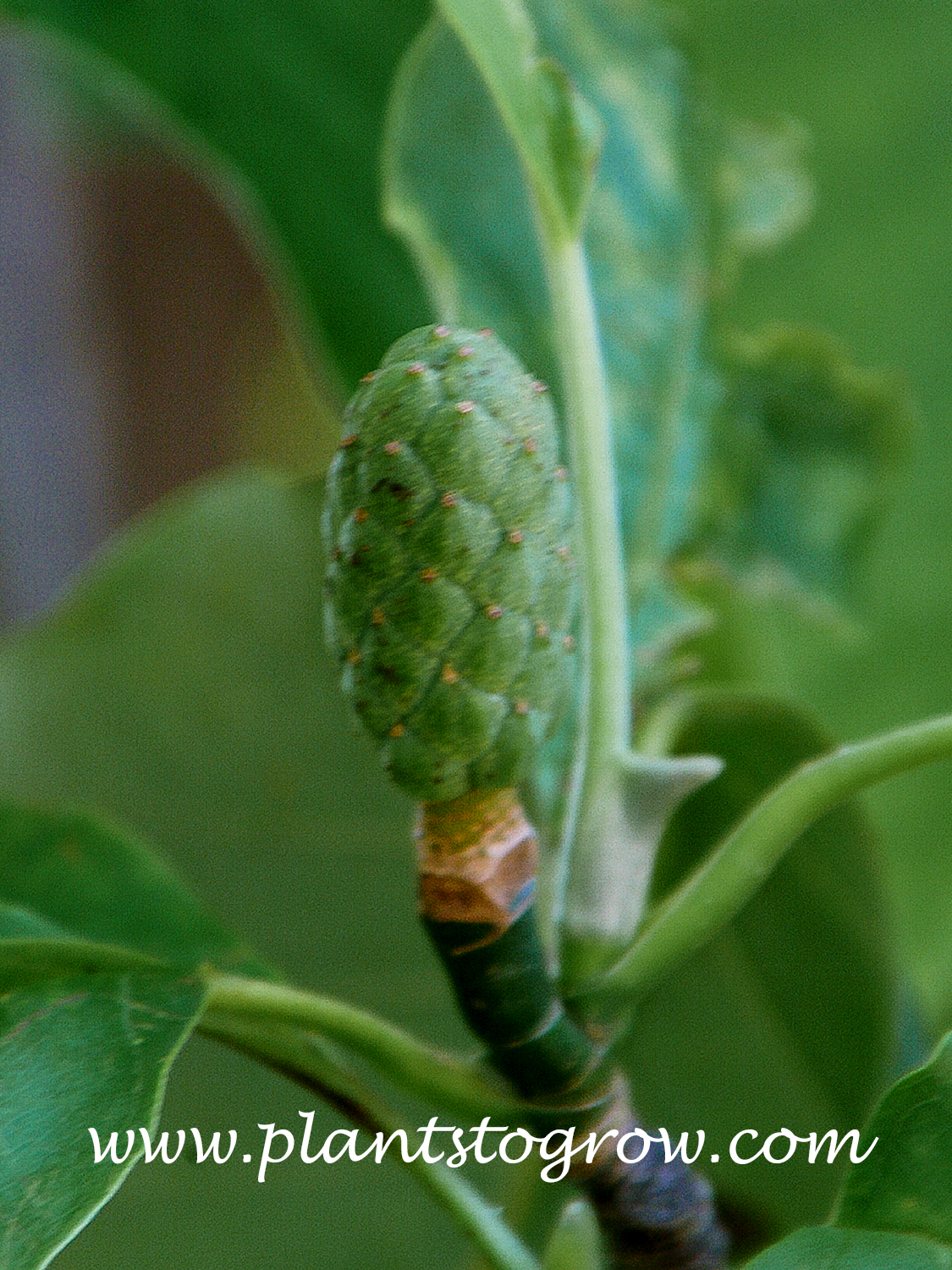
| Fruit | The fruit is an aggregate of follicles shaped like a cone, initially green and turning red, then maturing to brown. Individual seeds, coated in red, are suspended on slender threads. |
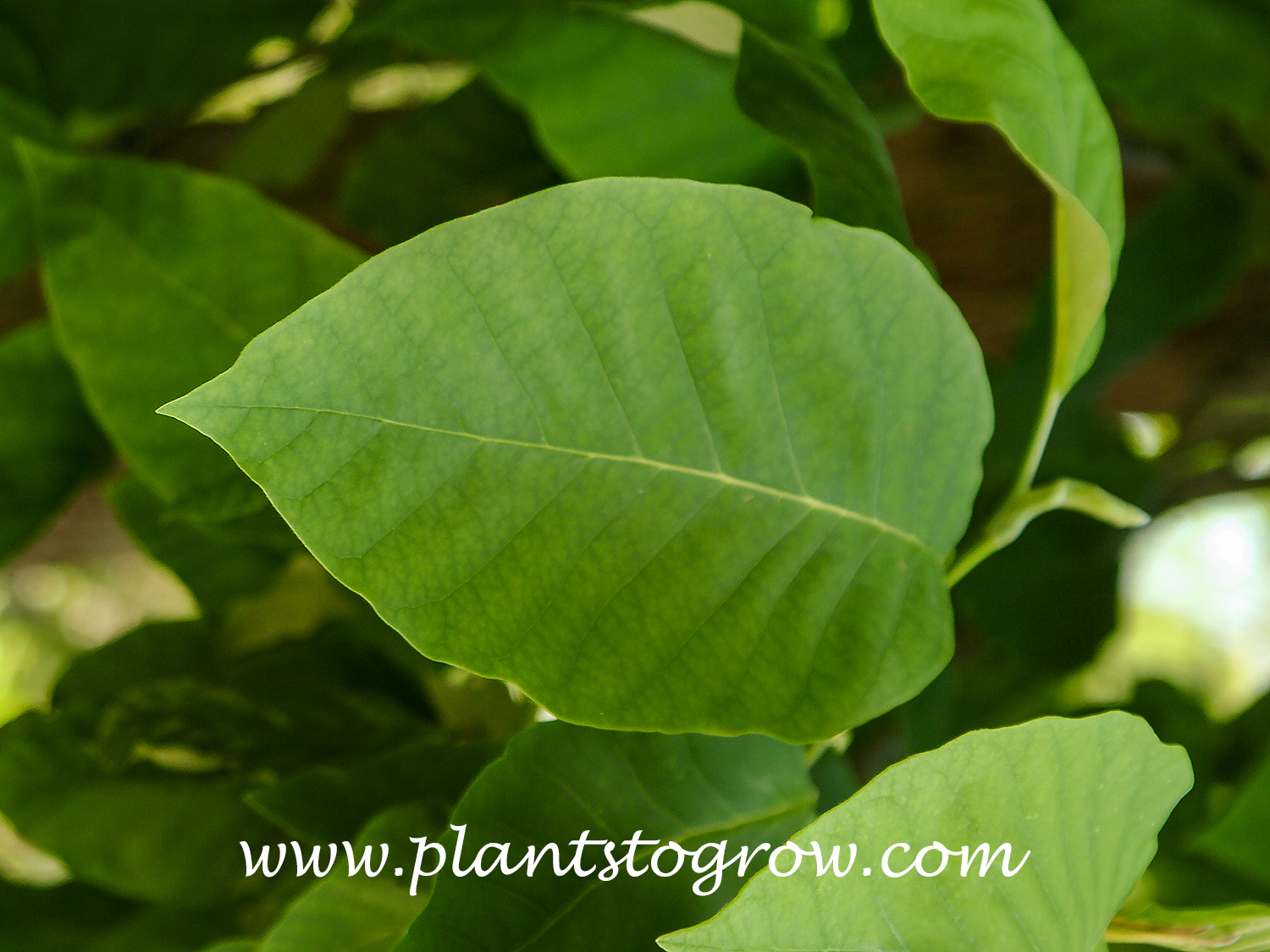
| Leaves | Simple, alternate, ovate, and green, changing to golden yellow in the fall. Have a pointed type called acuminate. |
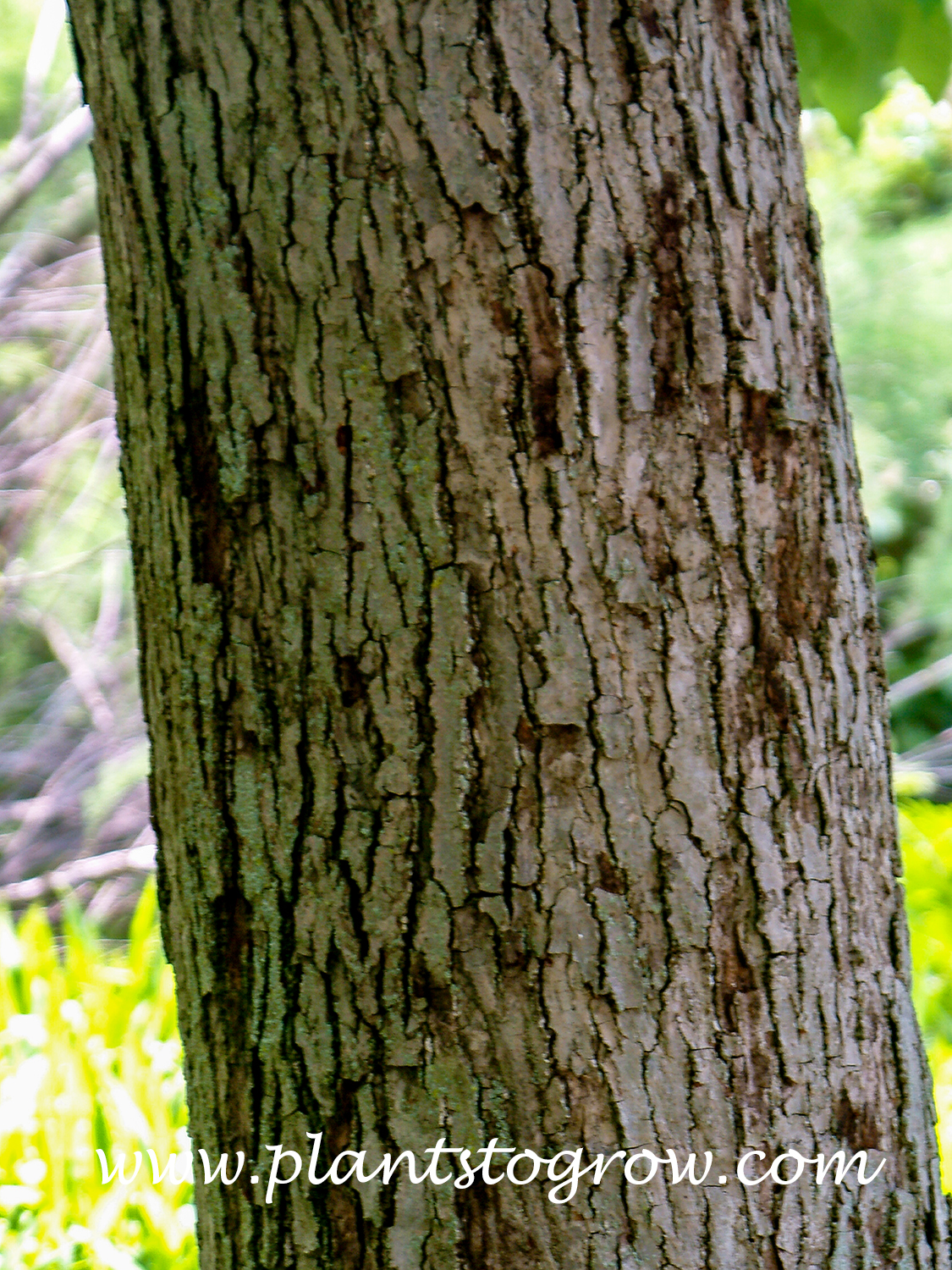
| Stems | Smooth gray bark when young, becoming ridged and furrowed |
| Dimensions | Pyramidal when young, developing into a rounded spreading form reaching 50-80 by 35-50 ft (HS) |
| Propagation | seeds |
| Cultivar Origin | . |
| Misc Facts | The common name comes from the cucumber-shaped fruits that follow the flowers. The genus honors Pierre Magnol, a French botanist (1638-1715), and the specific epithet means "pointed at the tip." |
| Notes & Reference | #01-Manual of Woody Landscape Plants (Dirr), #86-A Gardner’s Guide to Magnolias (Gardiner), #270-North Carolina Extension Gardener Tool Box (https://plants.ces.ncsu.edu/plants) |

Cart