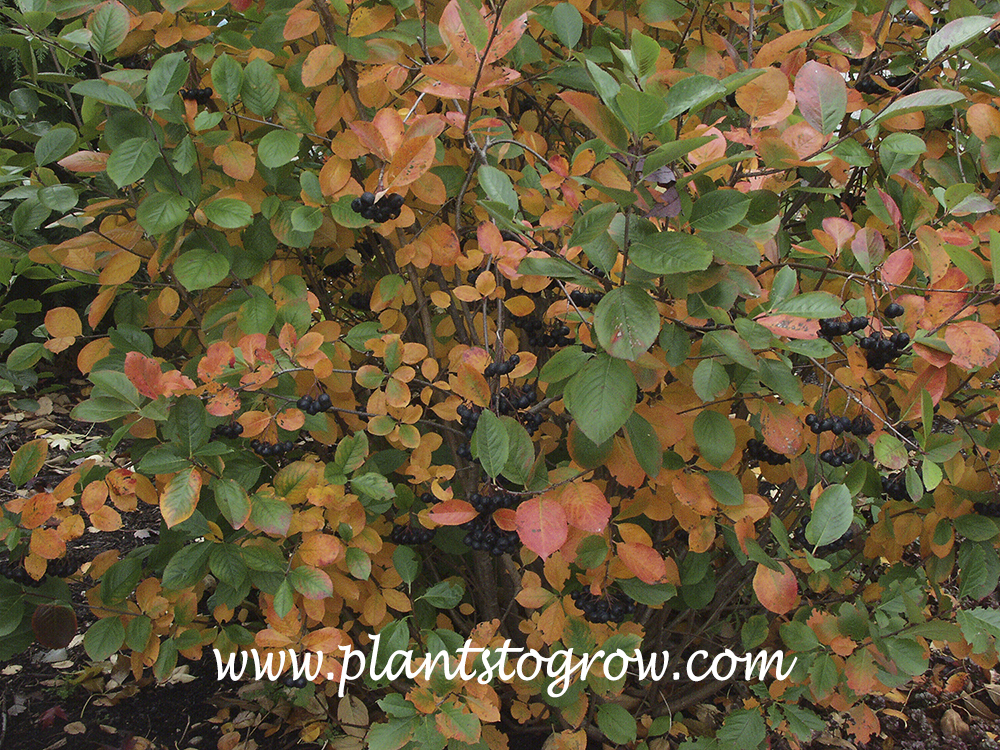
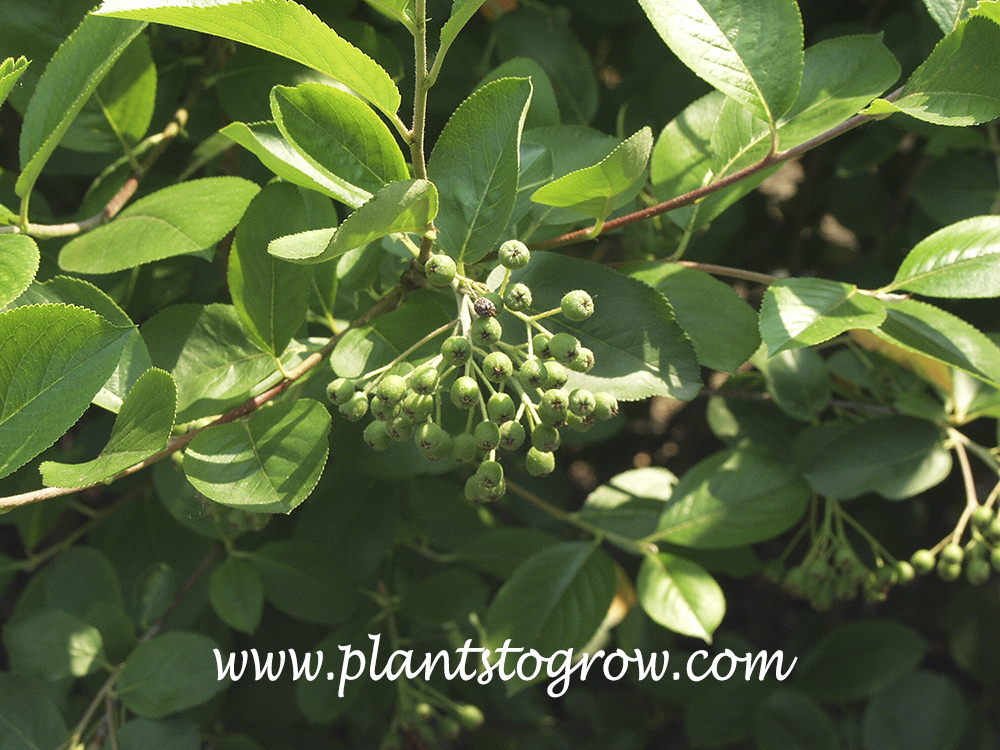
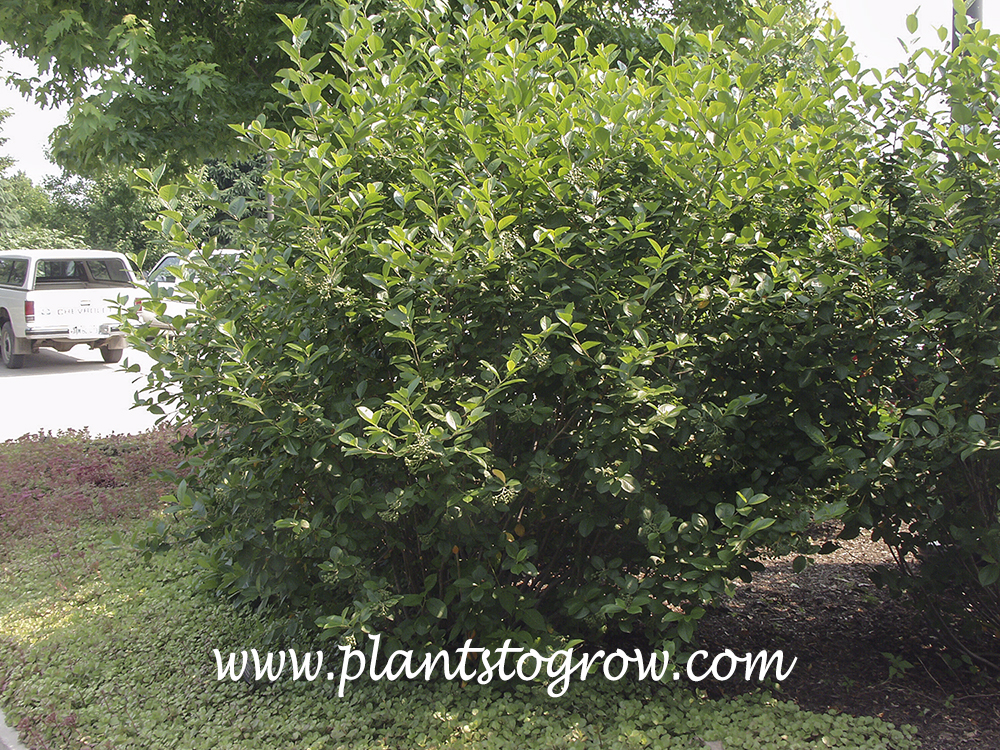
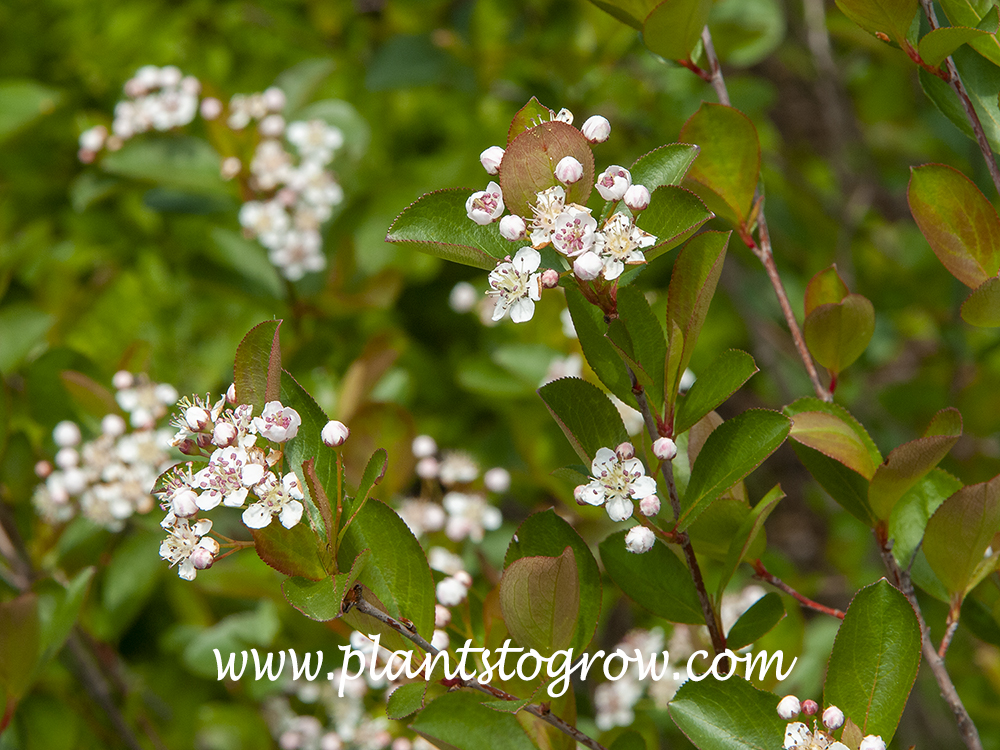
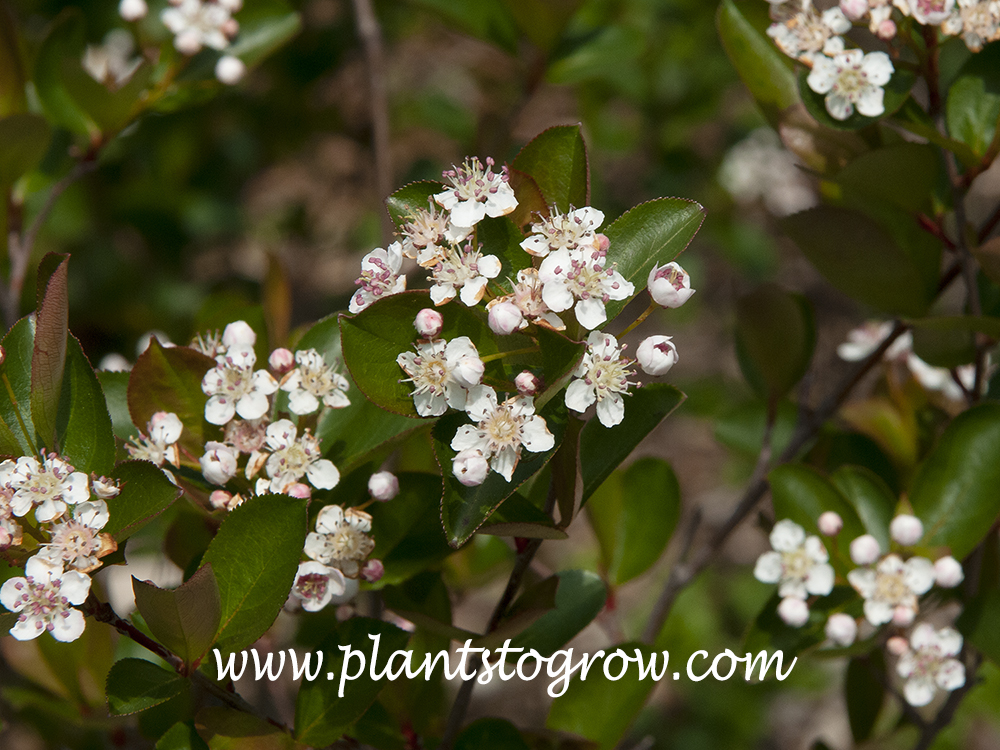
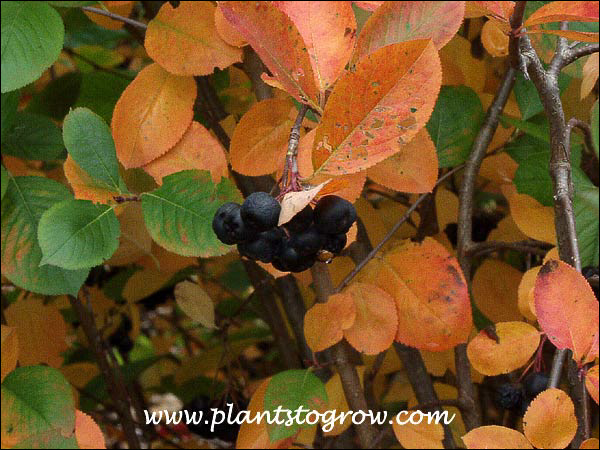
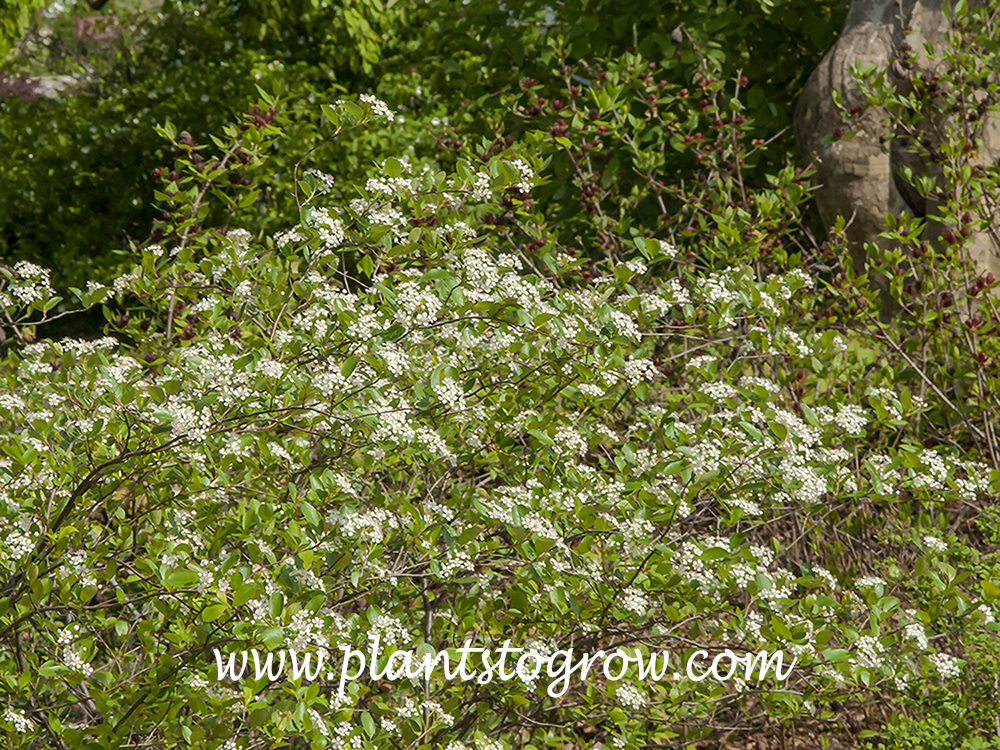
| Description | Black Chokeberry (Aronia melanocarpa elata) A medium spreading, medium height shrub that is adaptable to many different sites. The spring flowers and fall color are two of its better features. Can be a moderately aggressive spreader. |
|---|---|
| Pronunciation | (a-roh-NI-a)(mel-an-OH-car-pa) |
| Plant Type | Shrubs Deciduous, Site author's observations |
| Hardiness Zone | 3-8 |
| Sunlight | sun, mostly sunny, part sun, part shade |
| Moisture | average to moist |
| Soil & Site | average, wet, boggy |
| Flowers | 5 peals, white, borne in a corymb, early spring after the leaves emerge. |
| Fruit | pome, dark purple, almost black, edible but very astringent tasting, birds leave this fruit for last |
| Leaves | dark glossy green leaves during the summer, wine red to purple fall foliage, fall foliage could rival the Burning Bush |
| Stems | twiggy |
| Roots | fibrous |
| Maintenance | control the agressive spreading |
| Propagation | seeds, cuttings |
| Native Site | northeastern United States and adjacent Canada |
| Misc Facts | I have drank tea made from from Black Chokeberry fruit. It has a strong, sour puckering taste. High in anthocyanins and flavonoids, five to ten times higher than cranberry juice. Tea is a red color. |
| Author's Notes | Each day I drive past a pair of Chokeberry and they are around 5 by 5. Plants I have used in landscapes have suckered and formed a thicket. |
| Notes & Reference | #01-Manual of Woody Landscape Plants (Michael Dirr) |

Cart