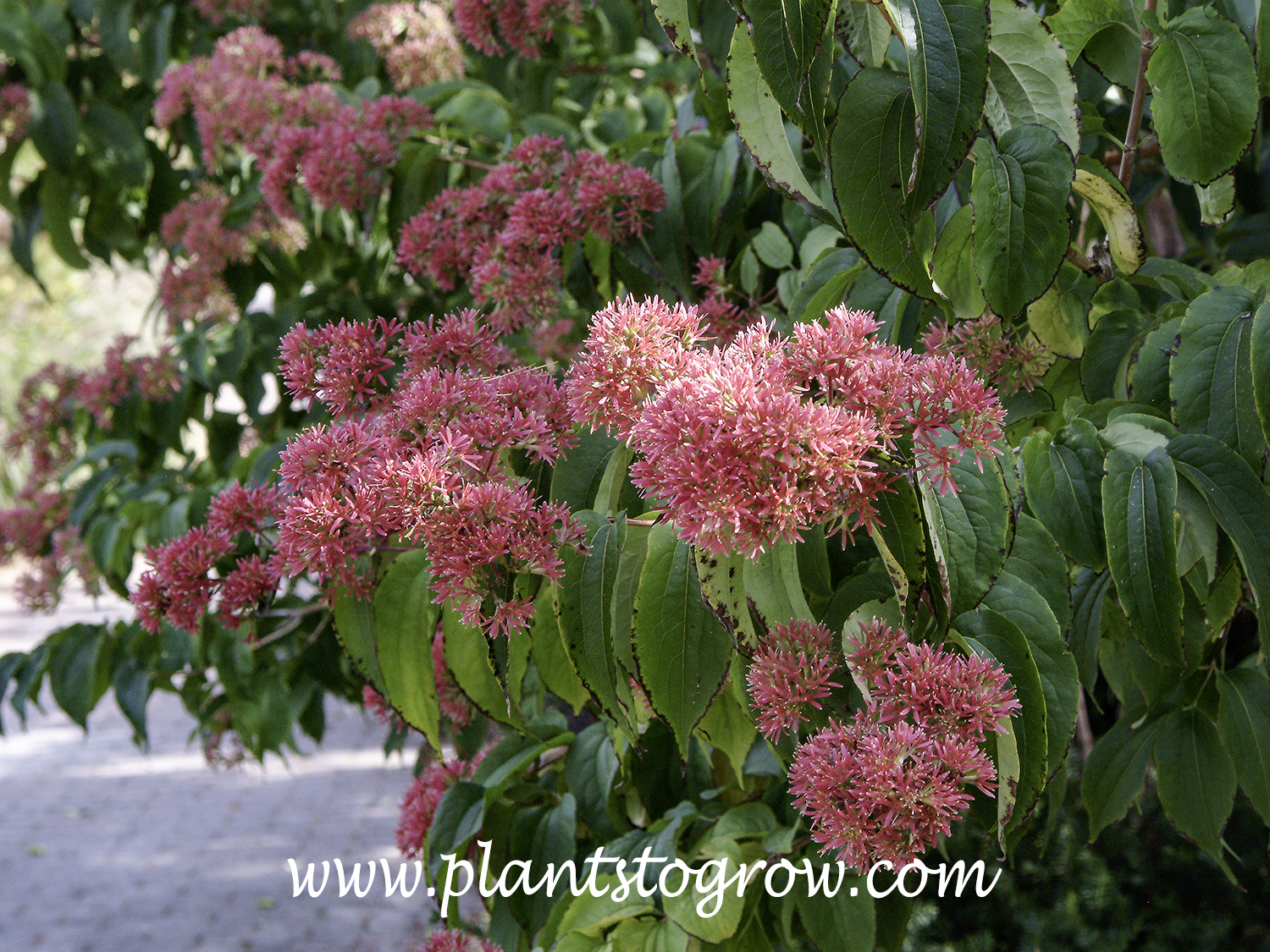
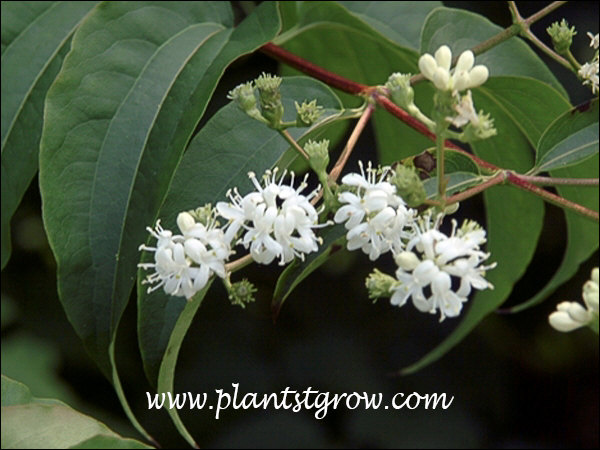
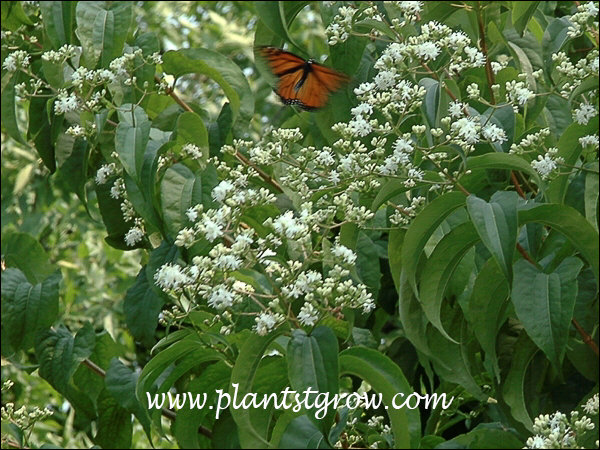
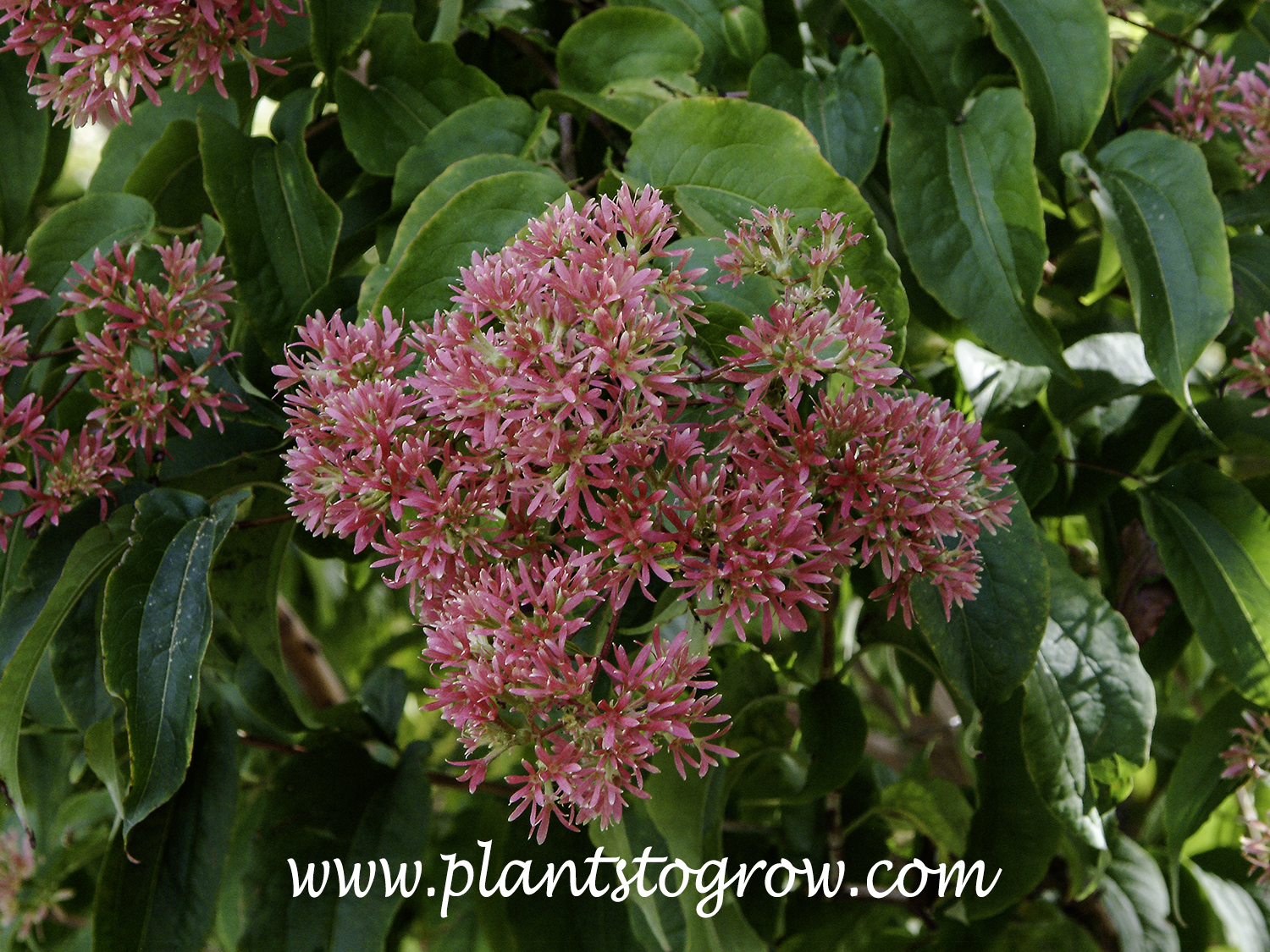
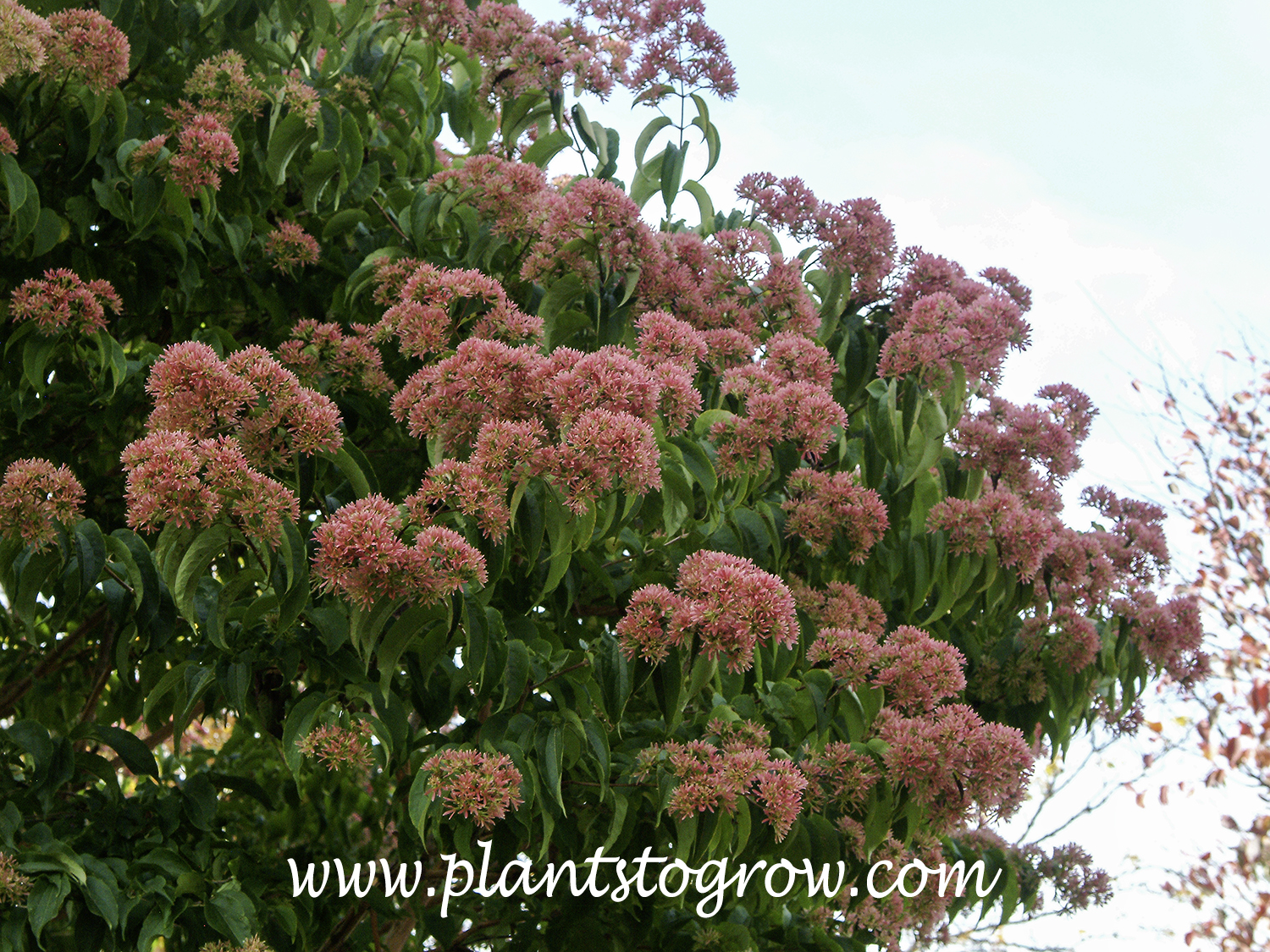
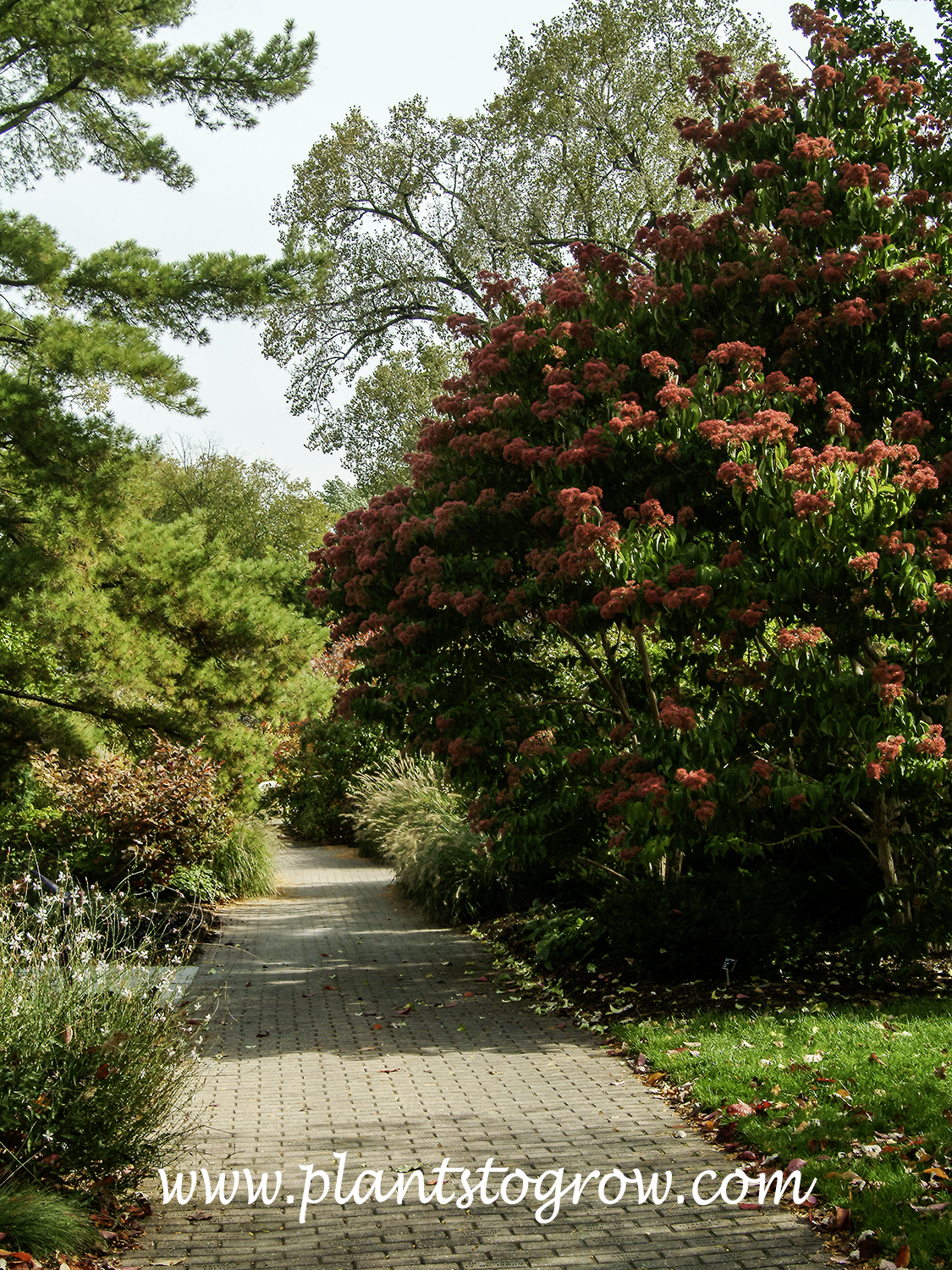
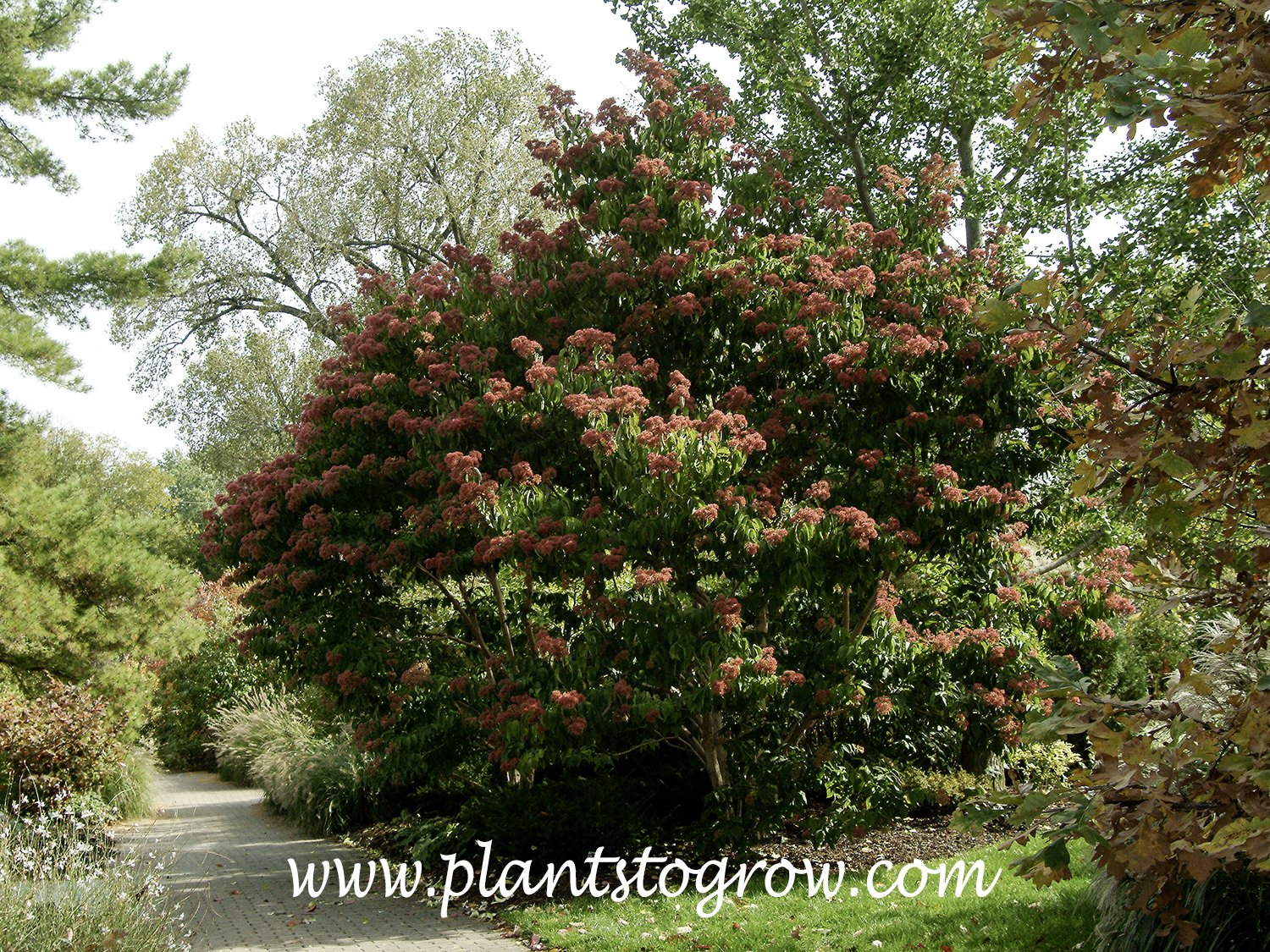
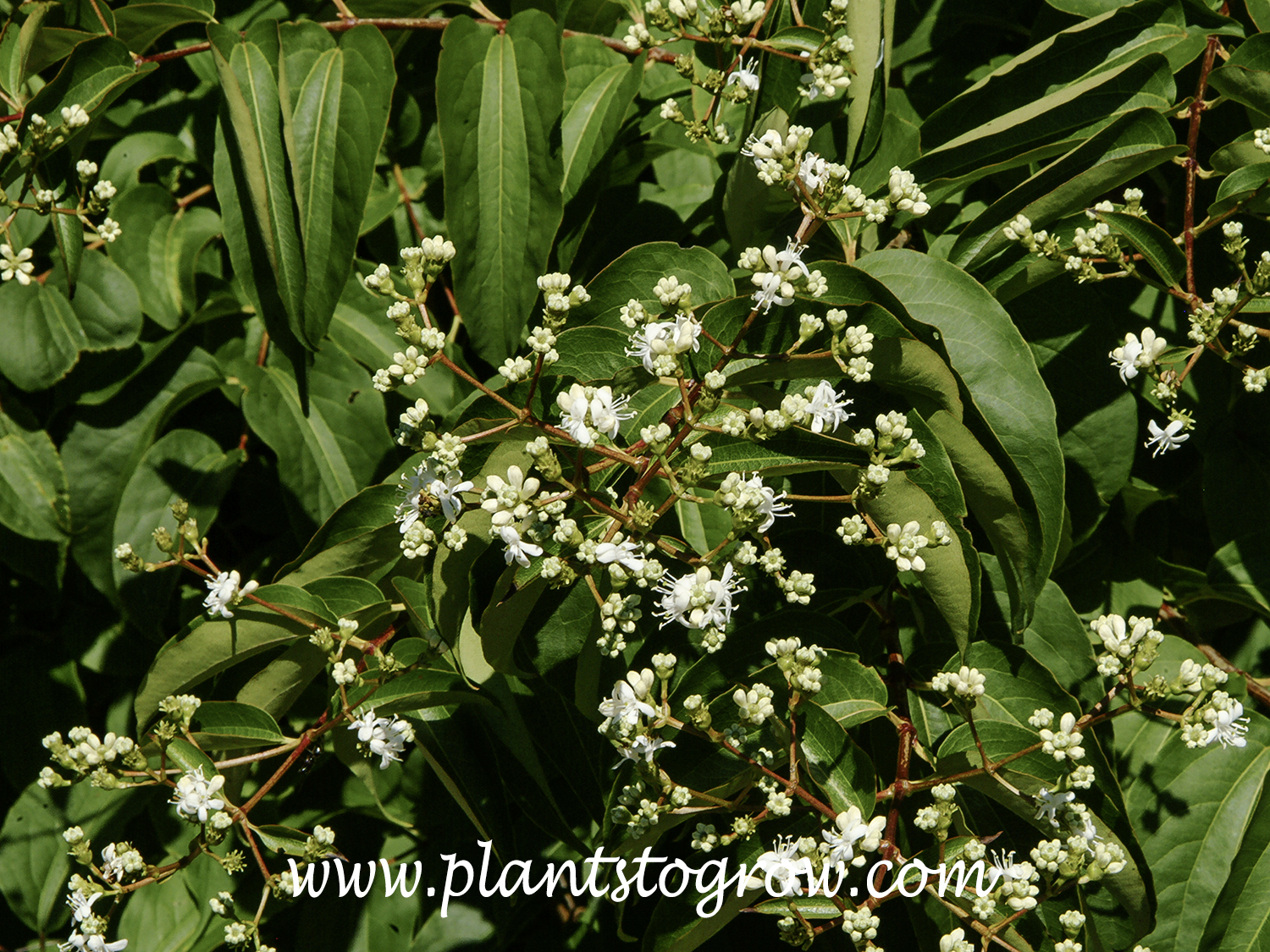
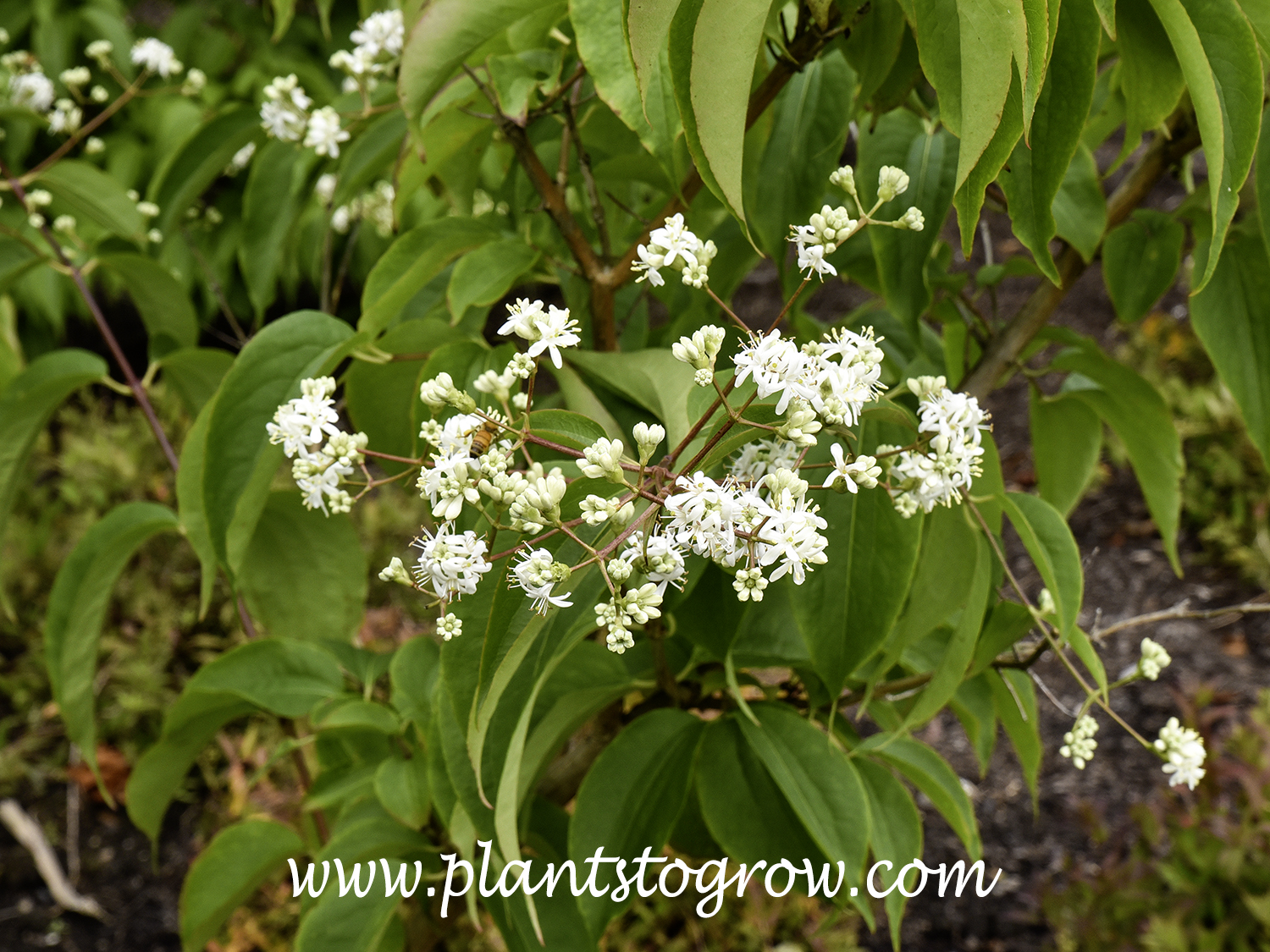
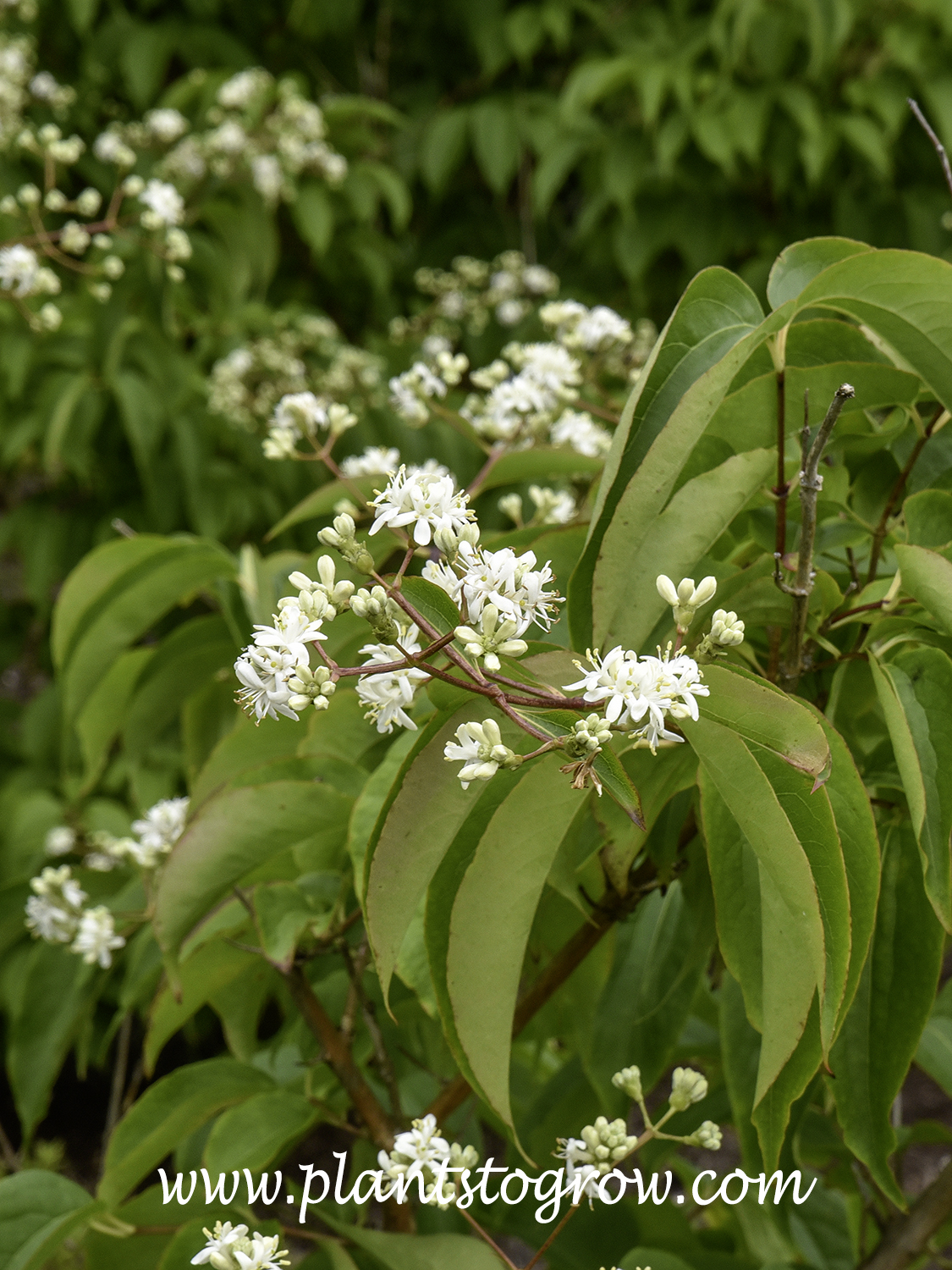
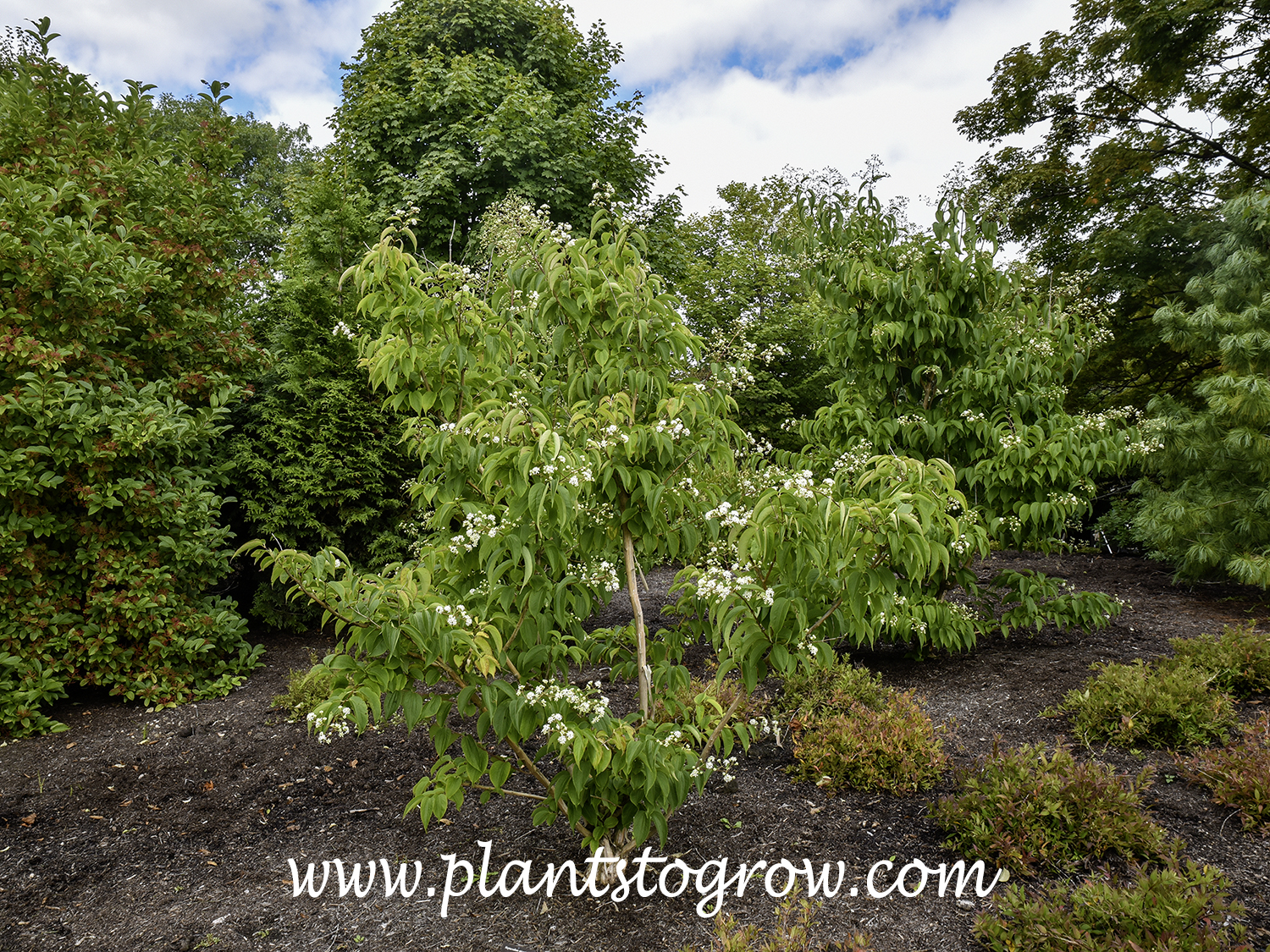
| Description | Seven Son Flower (Heptacodium miconioides) is a shrub that blooms in late summer. Its white flowers can attract butterflies. After the white flower blooms, the shrub produces purplish-red fruit and rose calyces. |
|---|---|
| Pronunciation | (hep-ta-coh-DIE-um)(my-co-nee-OY-deez) |
| Plant Type | Shrubs Deciduous |
| Hardiness Zone | 5-8 |
| Sunlight | Tolerant prefers full, tolerates some shade, benefits from shade in the southern zones |
| Moisture | Prefers moist, tolerates average, not drought-tolerant |
| Soil & Site | Prefers well-drained, organic, acidic soil but tolerates other soil types. |
| Temperature | Has survived down to minus 30 degrees at the Chicago Botanic Garden, Illinois, USA |
| Flowers | White, jasmine-like, borne in terminal panicles and fragrant in late summer. After the white flowers fade, the flower’s sturdier calyx wraps around rounded seeds in vivid colors ranging from cherry red to rose-purple. |
| Fruit | Ornamental capsules and calyces that change from green to rose-purple, lasting 2-3 weeks. |
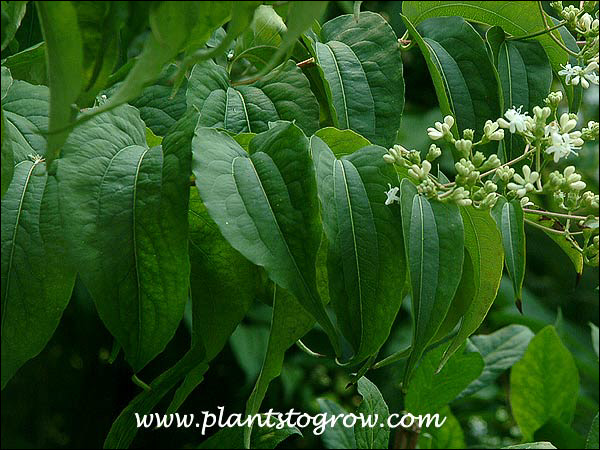
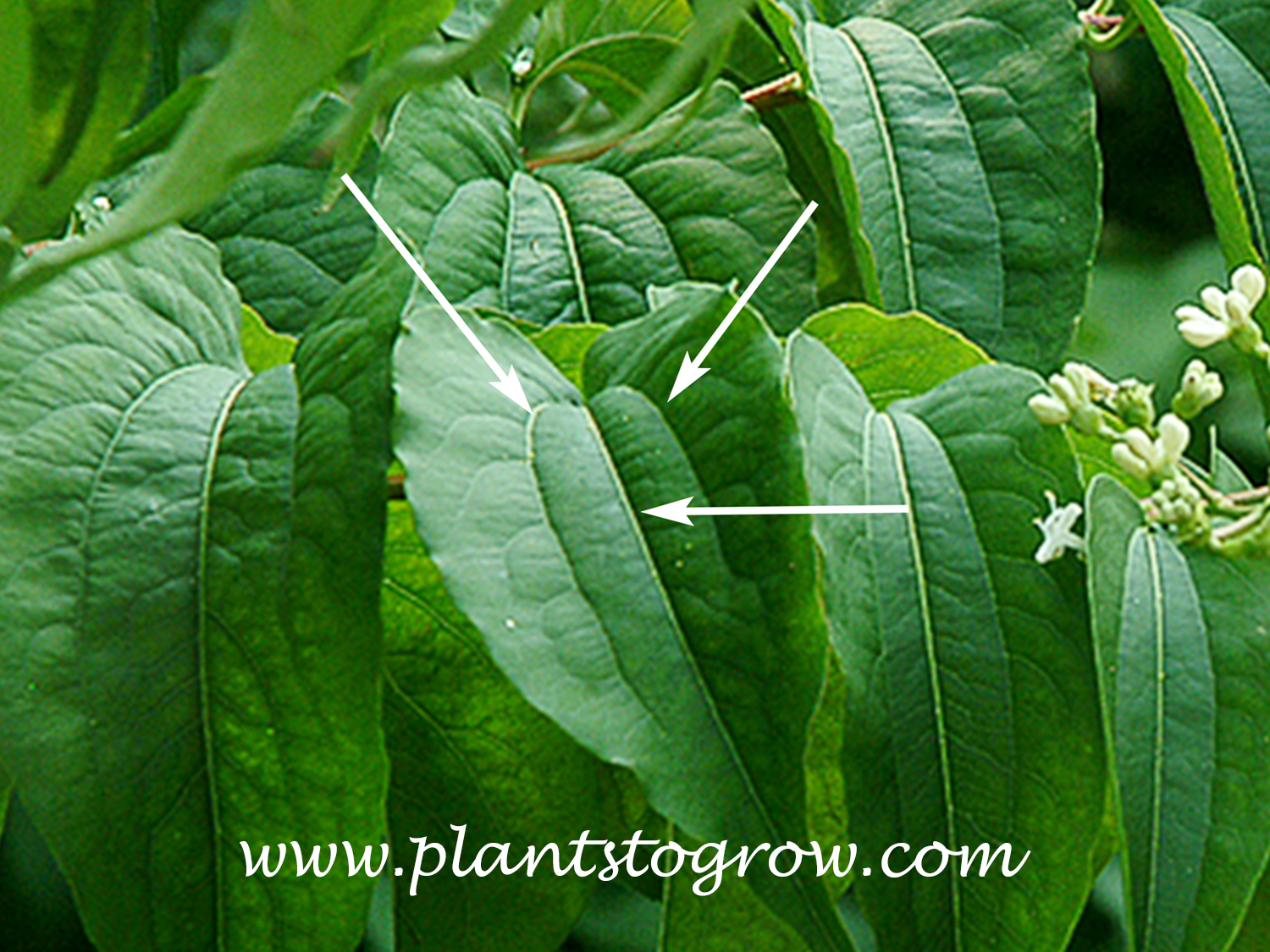
| Leaves | The leaves are green, opposite, simple, ovate-lanceolate with a wavy margin, and have little if any fall foliage color. The leaves have three main veins, which are called trinerved . |
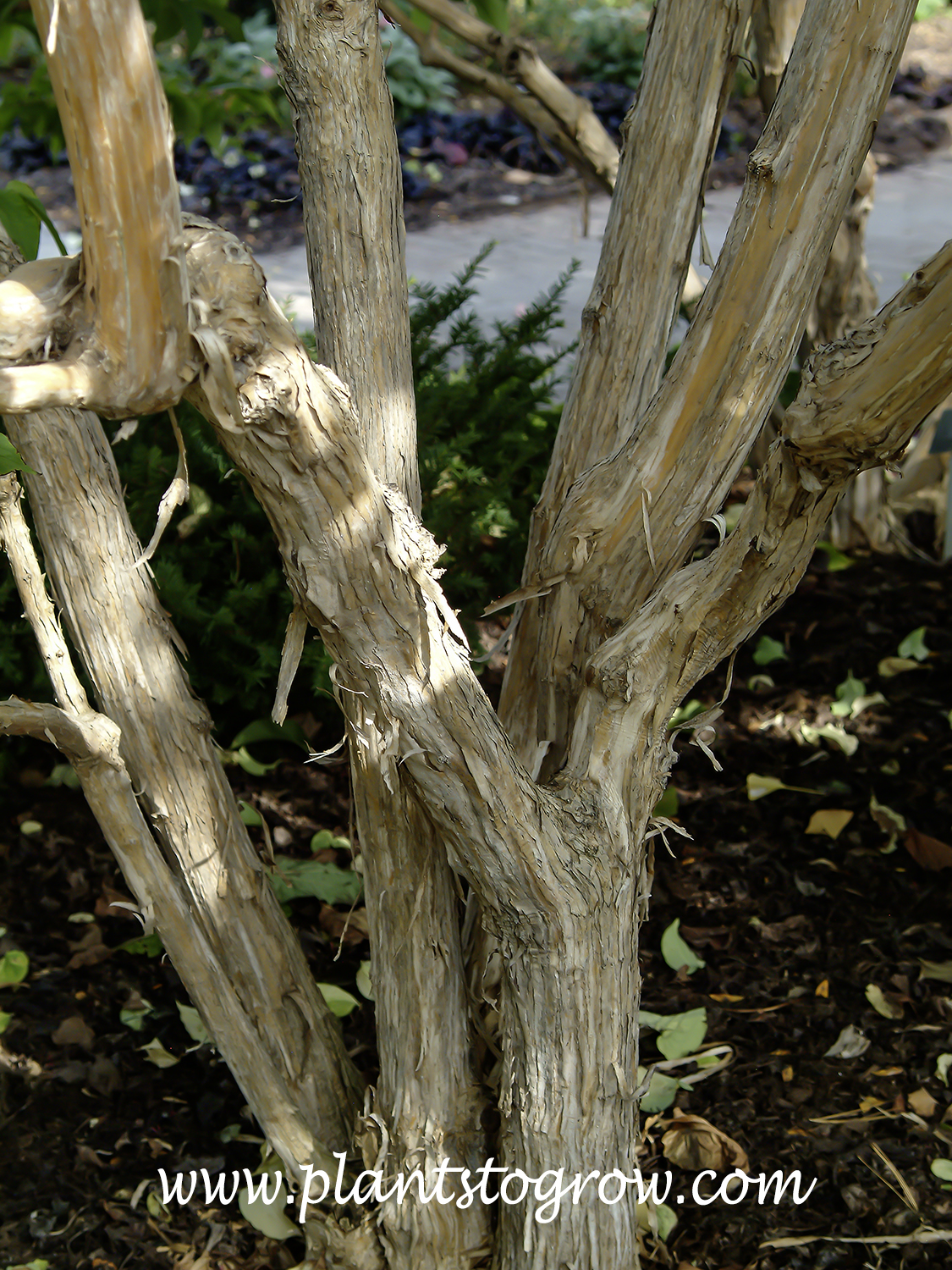
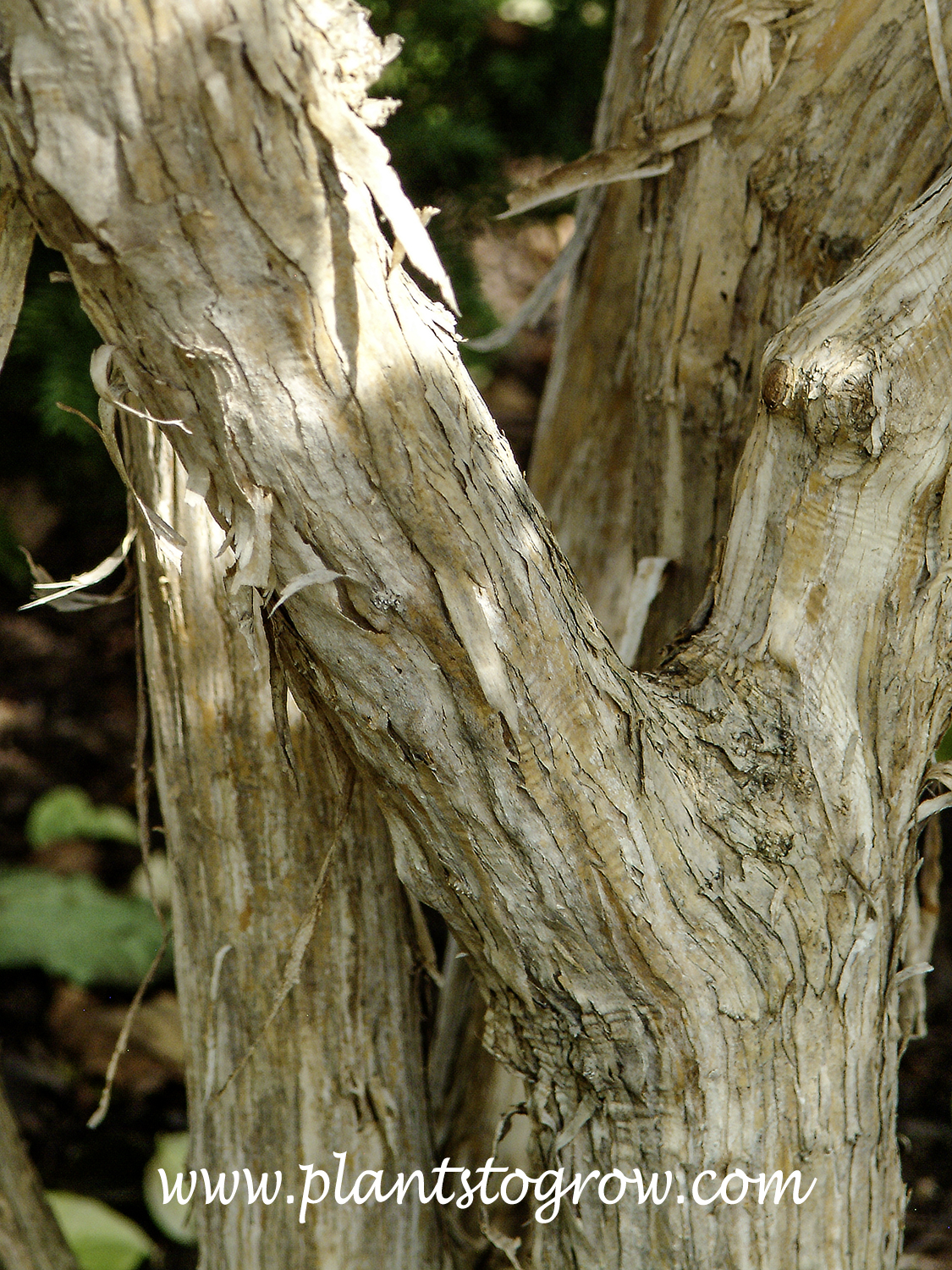
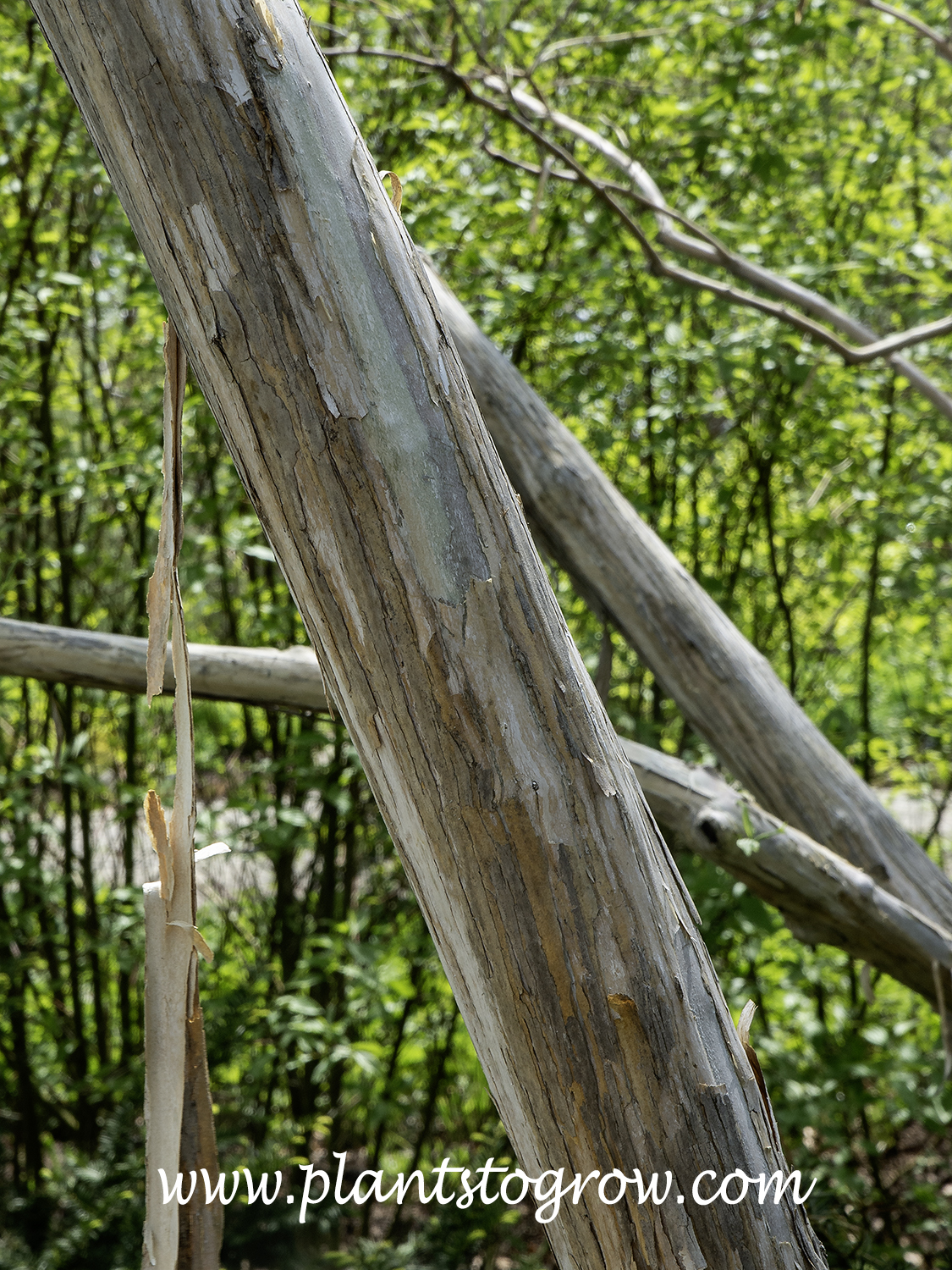
| Stems | exfoliating bark |
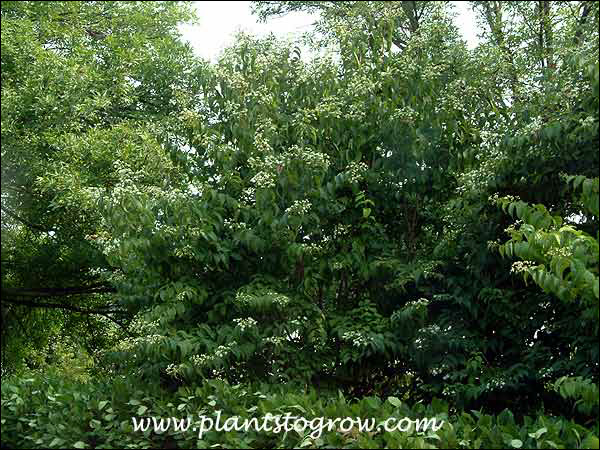
| Dimensions | 10-15 feet in height or more by 1/2 to 3/4 spread, can be grown as a large shrub or a small tree |
| Maintenance | The flower buds form in spring and mature on the new wood. Pruning should be done in late fall or early spring to avoid removing the flower buds. |
| Propagation | seeds, cuttings |
| Native Site | Native to the Zhejiang Province of China. |
| Cultivar Origin | First introduced by H.E. Wilson in 1907, but remained obscure until reintroduced by the Arnold Arboretum in 1980. |
| Misc Facts | Heptacodium is a monotypic genus that derives its name from "hepta" meaning seven, and "codium," referring to the flower head. |
| Author's Notes | At the Chicago Botanic Garden, I saw many large shrubs that were visited by Flutterbys. In college, my Zoology teacher never referred to them as butterflies; he said they "fluttered by". |
| Notes & Reference | #01-Manual of Woody Landscape Plants (Michael Dirr), Heptacodium "Plant with a Bright Future", Tim Wood (Spring Meadow Nursery) |

Cart