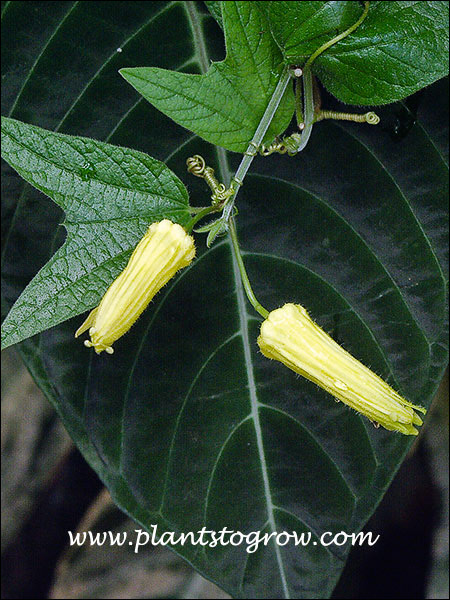
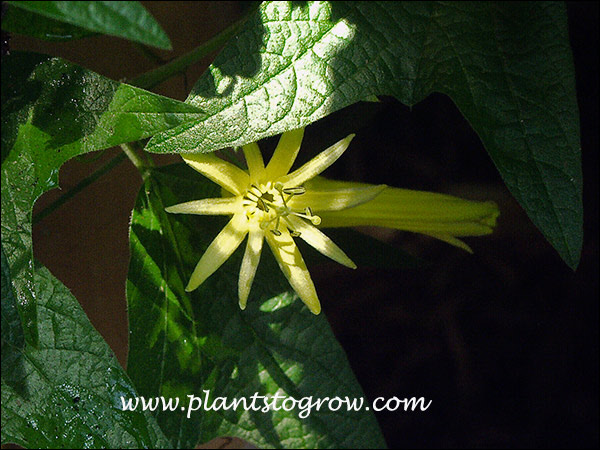
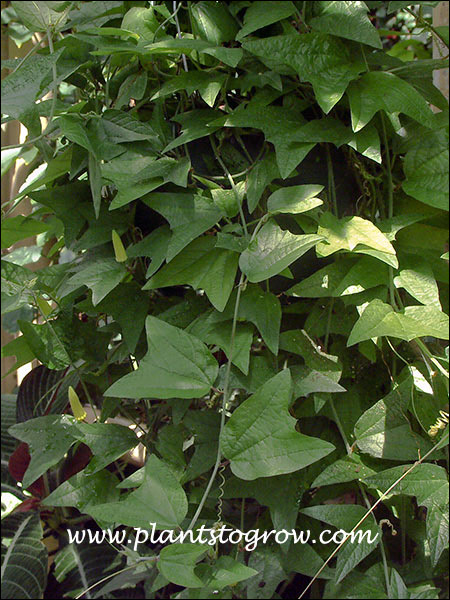
| Description | A tropical small vine with yellow flowers. Can be used as an indoor plant or grown as annual vine in colder climates. |
|---|---|
| Pronunciation | (pass-iff-FLOR-uh) |
| Plant Type | All Plants, Groundcovers and vines |
| Hardiness Zone | (9()10-11 |
| Sunlight | bright sunny |
| Moisture | evenly moist |
| Soil & Site | prefers slightly acid, peaty soils. |
| Growing Media | prefers moist, peaty growing mixes. |
| Temperature | Not less than 30 degrees F |
| Flowers | A very complex unusual flower that is pollinated by hummingbirds. Will bloom up to 10 months in good growing conditions. About 10 sepals and sepals flare out from the floral tube |
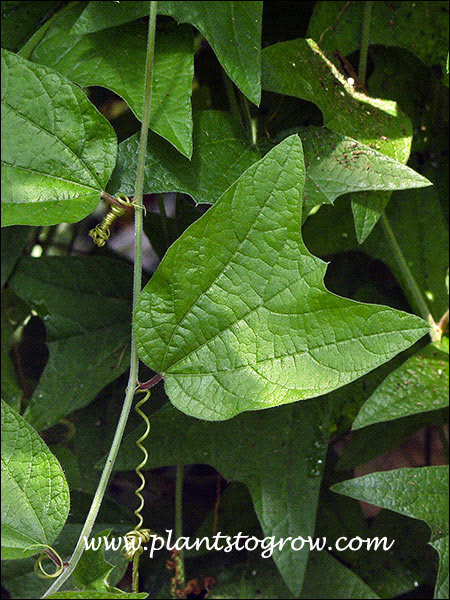
| Leaves | simple, cape-shaped, |
| Stems | Axillary stem tendrils that use contact coiling to grasp supports. |
| Dimensions | Reaches 10-15 feet long under good growing conditions. Might best be grown in Zone 10-11 outdoors or as a greenhouse plant. |
| Propagation | cuttings, seeds |
| Native Site | Native to the Honduras and Central America |
| Cultivar Origin | Discovered in Honduras in 1991 by plantsman John MacDougal. |
| Misc Facts | In 1620 Catholic priests in Peru saw a religious symbolism to this plant. The name 'passion flower' is said to be derive from a resemblance of the blue passion vine's flower to the crown of thorns placed on Christ's head. Others say that the parts of the plant symbolize features of Crucifixion, known as The Passion of Christ. |
| Notes & Reference | #62-Manual of Climbers and Wall Plants (J K Burras, Mark Griffiths) |

Cart