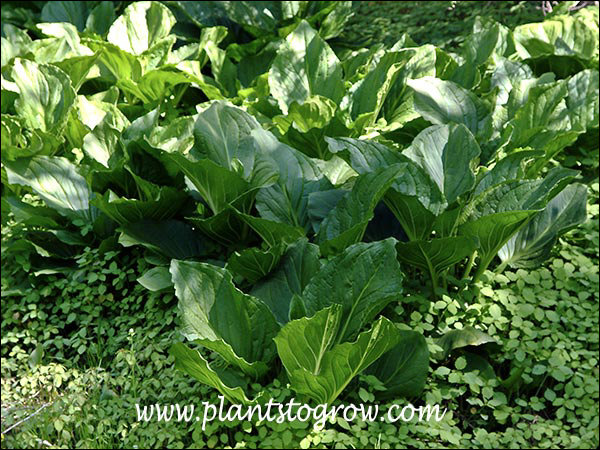
| Description | Skunk Cabbage (Symplocarpus foetidus) is an early-blooming plant found in swamps, bogs, or other wet areas. As the name implies, Skunk Cabbage flowers have a strong skunk or garlic smell. This is used to attract pollinators. |
|---|---|
| Pronunciation | (sim-plo-KAR-pus)(FET-uh-dus) |
| Plant Type | Wild Flowers |
| Hardiness Zone | 5 |
| Sunlight | Does best in partial sun to light shade. |
| Moisture | moist, wet |
| Soil & Site | moist, wet, swampy |
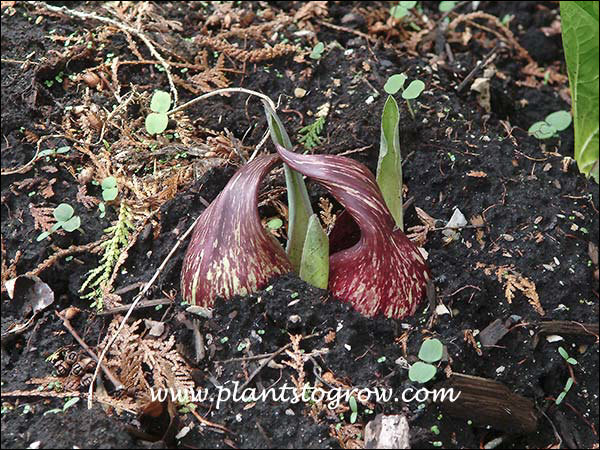
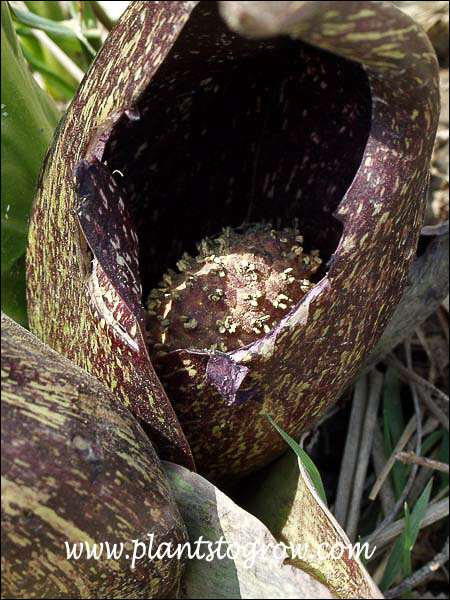
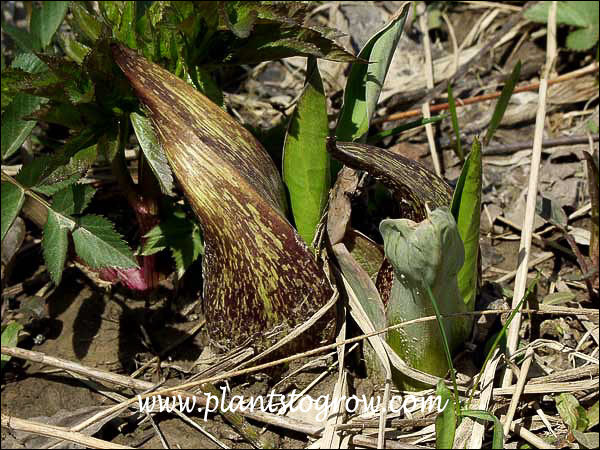
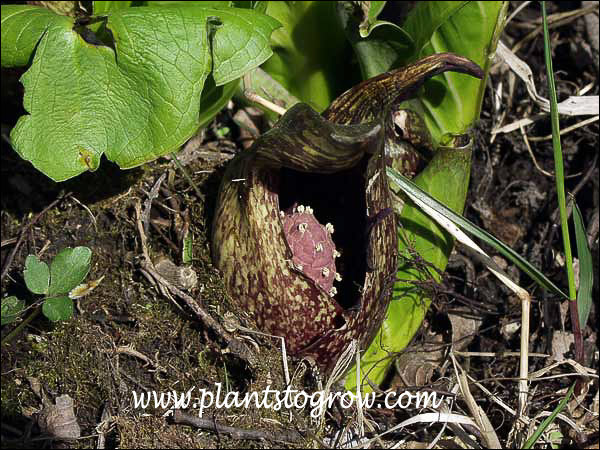
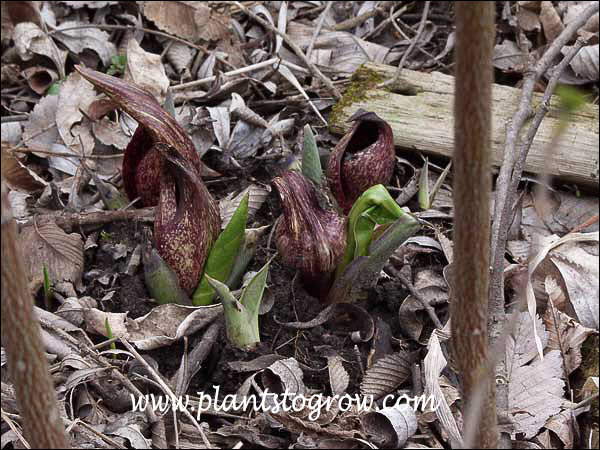
| Flowers | The malodorous flowers are a football shaped spadix surrounded by a huge purple, bronze, green spathe. Flowers appear in March though May. Many times they will emerge through the snow |
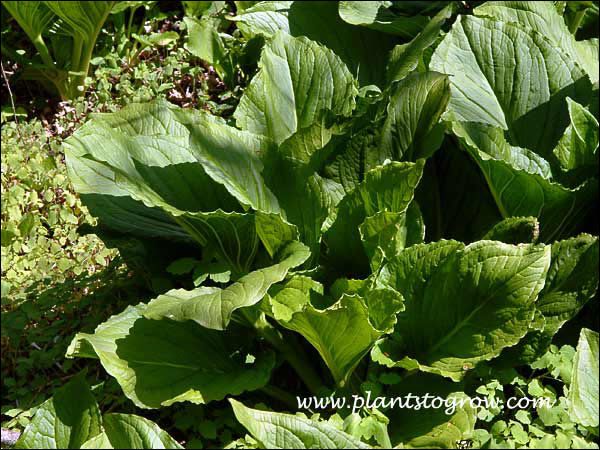
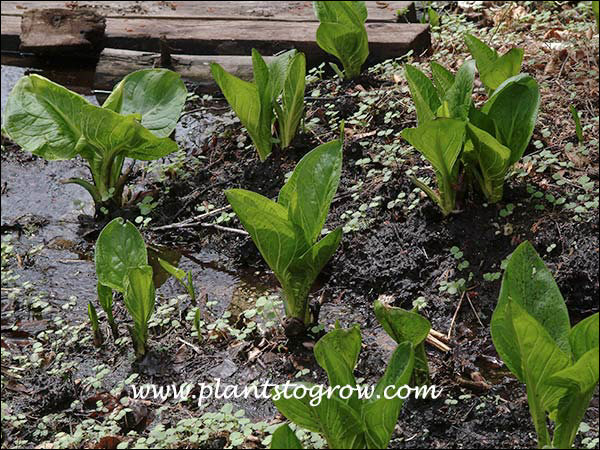
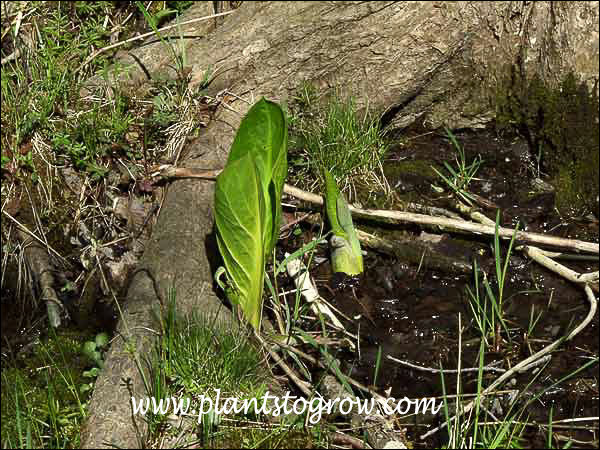
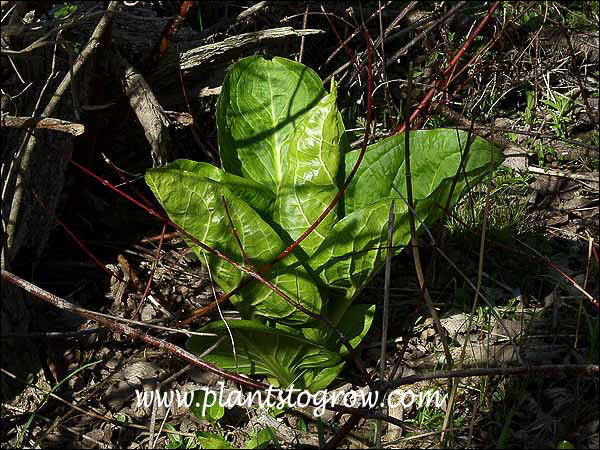
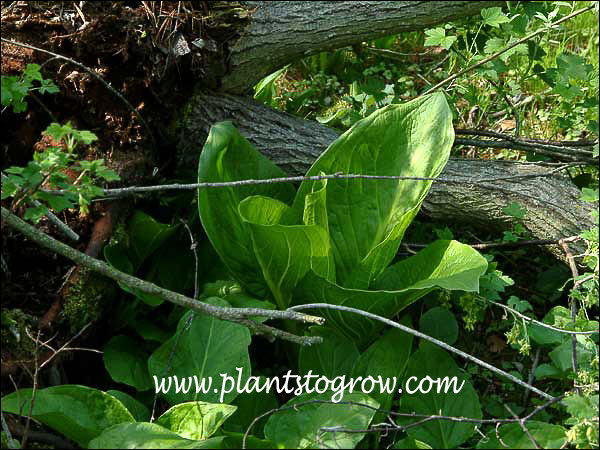
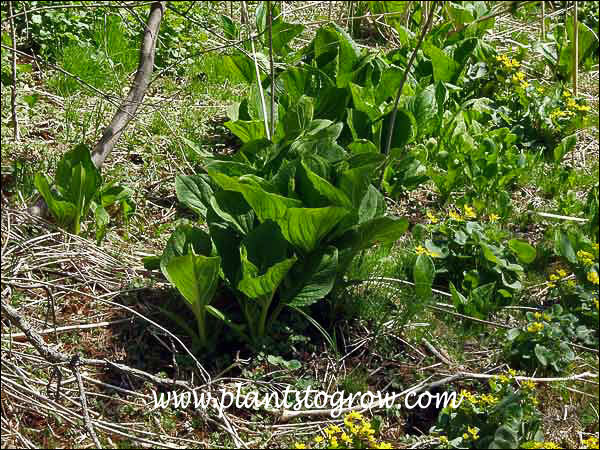
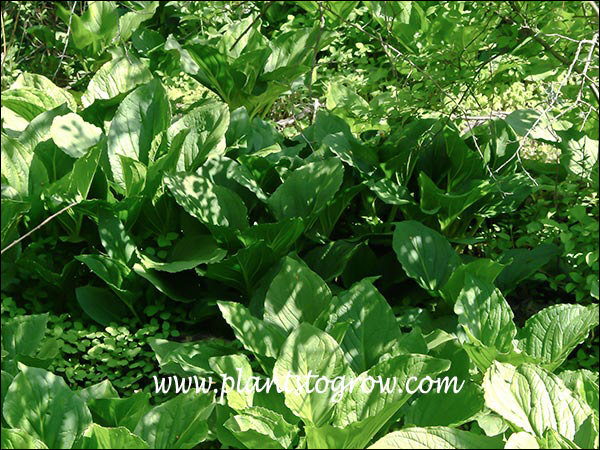
| Leaves | Huge heart-shaped leaves appear after they bloom. They start as a rolled cone of leaves pushing through the soil and unroll into a funnel-shaped rosette of dark green leaves. All the leaves emerge from a single bud that formed from the thick rootstock the previous fall. Leaves emerge after the flowers. |
| Stems | Forms a thick underground rhizome that, once established, is very difficult to move. |
| Roots | Roots will pull the plant down into the soil each year. Older plants have just the spadix above the ground. |
| Propagation | "Growing skunk cabbage (Symplocarpus foetidus) from seed involves planting fresh seeds directly into wet, mucky, shaded soil in the fall, since they cannot be dried out or stored. Seeds should be sown about 1 cm deep soon after harvesting and kept consistently moist. They require cold stratification and will germinate in the fall or the following season". (#291) |
| Misc Facts | Skunk Cabbage is a monotypic genus. The plant is senescent, meaning leaves and stems die back in late summer or early fall. The species name foetidus derives from foetid, meaning 'fetid'. Young cooked shoots are presumably edible if you change the water a few times. Skunk cabbage is one of just a few plants that exhibit thermogenesis, the ability to generate heat through metabolic processes. |
| Author's Notes | Every year, I visit a conservancy where hundreds of these plants grow in the wet areas and near a small stream. I also walk a bridge through a bog at Boerner Botanical Gardens, where the Skunk Cabbage blooms below. Often, the only visible signs of growth are the emerging purple-colored spadix and maybe a few leaves. |
| Notes & Reference | #46-Wetland Plants and Plant Communities of Minnesota and Wisconsin (Eggers and Reed), #284-University of Wisconsin-Madison (hort.extension.wisc.edu), #270-North Carolina Extension Gardener Tool Box (https://plants.ces.ncsu.edu/plants), #274-Site Authors' observations, #291-Lady Bird Johnson Wildflower Center (www.wildflower.org/plants) |

Cart