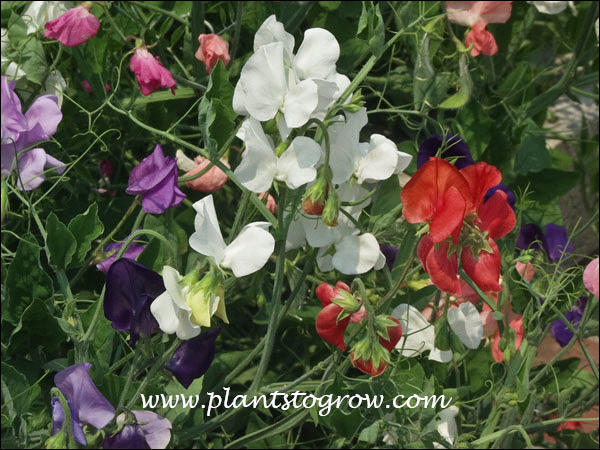
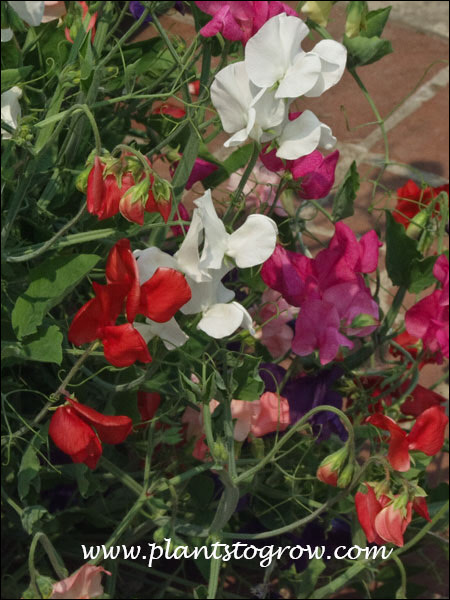
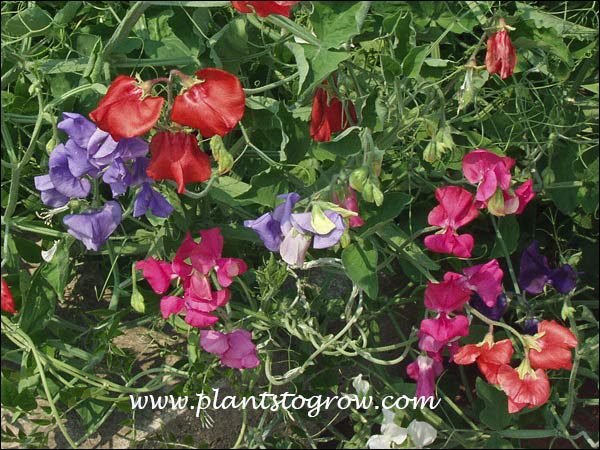
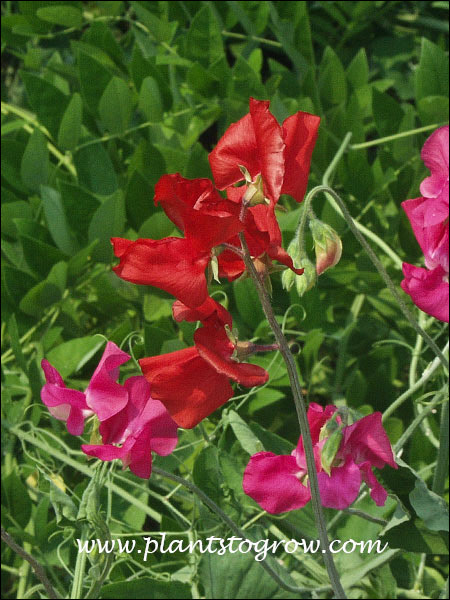
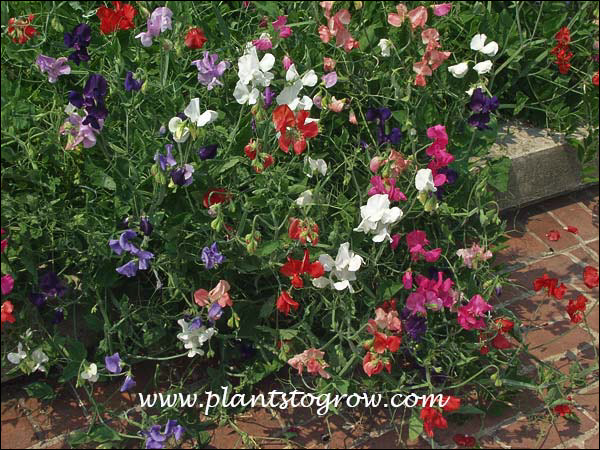
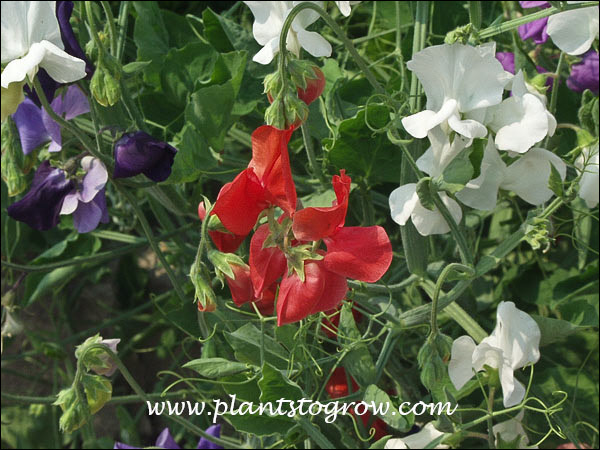
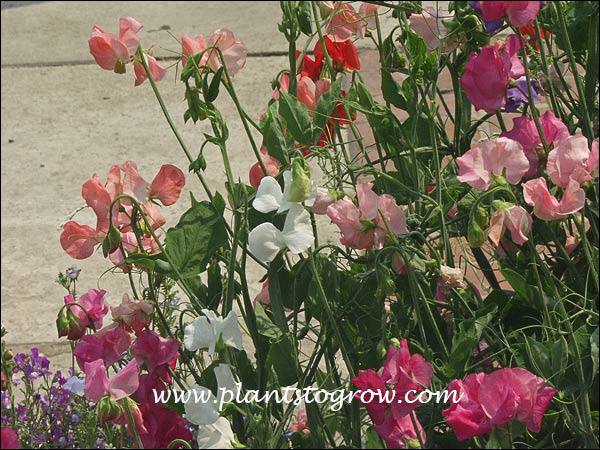
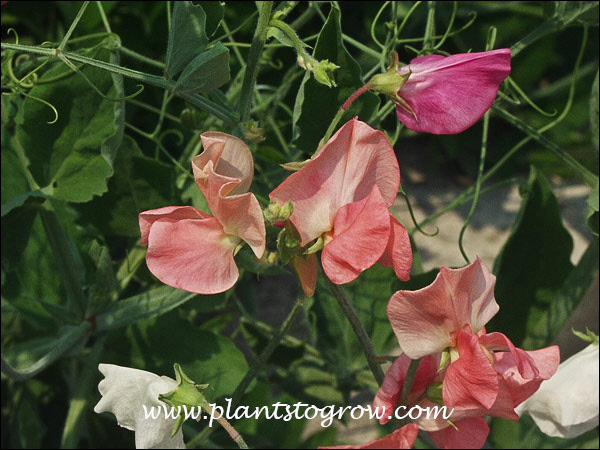
| Description | Sweet Pea (Lathyrus odoratus) A heirloom vine that is still popular in the modern gardens. |
|---|---|
| Pronunciation | (la-THI-rus)(o-do-RA-tus) |
| Plant Type | Annuals |
| Sunlight | full |
| Moisture | moist, hates to be dried out |
| Soil & Site | prefers deep rich organic well drained soils, tolerates average |
| Temperature | will tolerate light frosts, often listed as a hardy annual |
| Flowers | many colors, blooms best in cooler weather, will shut down in the heat of the summer, fragrant |
| Leaves | alternate, pinnate with two leaflets and a clinging terminal tendril, winged stems |
| Dimensions | 2 to 10 feet depending on the variety |
| Maintenance | some varieties may need staking |
| Propagation | can be sow in situ, sow indoors a few weeks before the last frost, sow in peat pots to avoid root disturbance, soak seeds for 2-3 days before sowing, germinates a lower temps than most seeds 55-60 degrees F, plant out early May in zone #5 |
| Cultivar Origin | In 1870 a Scottish nurseryman, Harry Eckford, crossbred the original flower, creating the ornamental and sweetly scented sweet pea we know today |
| Misc Facts | Even though the word Pea is in the name the seeds and flower of this plant are toxic. Laythyrus is the Greek name for Pea. |
| Notes & Reference | :#40-Herbaceous Ornamental Plants (Steven Stills), #109-Annuals and Tender Perennials for North American Gardens (Wayne Winterroud) |

Cart