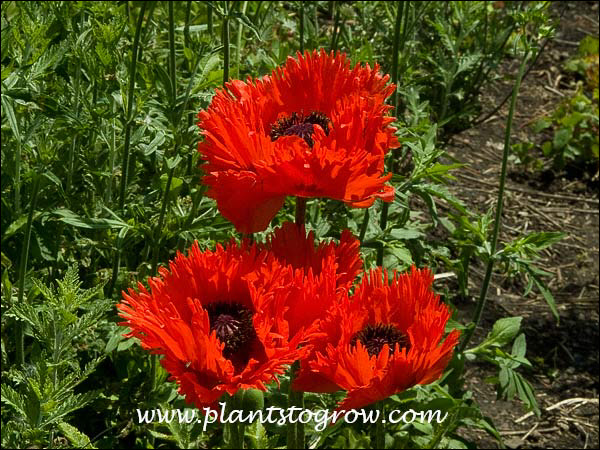
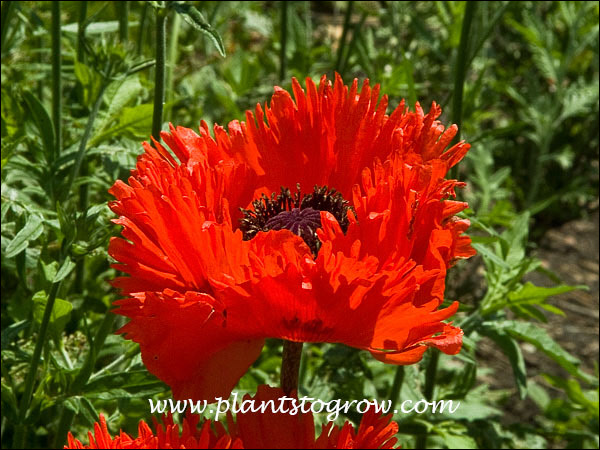
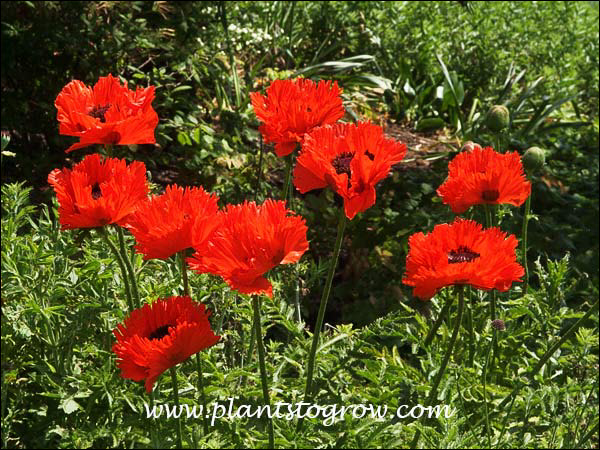
| Description | Turkenlouis Poppy (Papaver orientalis) has brilliant red to reddish orange flowers with ruffled almost double petals. A well grown Turkenlouis Poppy is a real crowd please. |
|---|---|
| Pronunciation | (pa-PA-ver)(o-ree-en-TA-le) |
| Plant Type | Perennials Hardy |
| Hardiness Zone | 3-7(8-9) |
| Sunlight | full sun |
| Moisture | average, moderately drought tolerant |
| Soil & Site | average, well drained |
| Flowers | large 4-5 inch, goblet-shaped, red to reddish orange, cupped petal, edges look like they were cut with a pinking shears, black center, blooms end of May early June |
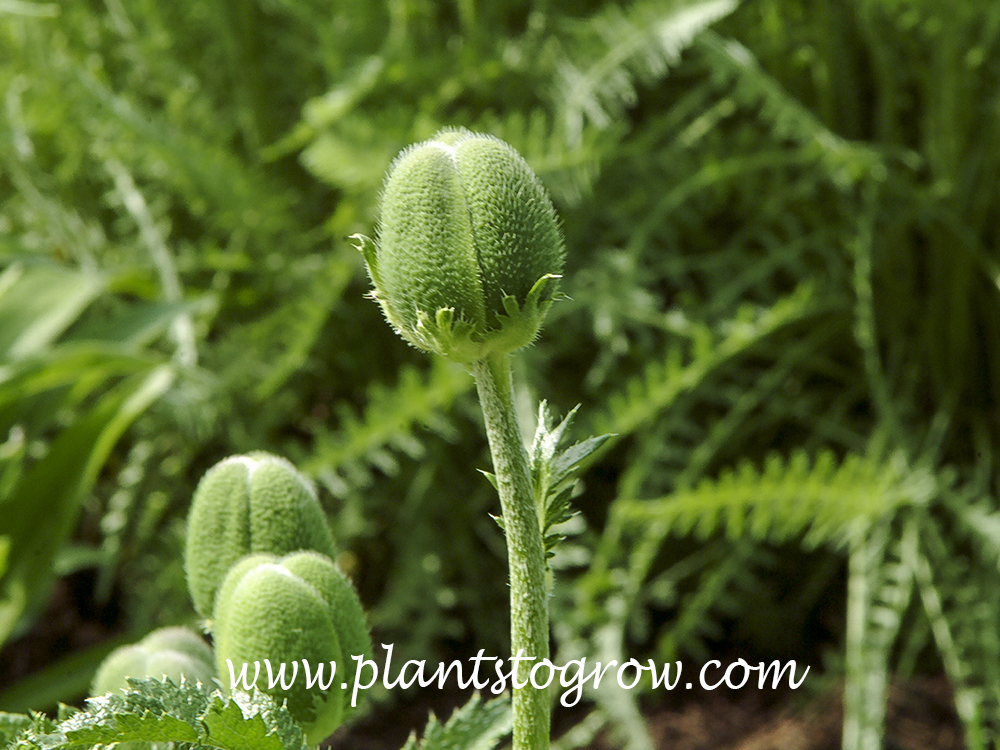
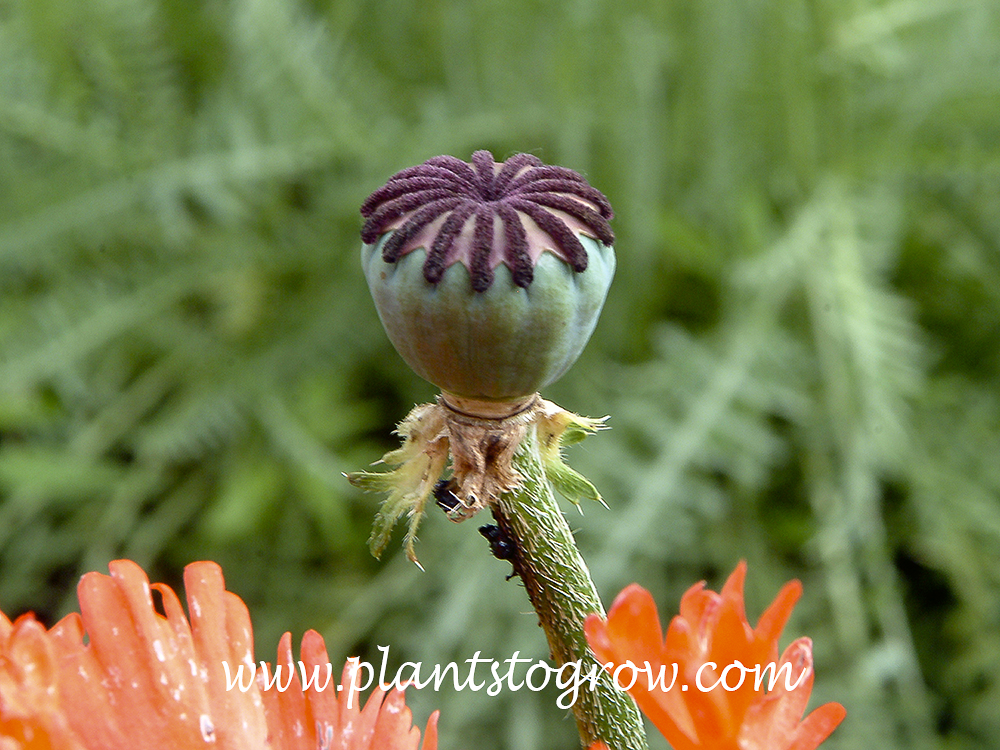
| Fruit | spherical seed capsule |
| Leaves | after the plant blooms it will go dormant and the foliage dies back, reappearing in the fall |
| Dimensions | 24-30 inches |
| Maintenance | Best planted in early fall, but spring is Ok. The spring plants may not grow as strong until the fall or next spring. Make sure to place plants around the Poppy to cover the space left after it goes dormant |
| Propagation | some named cultivars will come true from seed many won't, easily grown from root cuttings |
| Native Site | Native to northeastern Turkey and Iran. |
| Misc Facts | The ornamental Poppy has been in cultivation since at least 1817. Hybrid Poppy were first introduced by Amos Perry a English nurseryman. |
| Author's Notes | When we grew these plants in my nursery and dug them up, a part of the root was always left resulting in many small Poppies growing from the cut roots. A main problem for Poppies is if they are in full bloom, it becomes hot and sunny, add in some wind, the short bloom period is cut even shorter. |
| Notes & Reference | #04-Herbaceous Perennial Plants (Allan Armitage), #06-Perennials for the American Gardens (Ruth Rodgers Clausen and Nicolas H Ekstrom), Boerner Botanical Gardens data base |

Cart