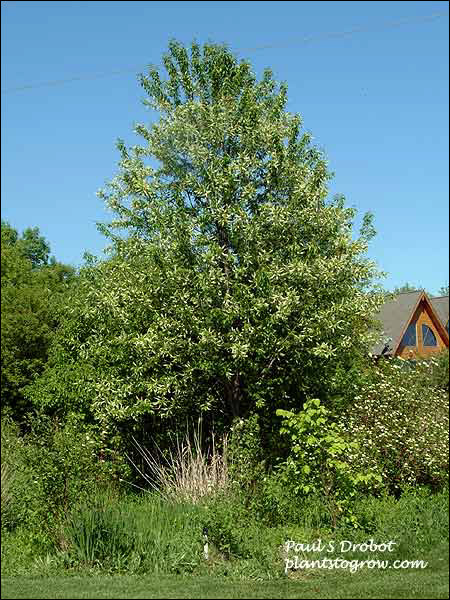
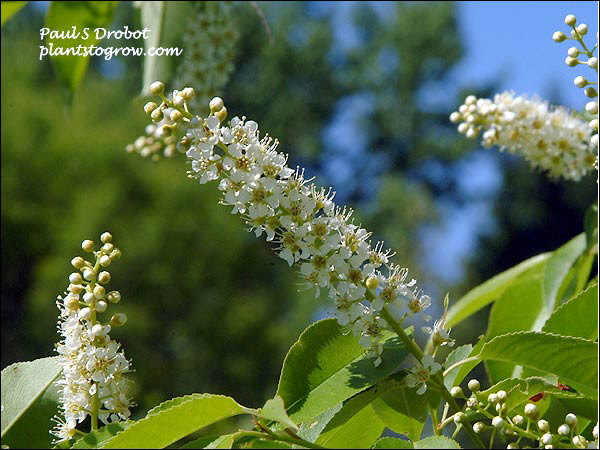
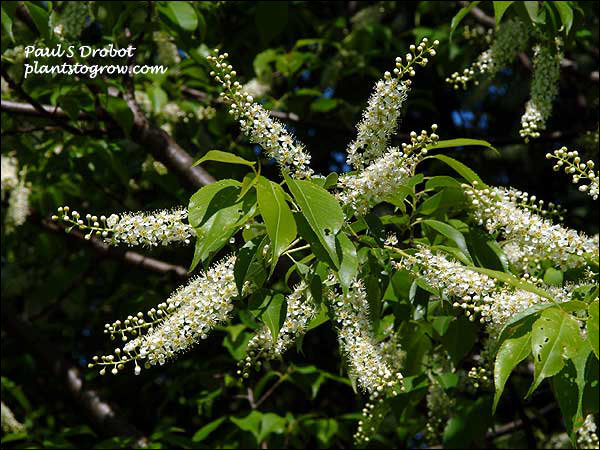
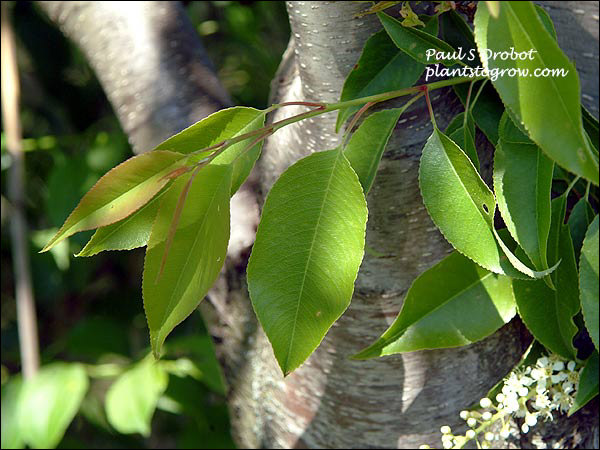
| Description | A common native tree valued for its lumber. |
|---|---|
| Pronunciation | (PRO-nus)(ser-OT-i-na) |
| Plant Type | All Plants, Trees Deciduous |
| Hardiness Zone | 4 |
| Sunlight | full, tolerates some shade |
| Moisture | prefers moist tolerates average |
| Soil & Site | prefers deep moist fertile, tolerates average |
| Flowers | white, 1/3", borne in pendulous racemes, May |
| Fruit | red fruit ripening to black, edible having a bitter, wine taste, birds and other animals readily consume it |
| Leaves | simple, alternate, small incurved teeth, lustrous green above, light green beneath, conspicuous hair along the midrib, yellow to red fall foliage |
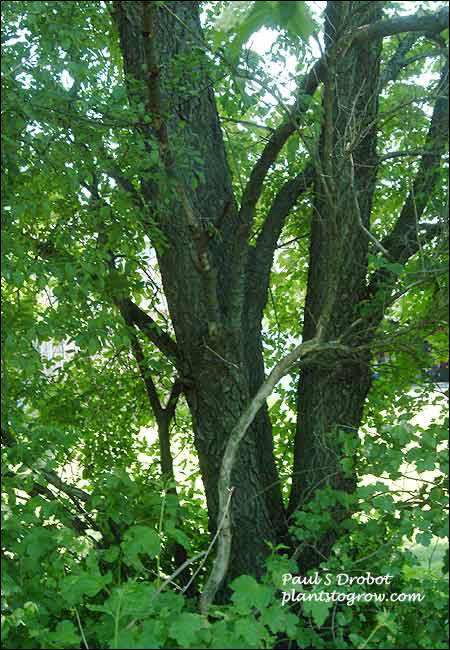
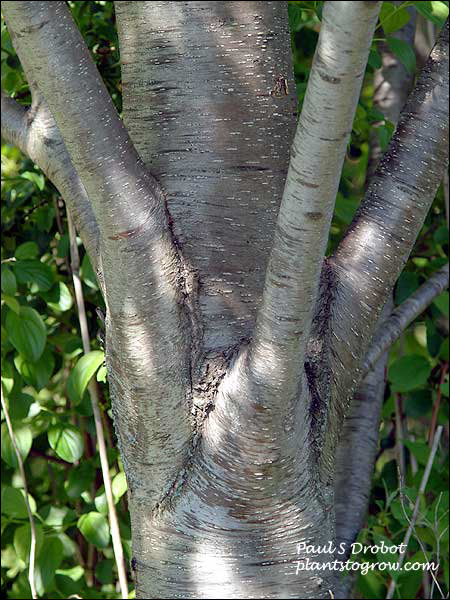
| Stems | broken, dark grey to black bark |
| Dimensions | 50-60 feet tall, occasionally over 100 feet. |
| Maintenance | reseeds it’s self and can become a weedy pest. |
| Misc Facts | The dark grained wood is highly valued for furniture and cabinets. |
| Author's Notes | I have one growing in the partial shade of a fence line and one in full sun. Full sun plant produces more flowers. |
| Notes & Reference | #01-Manual of Woody Landscape Plants (Michael Dirr), #39-The Natural History of Trees (Donald Cultrose Pattie) |

Cart