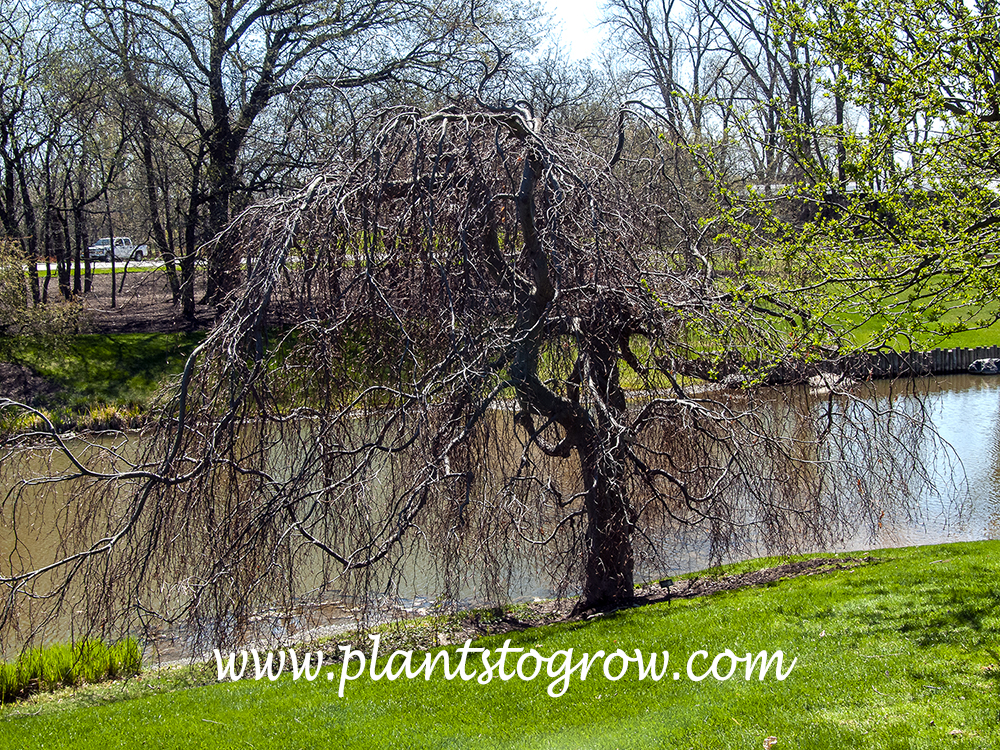
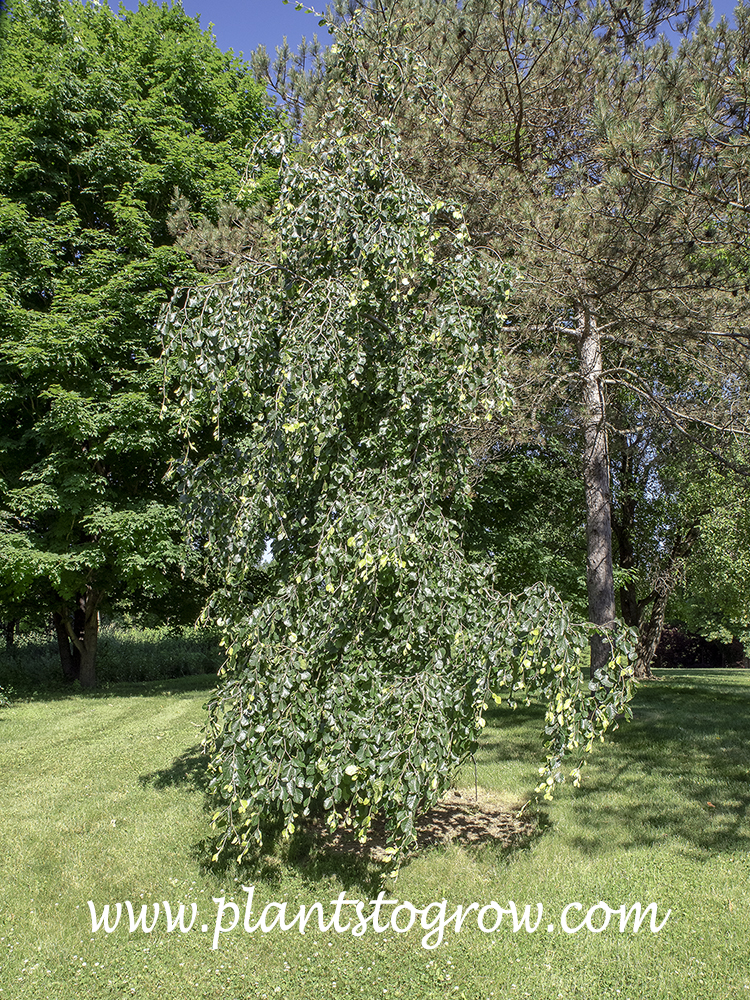
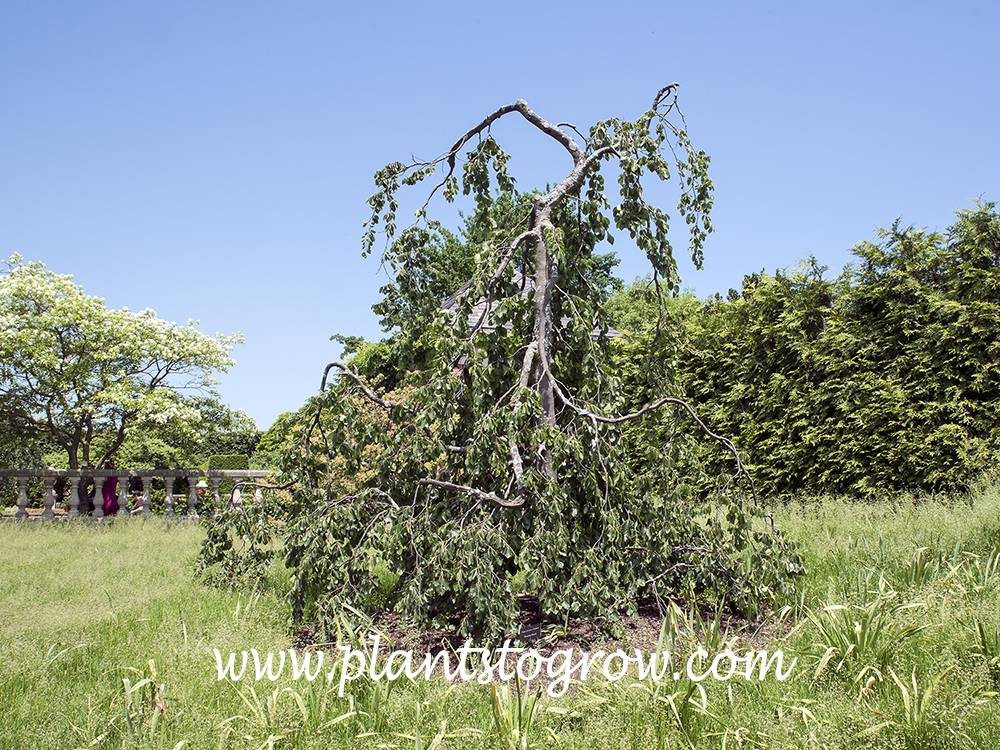
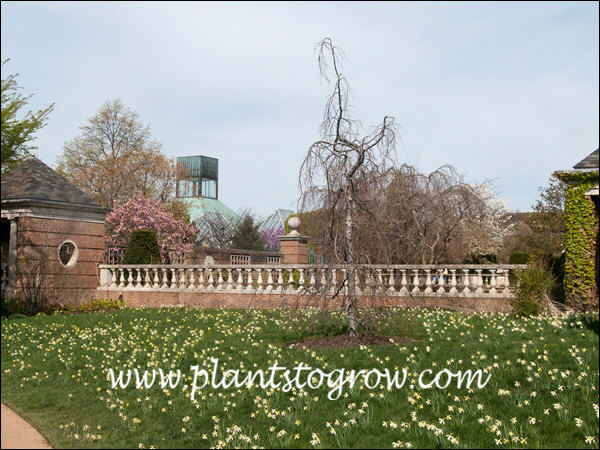
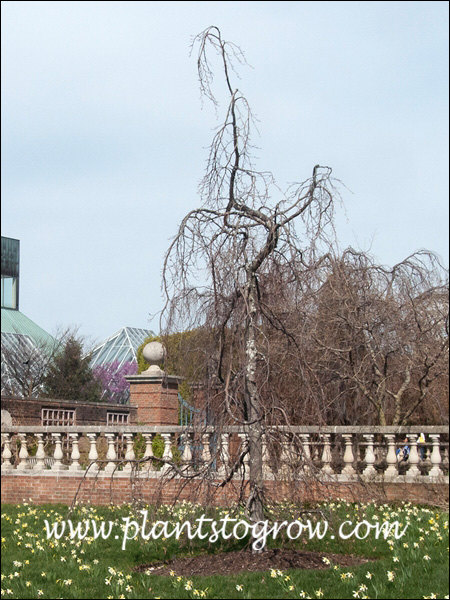
| Description | Weeping Beech (Fagus sylvatica pendula) A weeping form of the European Beech. Can become a fairly large tree or trained to be much shorter with weeping branches touching the ground. |
|---|---|
| Pronunciation | (FA-gus)(sil-VAT-i-ka) |
| Plant Type | All Plants, Trees Deciduous |
| Hardiness Zone | 4-7 |
| Sunlight | full, mostly sunny, part shade |
| Moisture | average |
| Soil & Site | average, intolerant of soggy wet soils |
| Fruit | triangular nuts enclosed by spiny bracts, edible |
| Leaves | simple, green |
| Stems | weeping |
| Dimensions | 35-50 by 20-40 feet (HS), pendant branches |
| Propagation | asexual |
| Cultivar Origin | England, 1836 |
| Misc Facts | Fagus is derived from Greek phegos (beech) or phago- (eating) component, and is the Latin name for 'beech tree'. Sylvatica means 'wild, of or from woods or forests". (#145) |
| Notes & Reference | #144-Missouri Botanical Gardens web site (www.missouribotanicalgarden.org), #145-Plant Lives, (Sue Eland) www.plantlives.com, #245-Trees for American Gardens (Donald Wyman) |

Cart