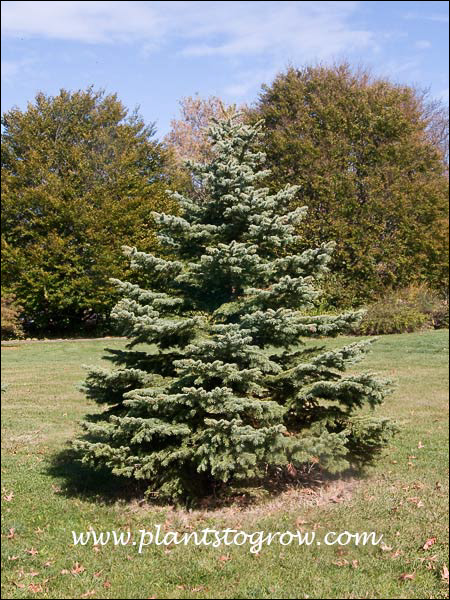
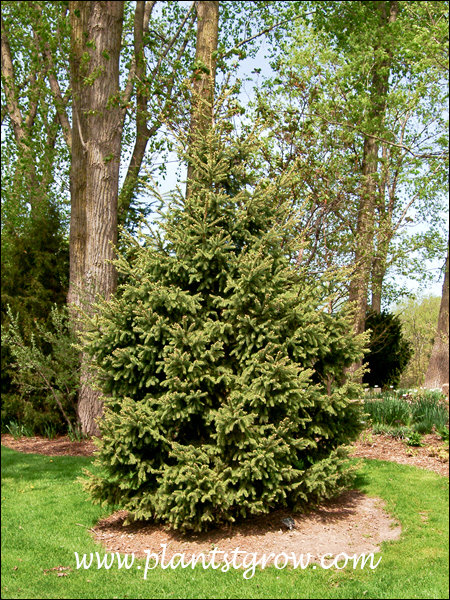
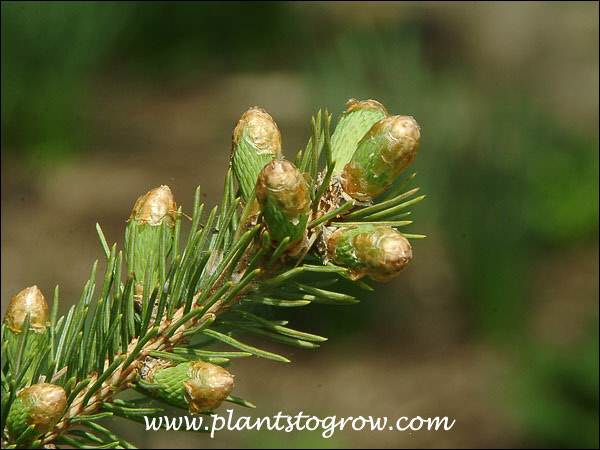
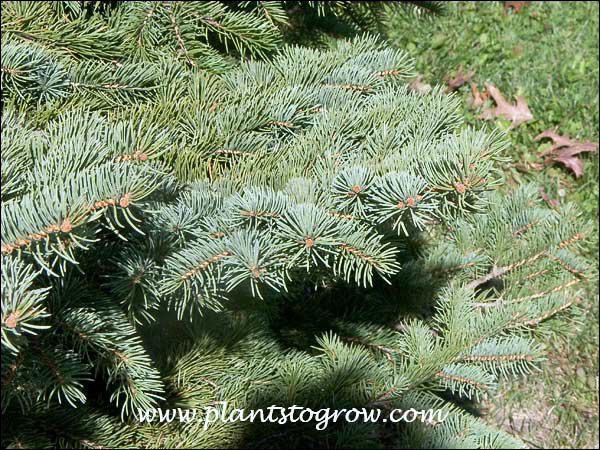
| Description | White Spruce (Picea glauca) One of the most tolerant of the Spruce for urban or city landscapes. Native to upland areas and lake/stream margins. |
|---|---|
| Pronunciation | (PI-see-AH)(glaw-cah) |
| Plant Type | Trees Coniferous |
| Hardiness Zone | 2 |
| Sunlight | full, tolerates some shade |
| Moisture | prefers moist, average |
| Soil & Site | Found growing on banks of streams, edges of swamps, tolerate average conditions |
| Fruit | cones, 1-2.5 inches, light green turning to brown, found near the tips of the branches |
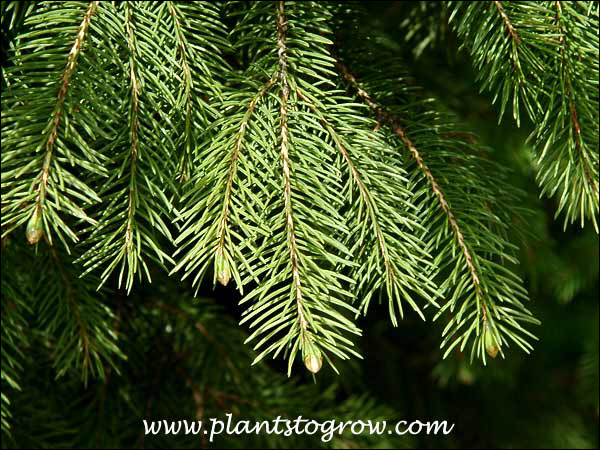
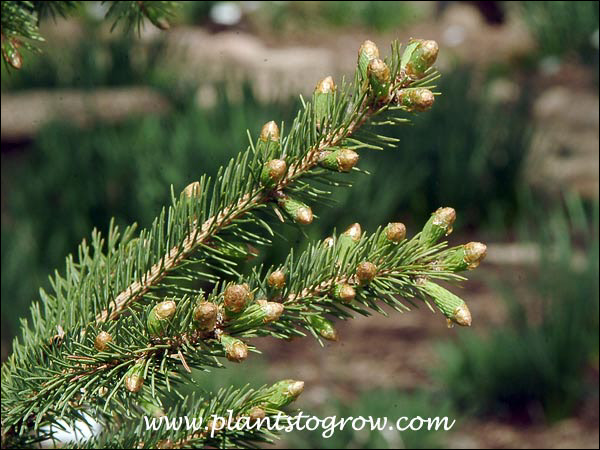
| Leaves | Needles are quadrangular in cross-section, crowded toward the upper surface of the stem, persistent for several years, narrow to a sharp tip, and, when crushed, give off a pungent, skunky smell. |
| Dimensions | 40-60 feet tall by 10-20 wide |
| Propagation | seeds need no stratification |
| Cultivar Origin | Introduced in 1700 |
| Misc Facts | Important as pulpwood for paper making. Indians dug up the pliable roots and used them to make baskets and lace their Birch bark canoes. AKA: white spruce, Canadian spruce, skunk spruce, cat spruce, Black Hills spruce, western white spruce, Alberta white spruce, Porsild spruce, Picea glauca, spruce, Picea |
| Notes & Reference | #01-Manual of Woody Landscape Plants (Dirr), #39-The Natural History of Trees (Donald Cultrose Pattie) ,#66-Trees of Eastern and North central USA and Canada (Harlow) |

Cart