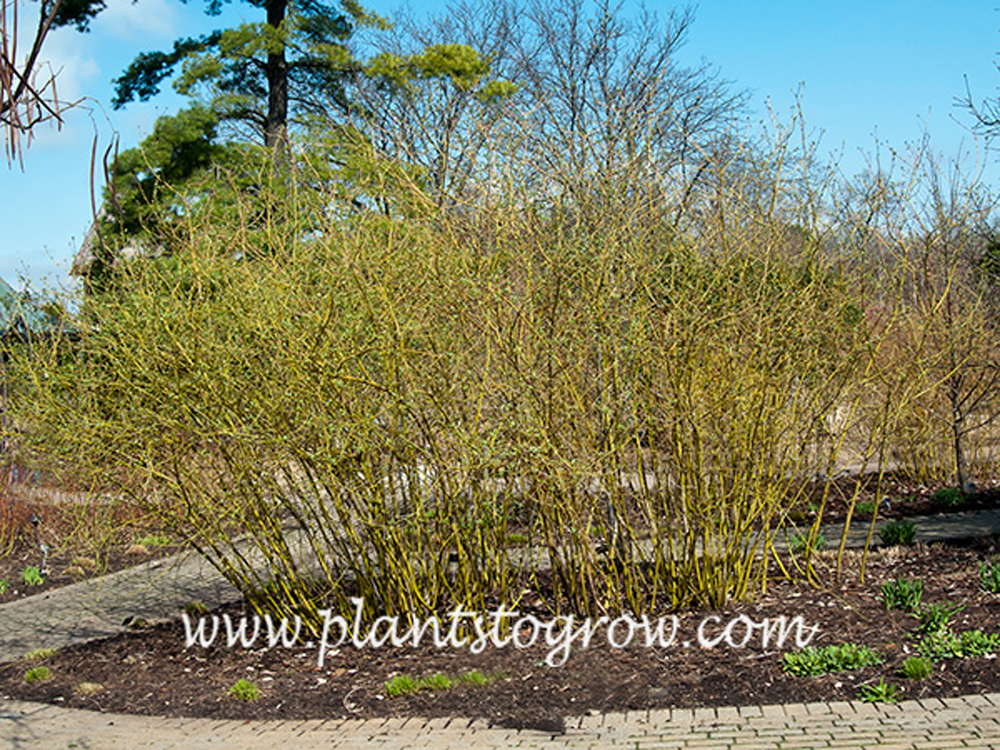
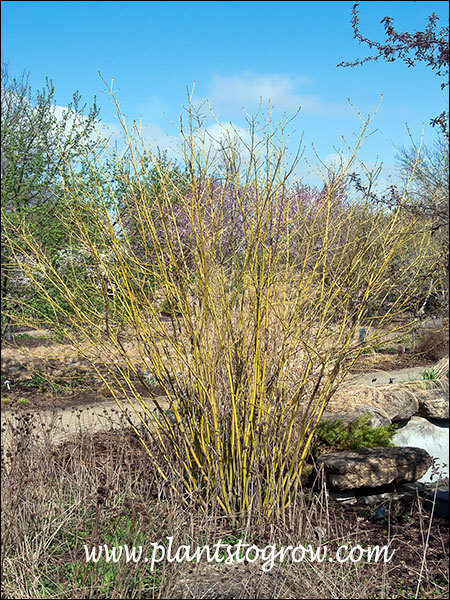
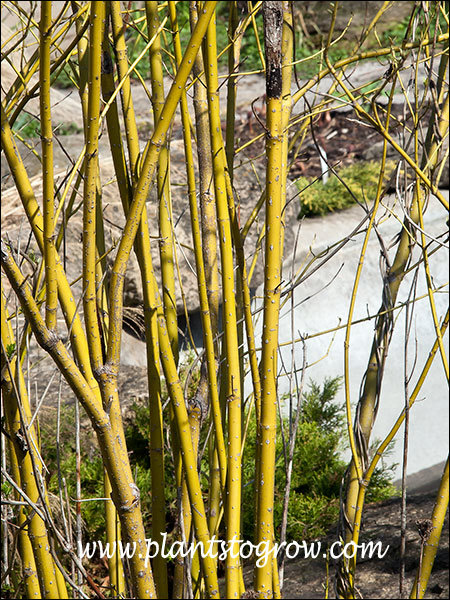
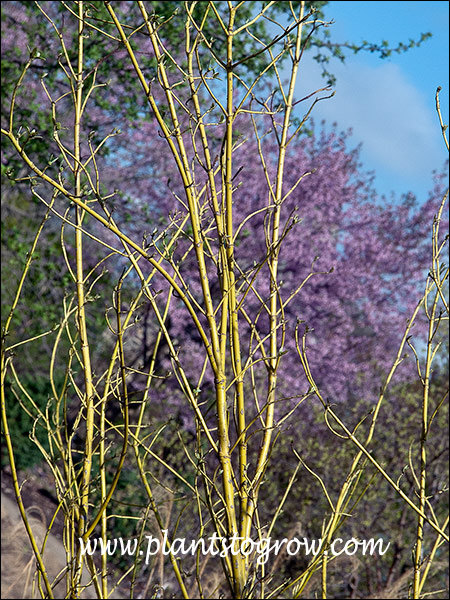
| Description | Yellow Twig Dogwood(Cornus sericea flaviramea) A medium to tall, wide-spreading shrub grown mainly for its yellow stems. |
|---|---|
| Pronunciation | (KOR-nus) (ser-REE-see-ah) (fla-vi-ram-ME-ah) |
| Plant Type | Shrubs Deciduous, Site author's observations |
| Hardiness Zone | 2-7 |
| Sunlight | full, mostly sunny, tolerates some shade |
| Moisture | average to moist to wet |
| Soil & Site | average to swampy |
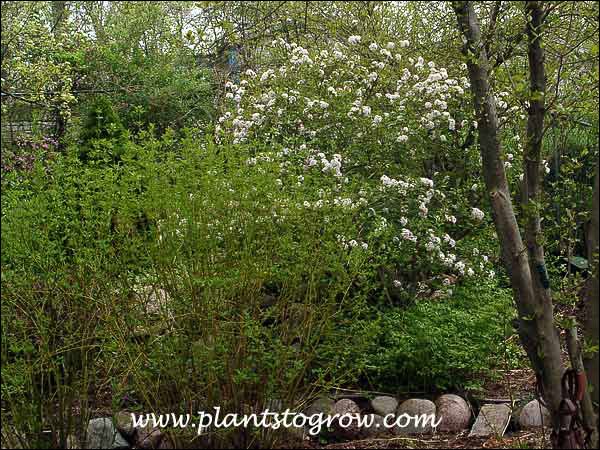
| Flowers | White (flat-topped cymes) bloom in the late spring. They attract many pollinators. |
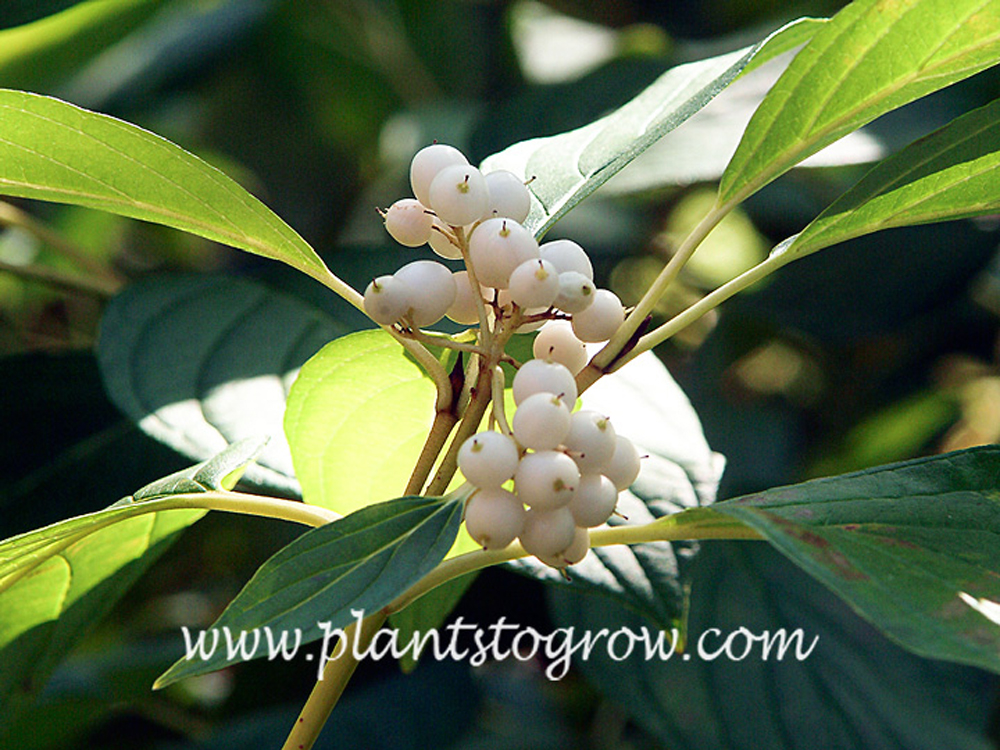
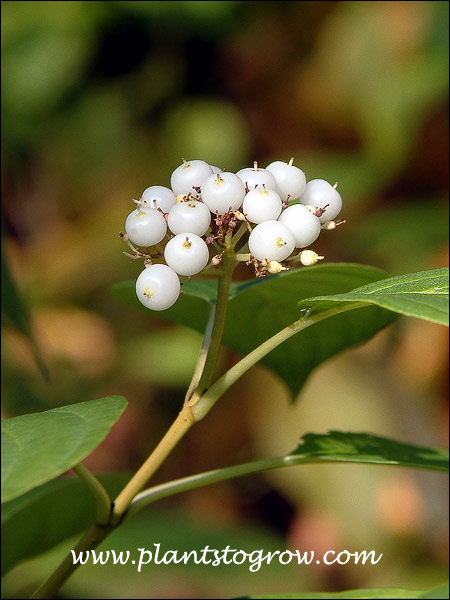
| Fruit | White to whitish-blue drupes are a food source for birds. |
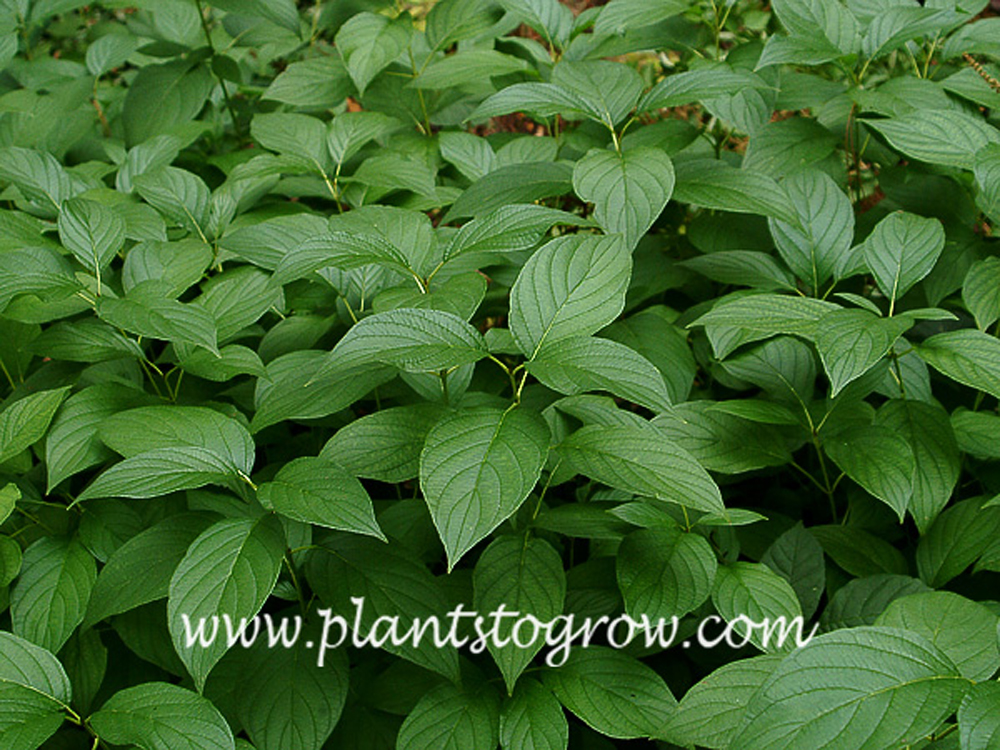
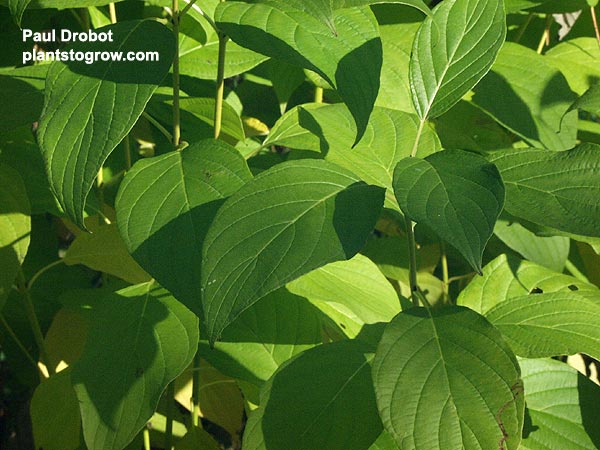
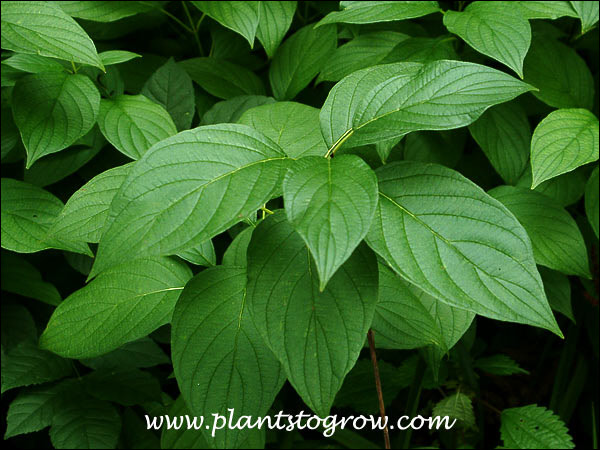
| Leaves | Leaves are green, simple, opposite, ovate to elliptic, and reach about two by 4 inches. Fall color seems to be plant and site-related, but can be a nice yellow. |
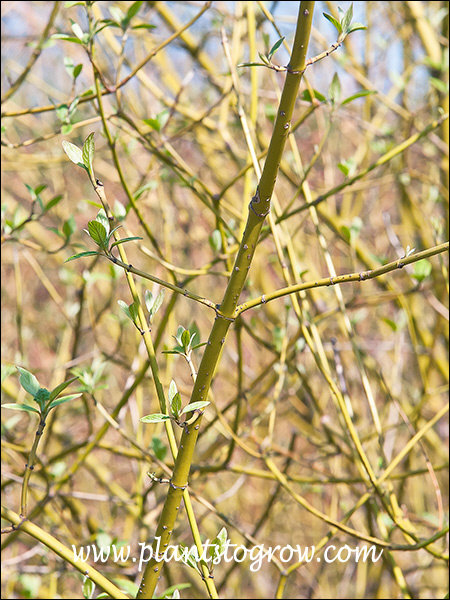
| Stems | The new stems are bright yellow and form many sucker from the base. |
| Dimensions | Reaches 8-10 feet high by a spread of over 6-8 feet. Space 6 feet on center. A rapid growing shrub. |
| Maintenance | I like to remove about half to a third of the old stems and cut the remaining stems back by 50%. This encourages new, colorful yellow stems since the older ones turn reddish. In one garden I maintain, we cut the plants down to 6-12 inches in early spring; they regrow, and we trim them back again. |
| Propagation | softwood cuttings |
| Cultivar Origin | First offered for sale by the Spath Nursery in Germany (1899). |
| Misc Facts | The genus name comes from the Latin 'cornu,' meaning 'horn,' likely referring to the wood's strength and density. Cornus is also the Latin name for cornelian cherry. The genus name from Latin means silky, referencing the hairs on young twigs and the upper leaf surfaces. SYN: Cornus stolonifera, Lutea |
| Notes & Reference | #01-Manual of Woody Landscape Plants (Michael Dirr), #03-The Hillier Manual of Trees and Shrubs (Hillier Nursery), #175-Dogwoods (Paul Cappiello and Don Shadow), #274-Site Authors' observations and growing experiences of different Cornus |

Cart